
 Today's DAR
May is National Historic Preservation Month, and as part of the celebration, we are highlighting the restoration of Memorial Continental Hall (MCH), a national historic landmark and the focus of two President General Projects spanning the Wright and Storage administrations.
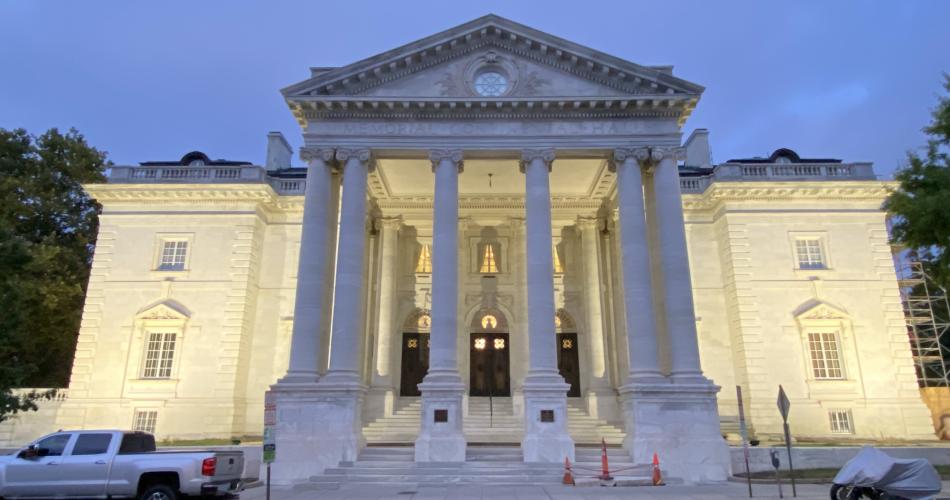
Continuing the Restoration of Memorial Continental Hall
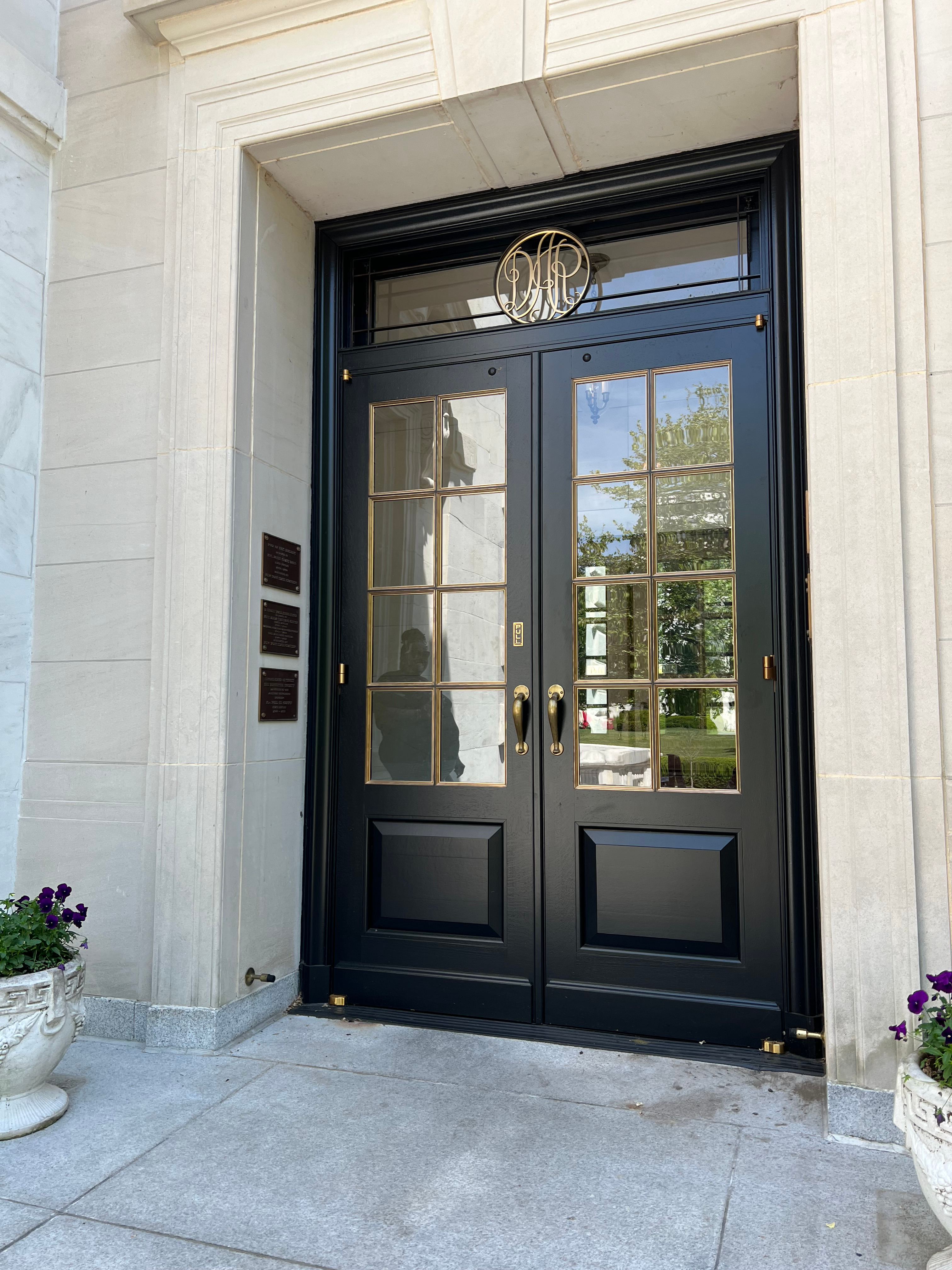
In 2023 a campaign to restore MCH began under President General Pamela Rouse Wright. Both the interior and exterior received major restoration, with the goal of returning the building as close as possible to its original 1910 splendor. Divided into two parts, this first phase included cleaning and repointing the marble façade, repainting the windows, and cleaning the bronze memorial doors on the 17th Street portico. Exterior work also extended to the Administration Building, where the main entrance doors on D Street were replaced with replicas of the lost originals. The interior of MCH also received a thorough restoration, the first since the 1950s. Based upon paint analysis, the 1910 color palette of cream and light gray replaced the heavily applied faux gold highlighting and faded, dirty paint. Genuine 24- karat gold leaf now highlights door moldings and other architectural details, enhancing the elegant appearance.
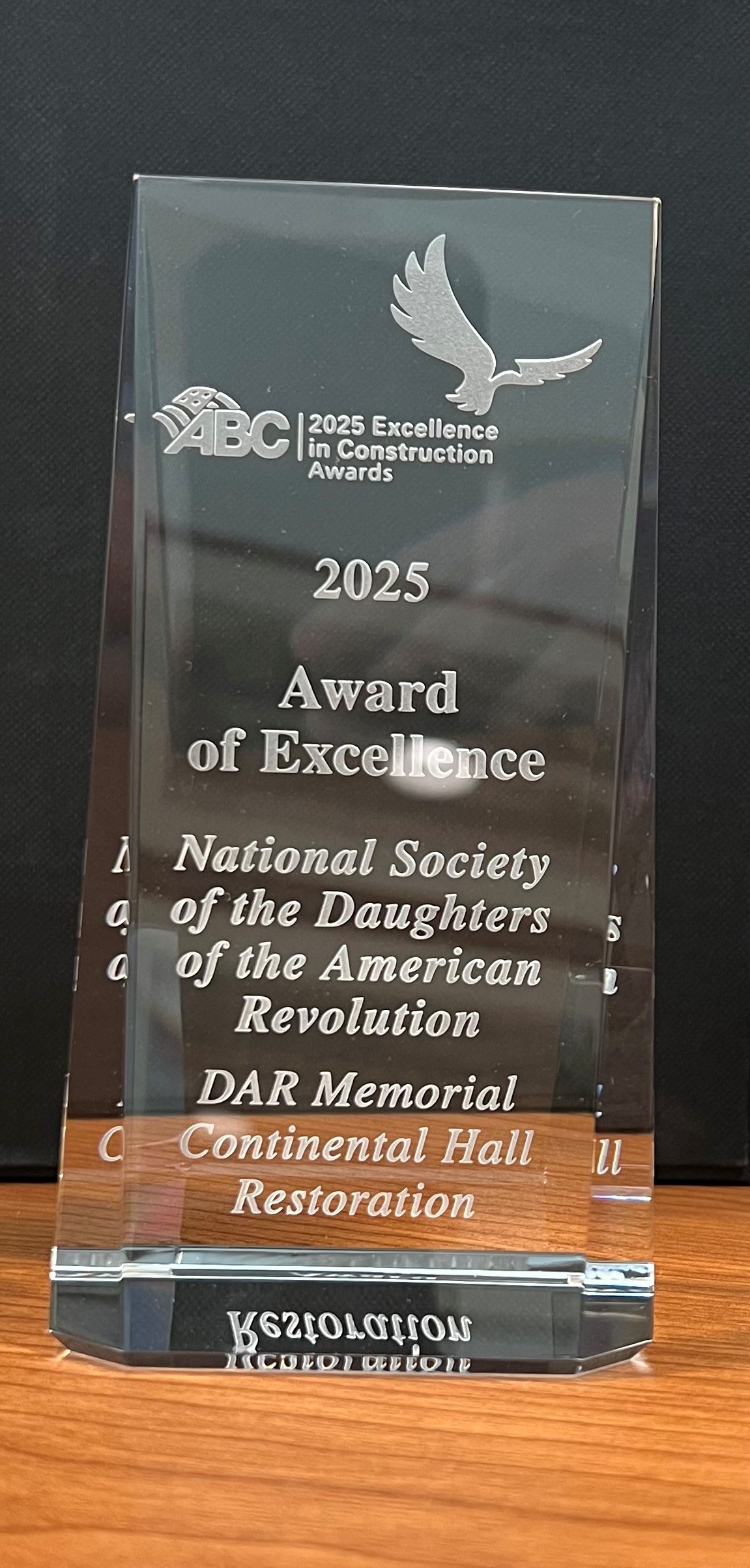
To accomplish this work, major plaster and wood repairs as well as reconstruction were necessary, all carried out using traditional materials and techniques. The restoration of MCH has only enhanced the architectural significance of this important building constructed by The National Society Daughters of the American Revolution. In 2025, The DAR was awarded excellence construction award from the Associated Builders and Contractors and a craftsmanship in historic preservation award from the Building Congress & Exchange.
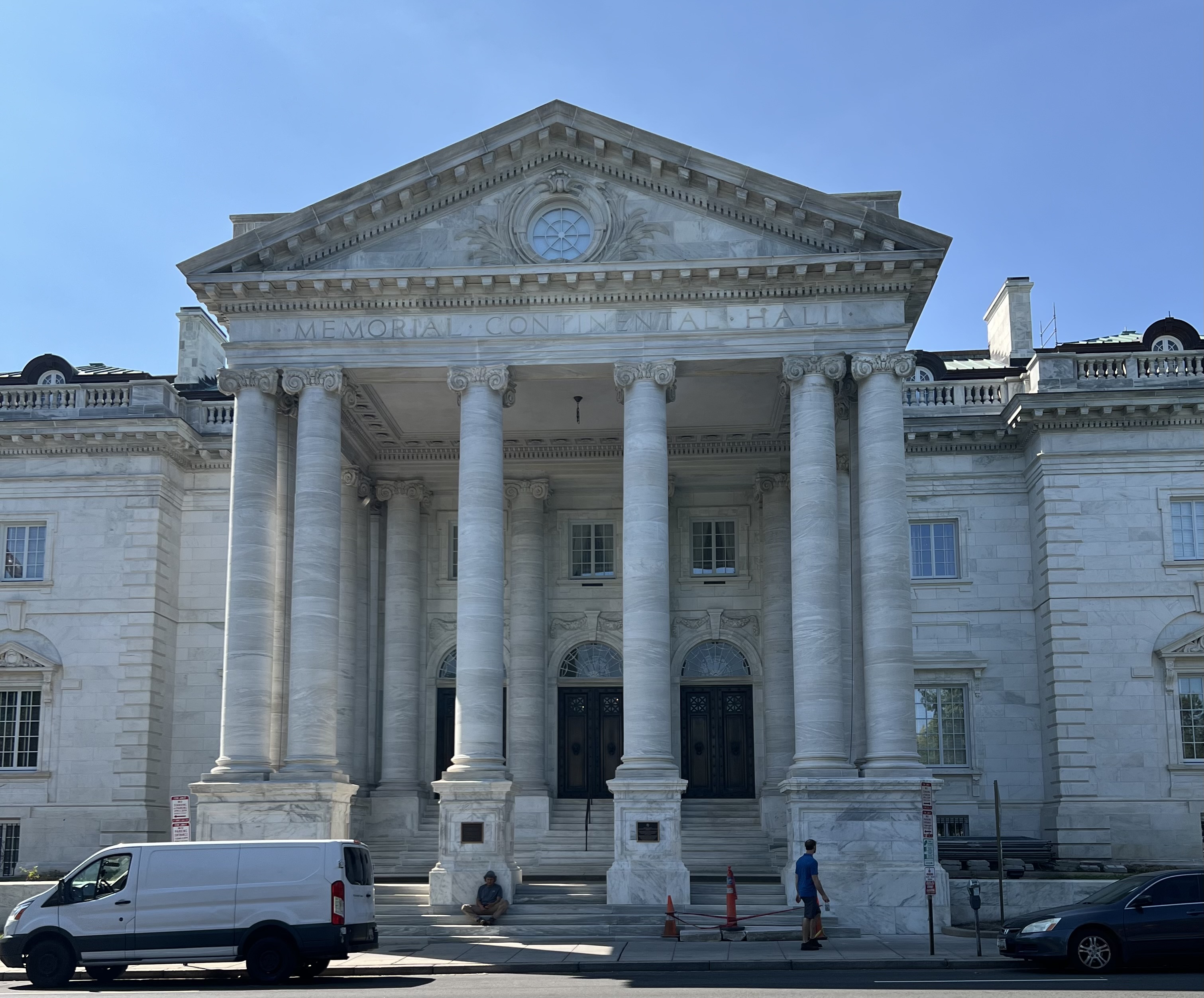
Memorial Continental Hall’s (MCH) restoration continues under President General Ginnie Storage. This second phase for 2026 and 2027 focuses on the south terrace, period rooms, genealogy offices, and the library.
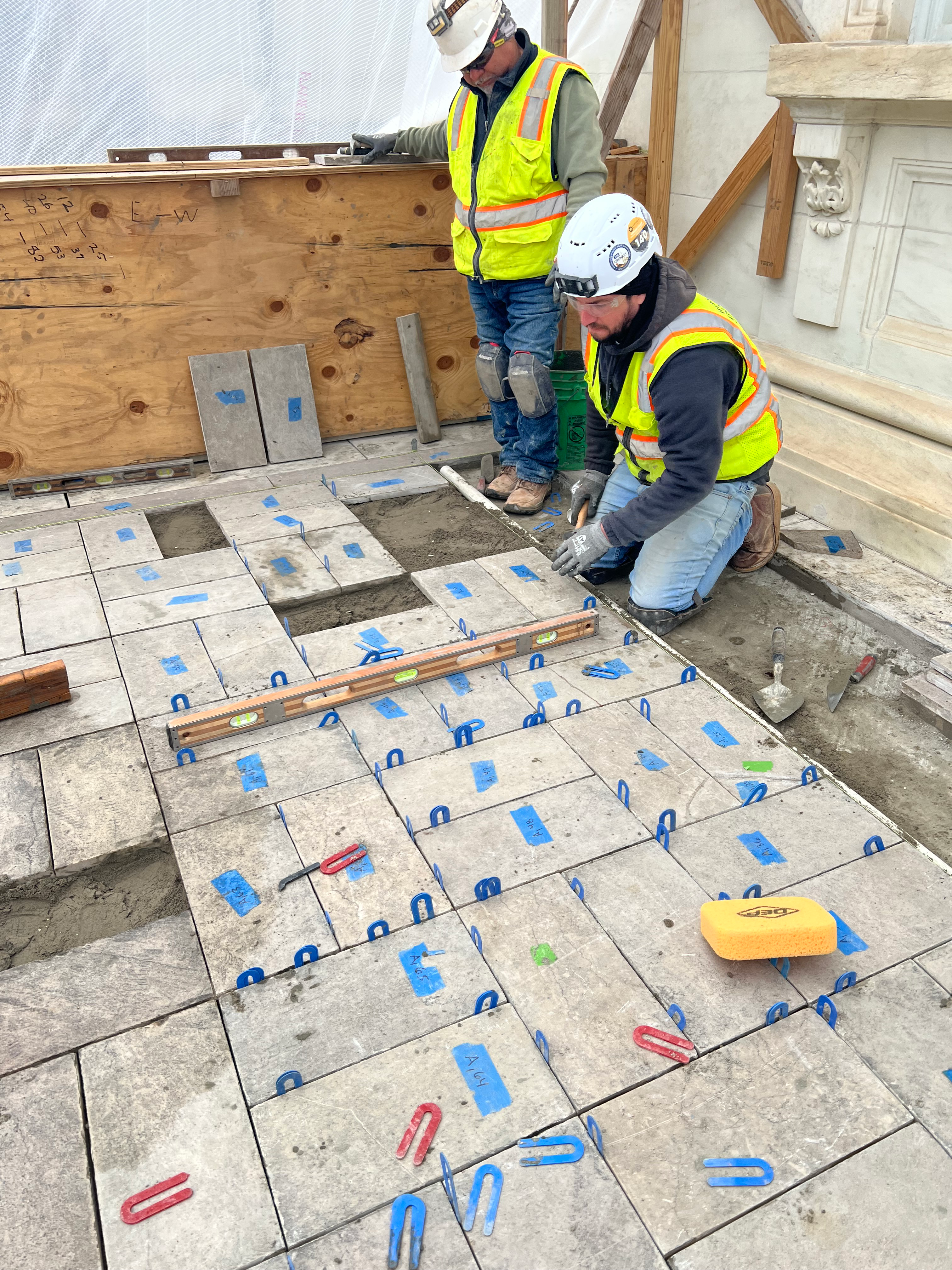
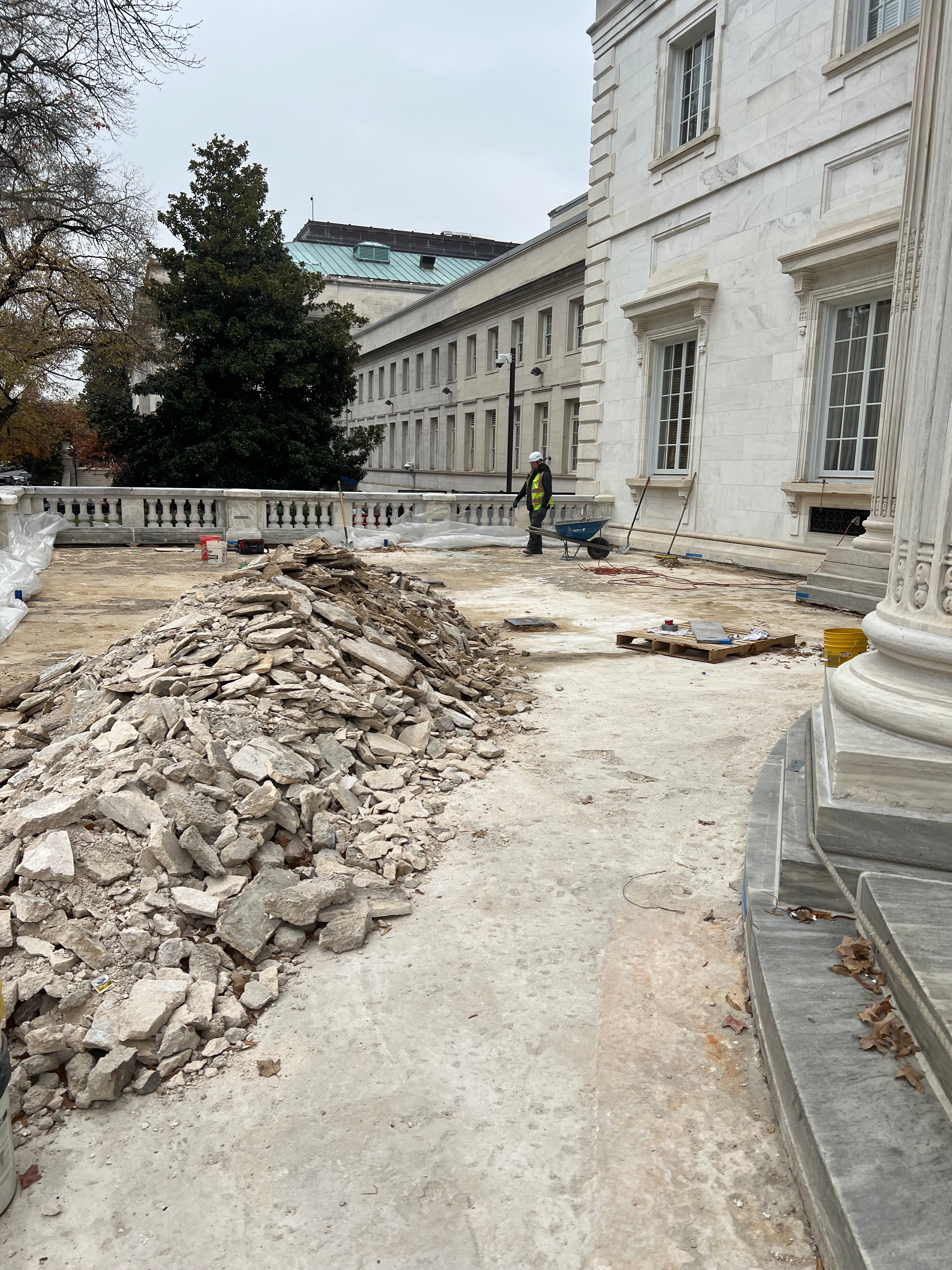
The south terrace developed drainage problems resulting in water infiltration and deteriorated marble. The cast iron drains hadn’t been addressed in at least eighty years. The drains were found to be in poor condition, necessitating replacement. Installing new drains required that the marble terrace pavers be carefully removed and selective demolition of the concrete slab. New drainpipes were installed to better carry water away from the building. Once complete, stone masons reinstalled the marble pavers in their original locations.
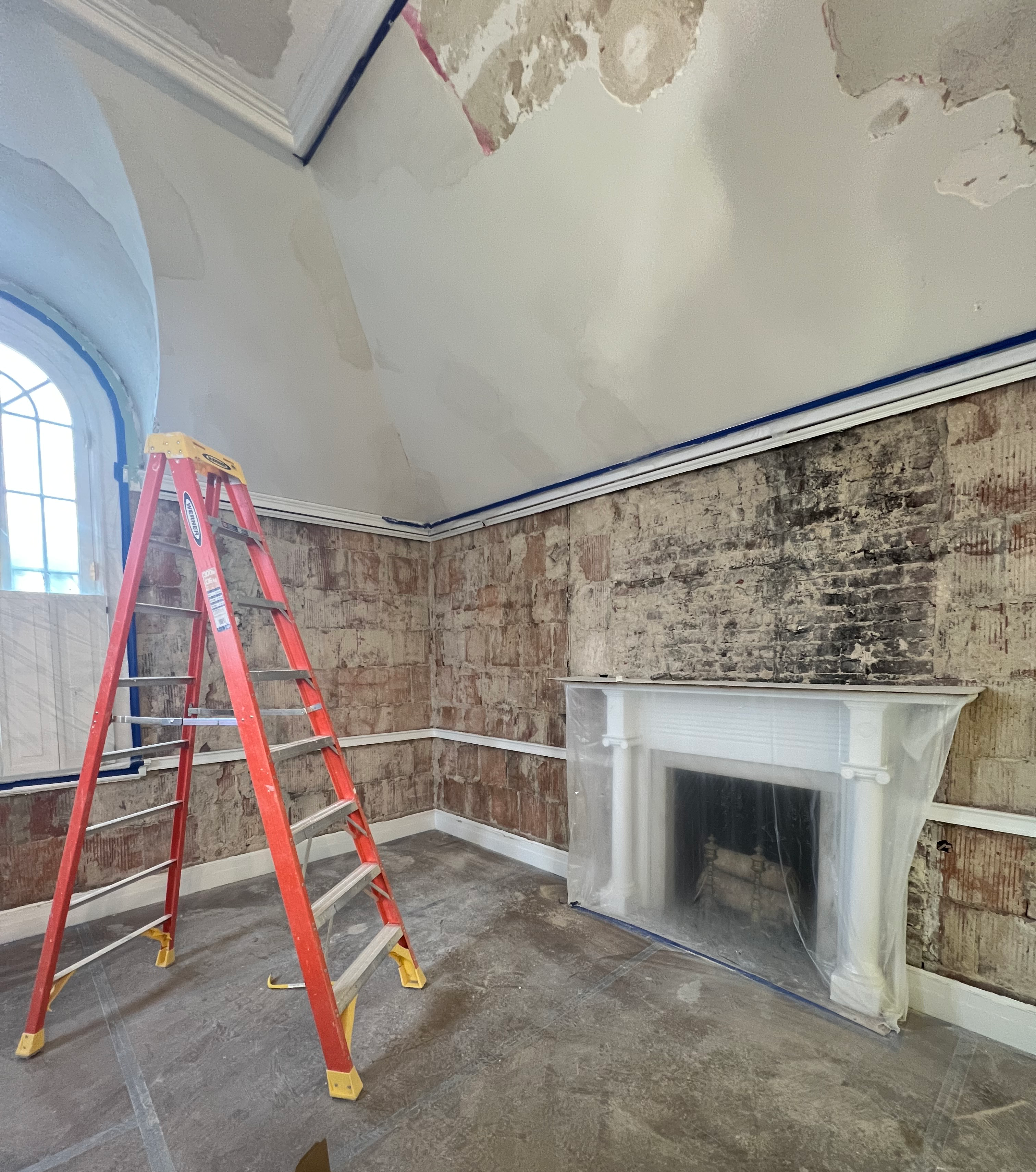
Interior work began in the period rooms with the repair of water-damaged woodwork, flooring, and plaster walls. In some of the period rooms such as Maine and Missouri, extensive wall damage required complete replastering. Museum objects exhibited in the affected rooms were stored and, in some instances, protected in place. Where possible, wallpaper was carefully removed and set aside for reinstallation. In other cases, new wallpaper panels replaced those that couldn’t be saved. Skilled craftspeople replastered the walls using traditional methods. Missing or damaged woodwork was recreated. Most of the period rooms have been completed and look beautiful.
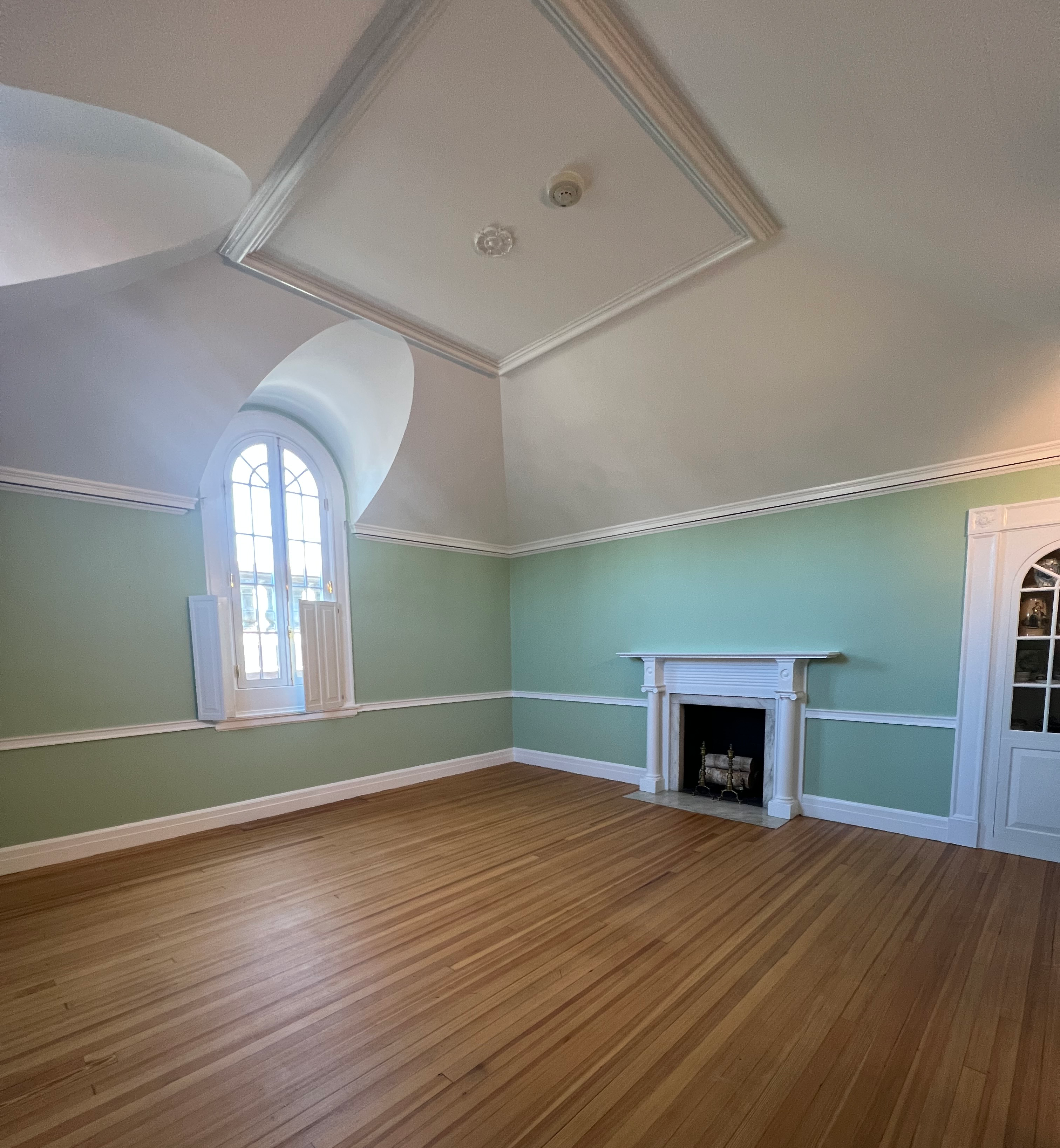
Work on the genealogy offices and library will begin after the 135th Continental Congress next month. As in the public areas of MCH, these spaces will be restored to their 1910 appearance. The historic colors of cream and light gray will be applied based upon paint analysis. Both the colors and finishes will highlight architectural features, much as they do in other newly restored areas of MCH. The library is the largest and most complex room to restore. For the restoration work to happen, the library will move more than 130,000 books and all the furniture to a secure storage facility. Scaffolding will be erected to access all portions of the library walls and ceiling. As part of the project, new bookcases will be made and existing ones repaired and refinished. The library will also receive new lighting and wiring. There is still much to do but look out for update blogs and videos as the work progresses in the coming months. More information about the DAR Library's operations during the restoration can be found here: https://www.dar.org/collections/library/libraryonthemove.
