
 Today's DAR
The DAR Museum’s current exhibition is “Sewn in America: Making—Meaning—Memory.” For the first time, quilts, samplers and decorative needlework, clothing, household linens, sewing tools, and other sewing-related objects from the early 1700s to today fill the DAR Museum gallery to examine what a huge part of women’s lives sewing was before industrialization and ready-to-wear.
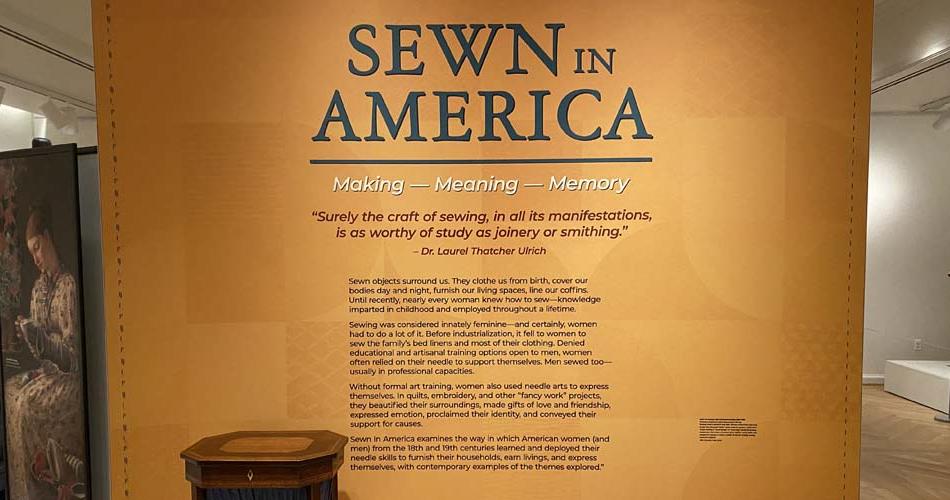
Threads of History: Exploring the Latest DAR Museum Exhibition
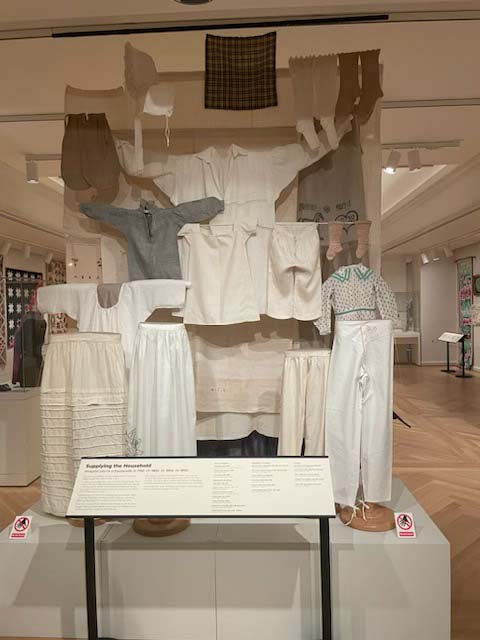
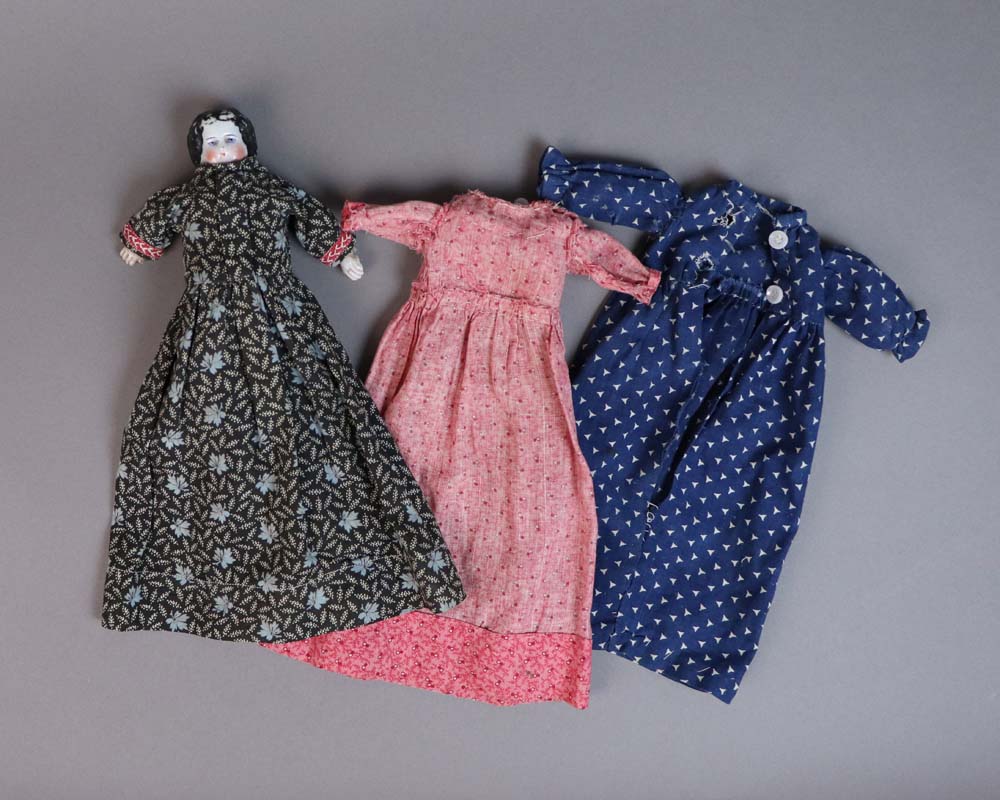
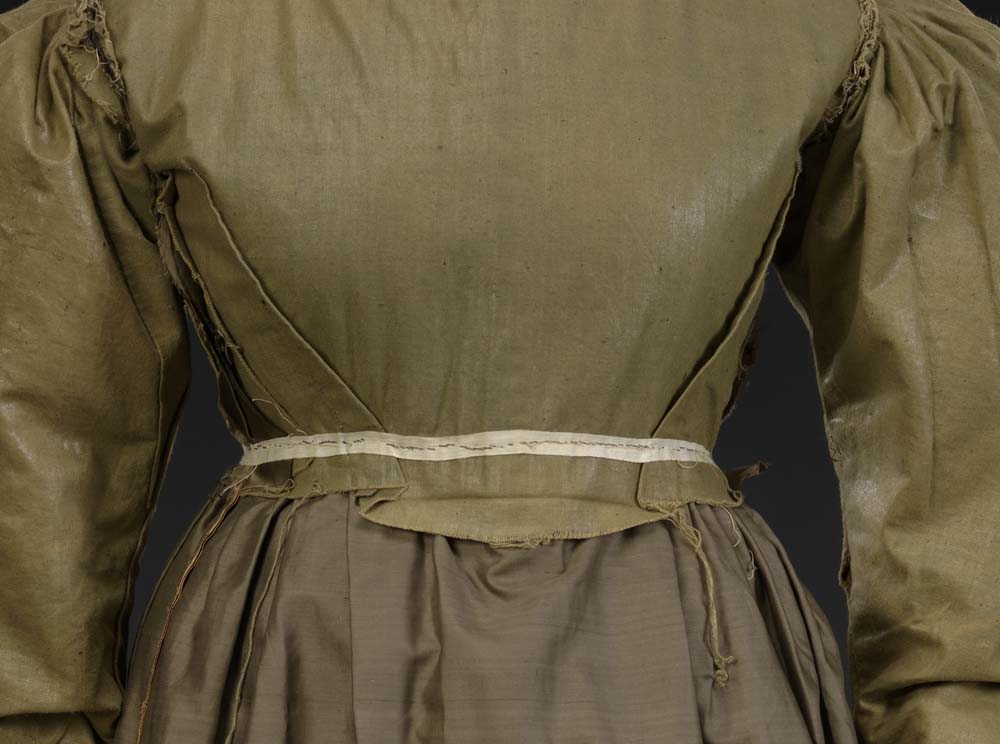
The first section, “Making,” looks at how girls learned to sew through making samplers and doll clothes and learned and practiced mending and darning as well. A selection of dresses from 1780 through 1920—two of them displayed inside-out to show the piecing, linings and facings, and stitching—show the evolution from garments which had to be made by highly skilled dressmakers, to those which could be made with paper patterns or bought ready-made. The technologies which assisted this transition—a selection of paper patterns from the 1850s to 1890s, a pattern drafting system, and a sewing machine, are also on view. A group of bed linens and men, women’s, and children’s clothing all hanging in front of each other form a “wall of clothes” to show the variety and volume of household sewing the average woman was responsible for. Behind it, examples of professions involving sewing (from dressmaking and millinery to male-dominated fields of tailoring, shoemaking, and less obvious professions such as bookmaking and leather working) further examine the notion of sewing out of necessity.
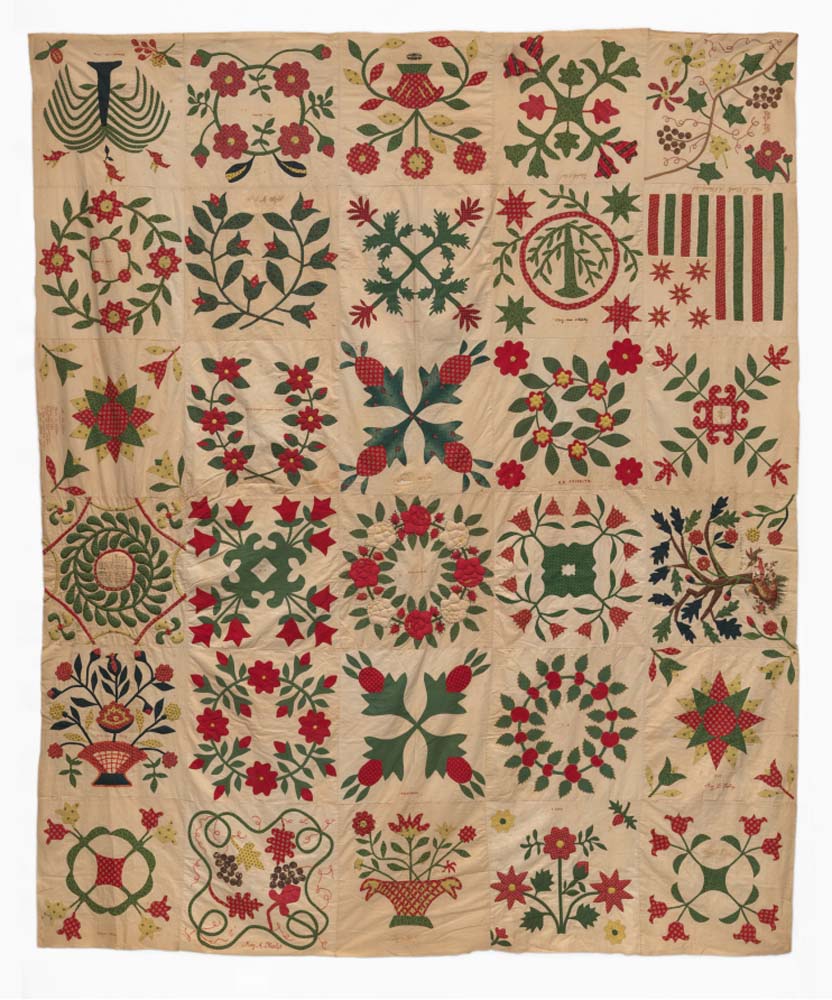
The second section of the exhibition, “Meaning,” examines how women expressed emotions, identity, and support for charity or causes by using their needles. Examples of gifts of love and friendship, and works made or saved to express or process grief, are included. Quilts and a family record needlework expressing family ties, quilts which are a fusion of their makers’ homeland or indigenous designs with American quilting traditions, and embroidery honoring religious affiliation are also on view. Personal, regional, and national identity are also expressed through a variety of garments, needleworks, and quilts.
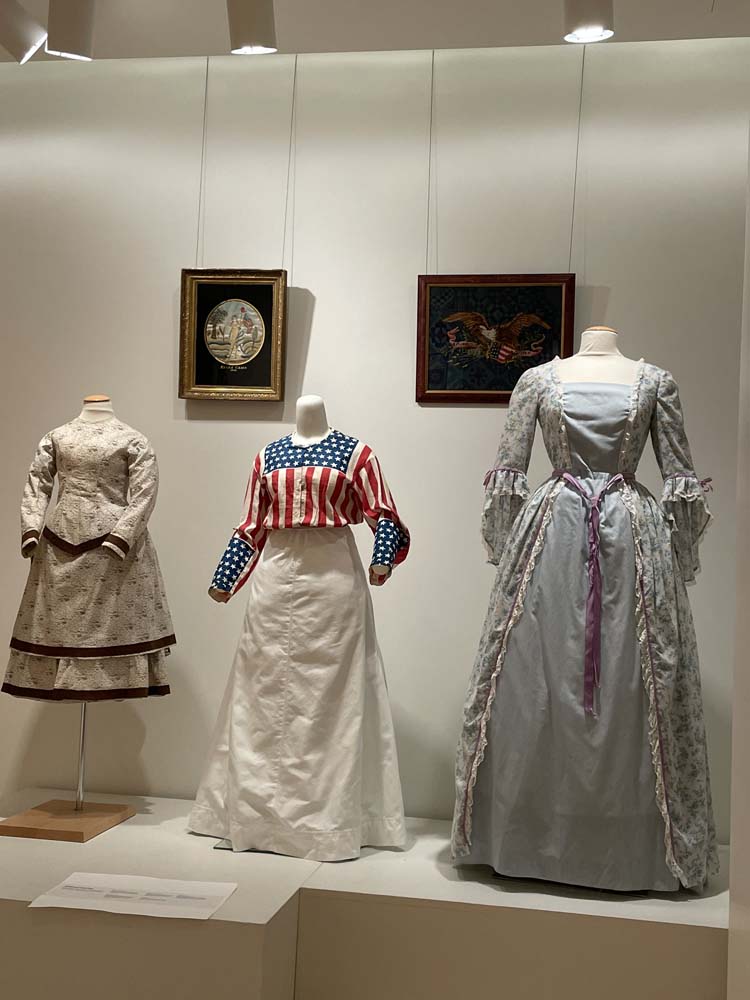
The last part of the “Meaning” section documents how women—especially before they had the vote or were allowed by social norms to speak out publicly on social or political issues—used their needles either to make items for fundraisers (charitable bazaars began in the 1830s), support the troops (a Quilt of Valor joins two Civil War quilts), or express concern for social issues. Examples from the 1900s are juxtaposed with contemporary examples to show that women are still using their needles in these ways. An abolitionist bag and pin holder are steps away from a quilt addressing interracial relations. Other examples include a scarf documenting climate change and garments with “visible mending” calling attention to textile waste, one of the largest causes of pollution worldwide.
The main point of the exhibition, however, is to remind the visitor of how intrinsic sewing was to virtually every woman’s life in preindustrial times. Being aware of the necessary “plain work” of sewing sheets, towels, petticoats, shirts, and so on, can make us even more appreciative of the “fancy work”—the quilts and embroidery and other needle crafts 18th and 19th century women elected to do after their plain work was completed.
An entire slate of programs has been created to complement this exhibition. Each Saturday, families can participate in Family Activities, on a monthly rotating basis and crafters can join us for a “UFO,” or UnFinished Object, Craft Circle.
One special program to highlight is the “Storycloth Workshop” on October 19, led by the daughter of Esther Krinitz. Following in her mother’s footsteps, Bernice Steinhardt (DAR Founders Medal of Education awardee) will lead attendees in the creation of their own storycloth, just like the ones featured in the exhibition. Details and registration for this program can be found at https://StoryclothOct2024.eventbrite.com. A full list of programs can be found at www.dar.org/MuseumCalendar.
This exhibition has encouraged many people to explore the museum, especially those that have never before visited. To date, almost 7,000 people have checked out the exhibition since March 22, 2024. This exhibition will be on view through 2024. For those that are not able to make it to Washington, DC, the exhibition can be enjoyed at https://sewninamerica.dar.org/ A number of publications have featured the exhibition and videos have been created to celebrate the groundbreaking nature of the exhibit. A collection of media and resources can be found at https://wakelet.com/wake/J7cuAM_Bdc4DRAcAMDe1v
