
Tales From the Archives: Aiding the Fatherless Children of France in WWI

Joy O'Donnell, DAR Archivist

Continuing with our commemoration of the 100 year anniversary of the United States entering into World War One, this “Tales from the Archives” blog highlights one of the most notable projects the DAR undertook – supporting the children of France who had lost their fathers on account of the War.

With the country engulfed in the war abroad, Americans at home turned their attention to France and what they could do for her citizens.  At the 26th Continental Congress, which was held a mere 10 days after the United States declared war on Germany, President General Daisy Allen Story read a letter from former President Theodore Roosevelt, encouraging the DAR to assist France in their time of need.  Roosevelt reported that half a million French children had lost their fathers in the War and that the French government “staggering under the stupendous financial burdens of the war,” could not fully support these orphaned children.  
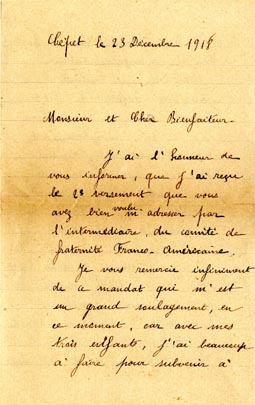
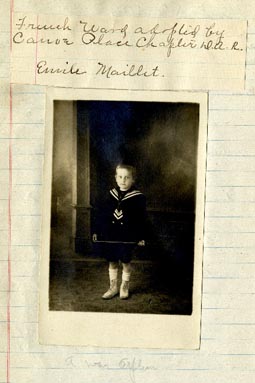
DAR members answered the call and began “adopting,” or sponsoring, these children.  $36.50 supported one child for an entire year.  Through Elise Richards Jusserand, the wife of the French ambassador to the United States, the DAR sent money to the “Fatherless Children of France” organization, which in turn sent quarterly payments to the children’s guardians.  Instead of sending orphans to the United States for formal adoption with American families, it was felt that the future of France depended on keeping the children in their country of birth.  DAR members, both individually and together with the support of their Chapters and State Societies, supported the orphans, often “adopting” entire families.  The members sent Christmas and birthday presents to the children and exchanged letters with them.  By 1918, over 1000 children were supported by the DAR.

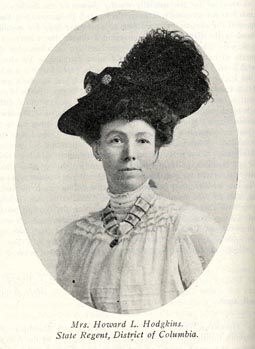
Marie Wilkinson Hodgkins, Secretary of the DAR’s War Relief Service Committee, was in charge of coordinating the DAR’s support of the French orphans.  Mrs. Hodgkins devoted herself entirely to the project until the end of the War, working 8-hour days to place the financial care of the orphans in the hands of the Chapters.  In a letter thanking the “Fairy Godmothers of France’s future citizens,” Mrs. Jusserand states, “I wish the Daughters of the American Revolution who have ‘adopted’  our little ones could realize, as I do, who am just back from France, all that their help and sympathy mean to them.  It means sometimes the proper food necessary for a child's health, sometimes the pair of shoes which can enable the child to go to school, and at all times it means carrying the word ‘America’ into thousands of French homes where it will remain a symbol of fraternity, ever respected and beloved.”

To learn more about the many ways the DAR contributed in war relief service, please stop by the Americana Room’s new exhibit, “Women of Resilience:  DAR Service in World War One,” opening on June 19, 2017!

send-a-commentSend Us a comment