 Today's DAR
Like the mythical phoenix rising from the ashes, Memorial Continental Hall’s façade reemerged from the recently removed scaffolding looking like a new building. All gone is the black dirt and missing mortar, in its place are gleaming grey-white Vermont marble blocks held together with new white mortar joints.

Sparkling Memorial Continental Hall, A Restoration Update
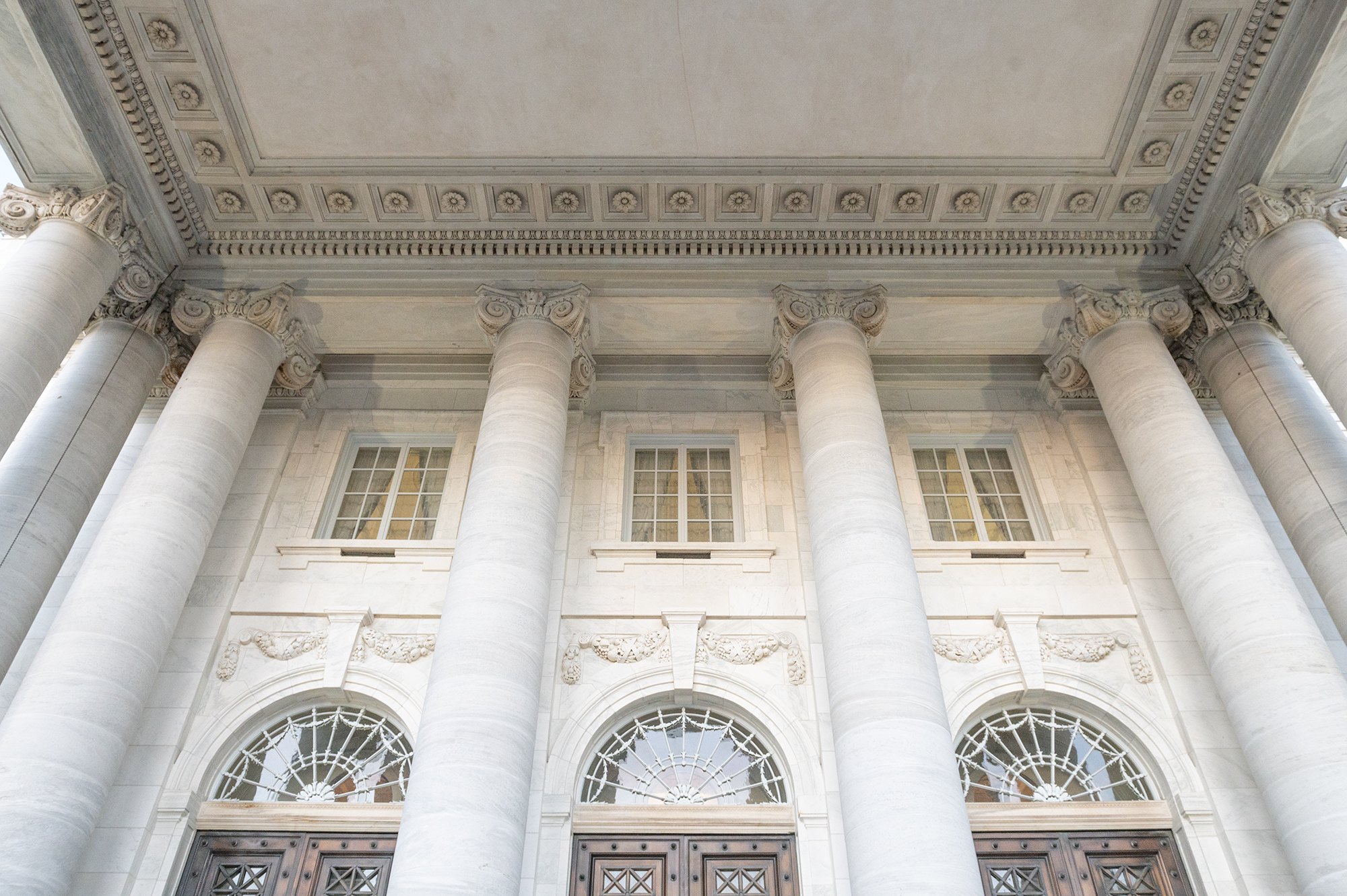
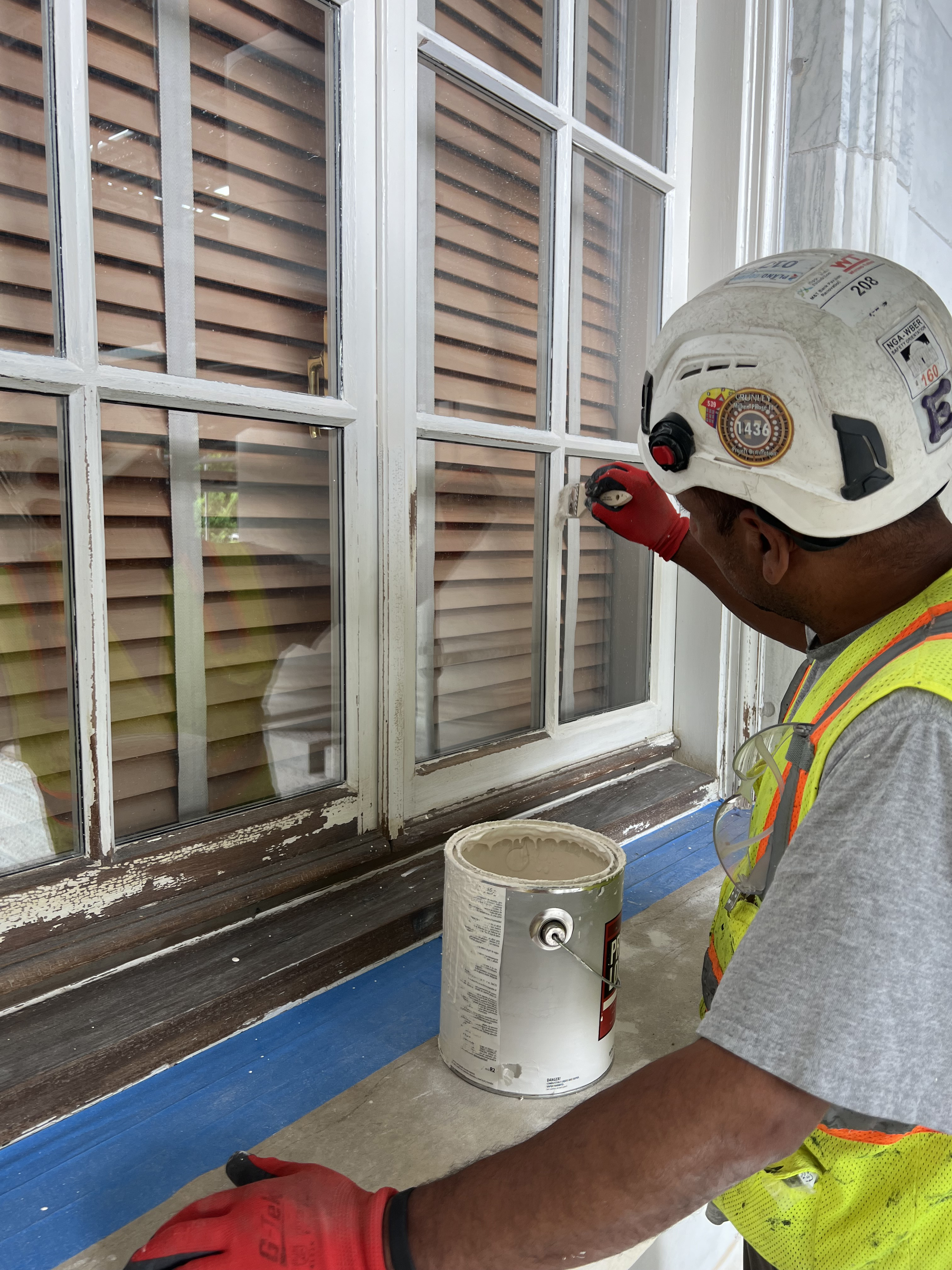
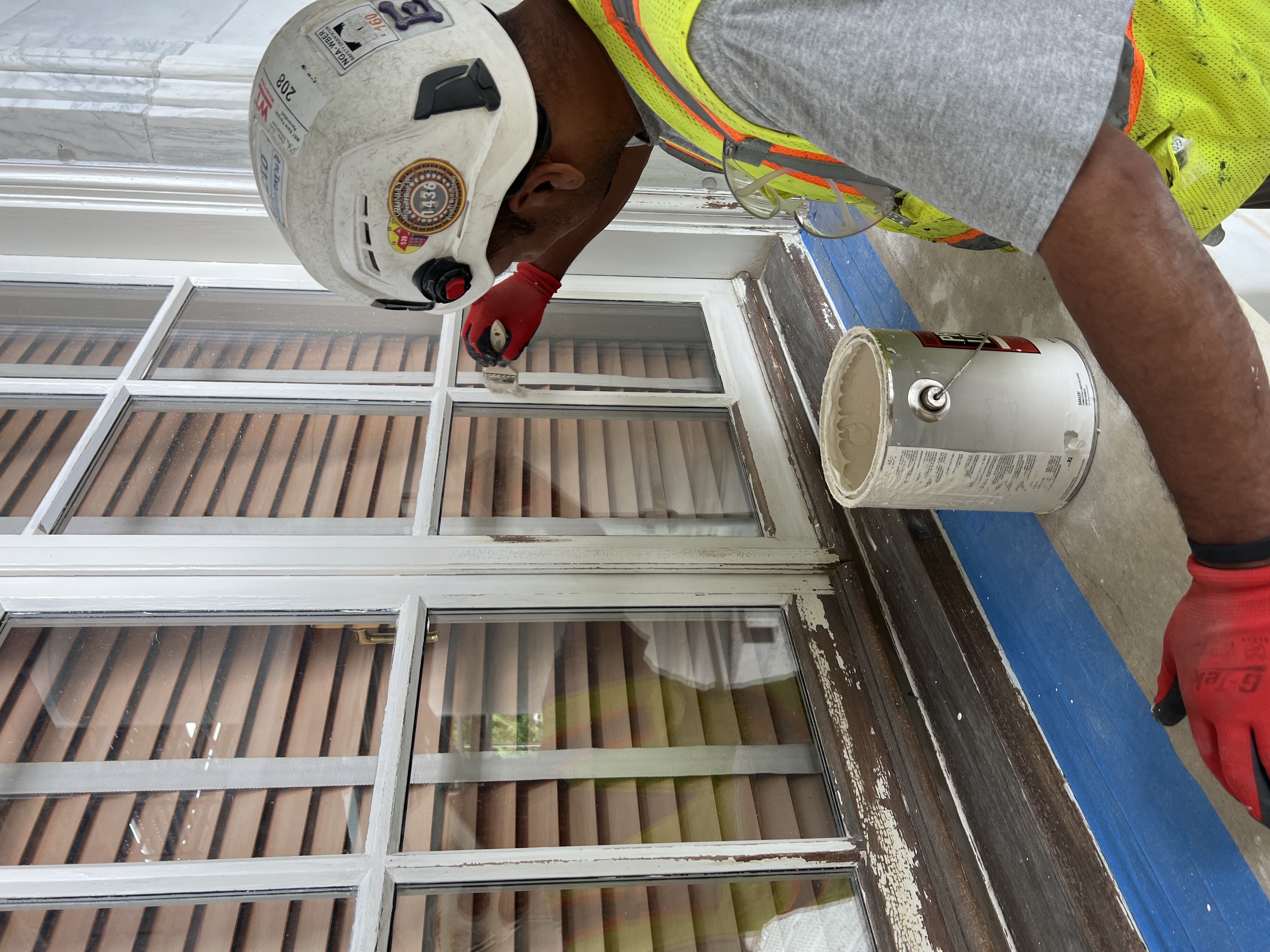
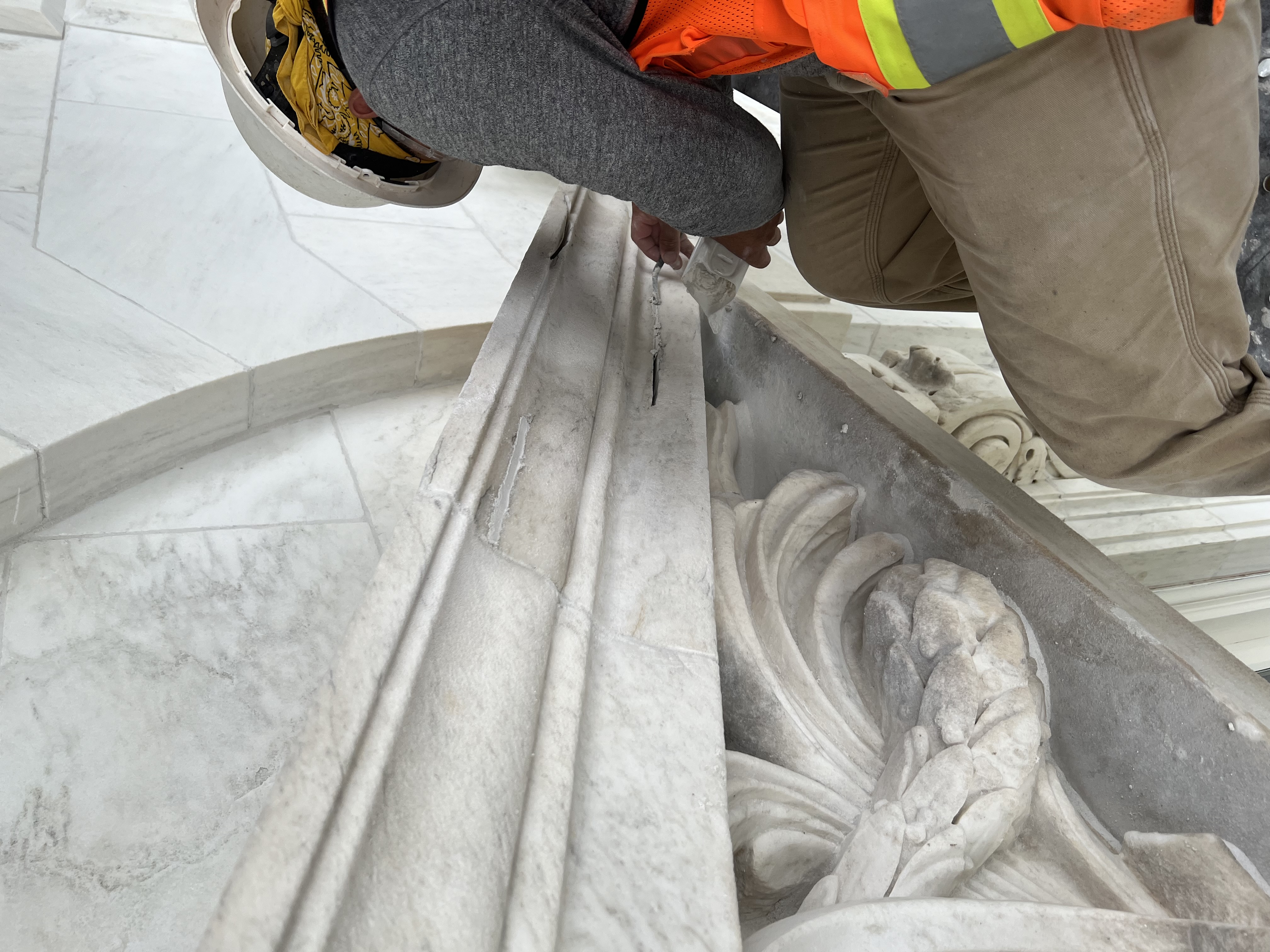
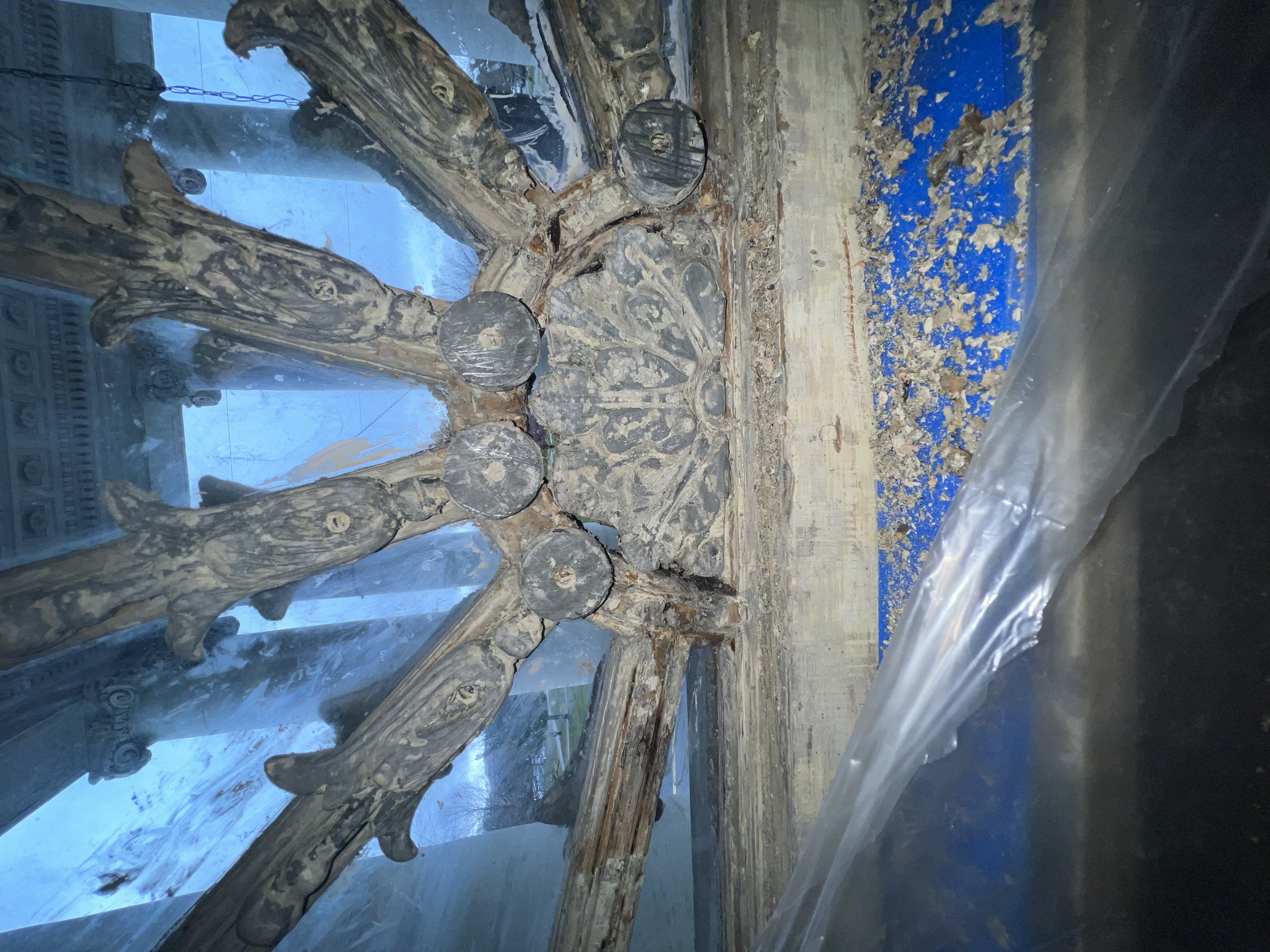
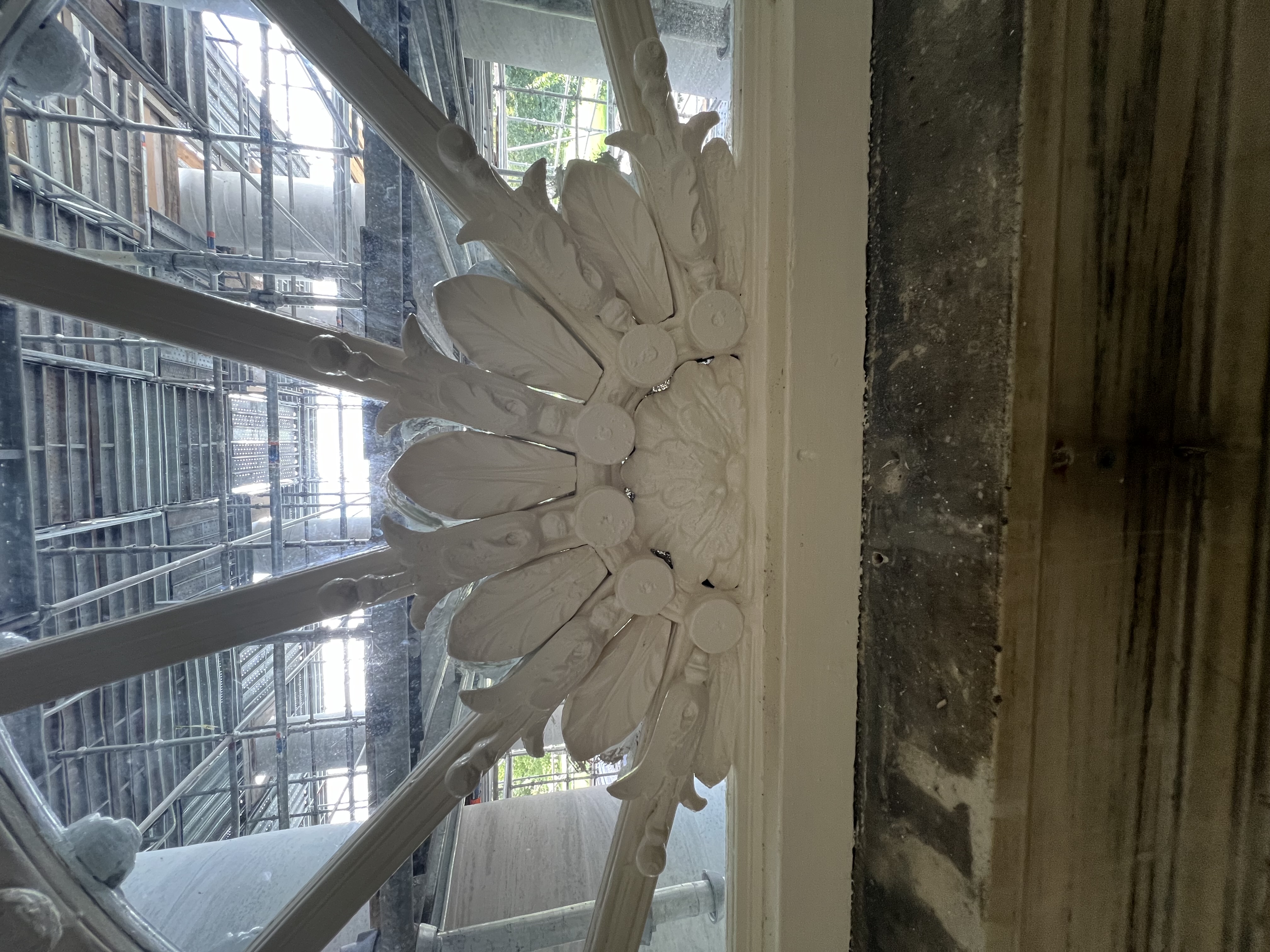
The wood windows, some original to the building, have been repainted in a period appropriate off-white color. The hard work of the architectural conservators and skilled craftsmen is apparent. Following careful cleaning with low pressurized water and special solvents to remove rust stains, they made many repairs to the stone, especially on the balustrade along the roofline. The intricate 1910 arched transoms over the bronze memorial doors are now clean with missing elements replaced with exact reproductions. All this work was carefully done by hand to protect and conserve the original surfaces.
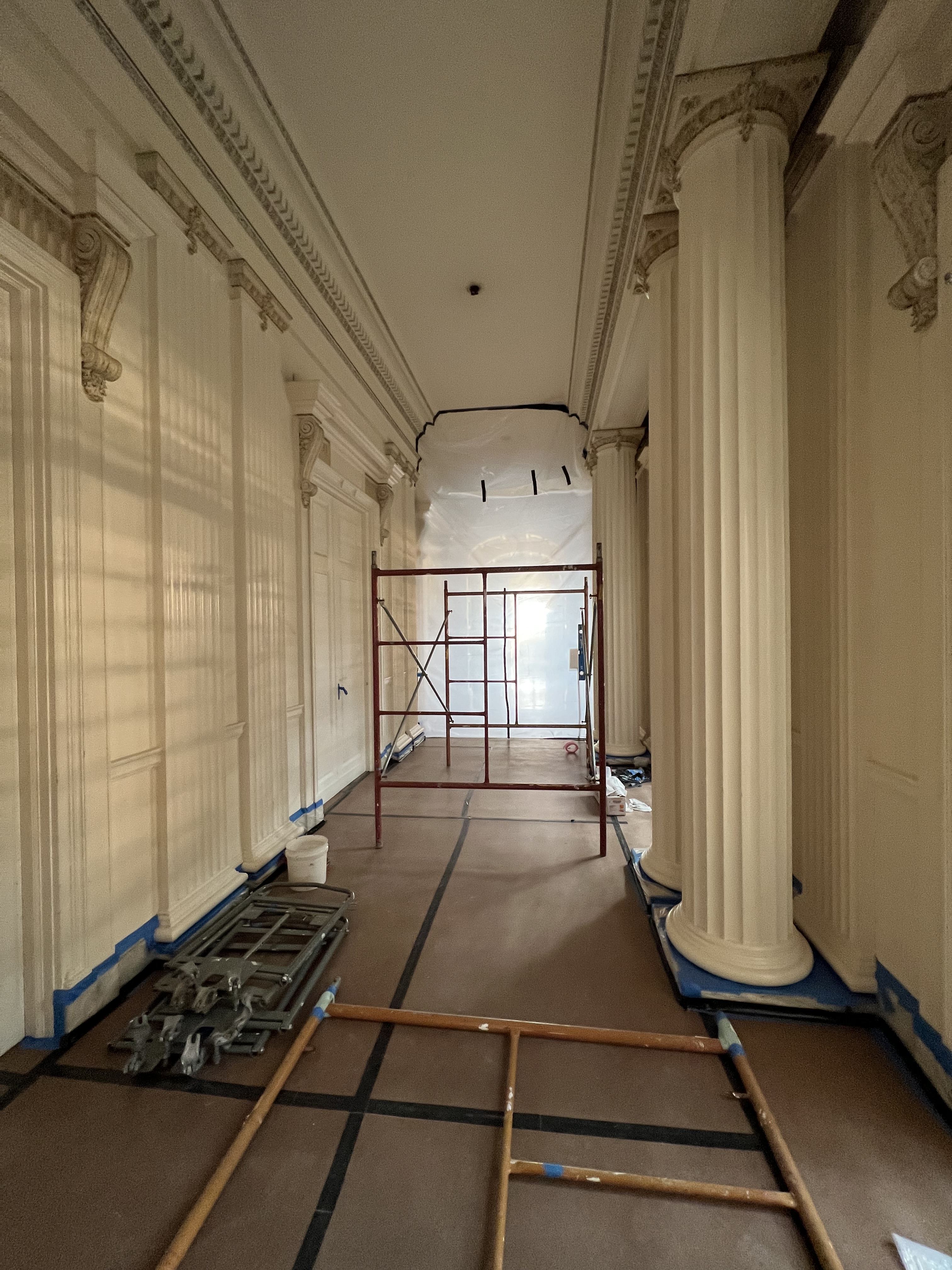
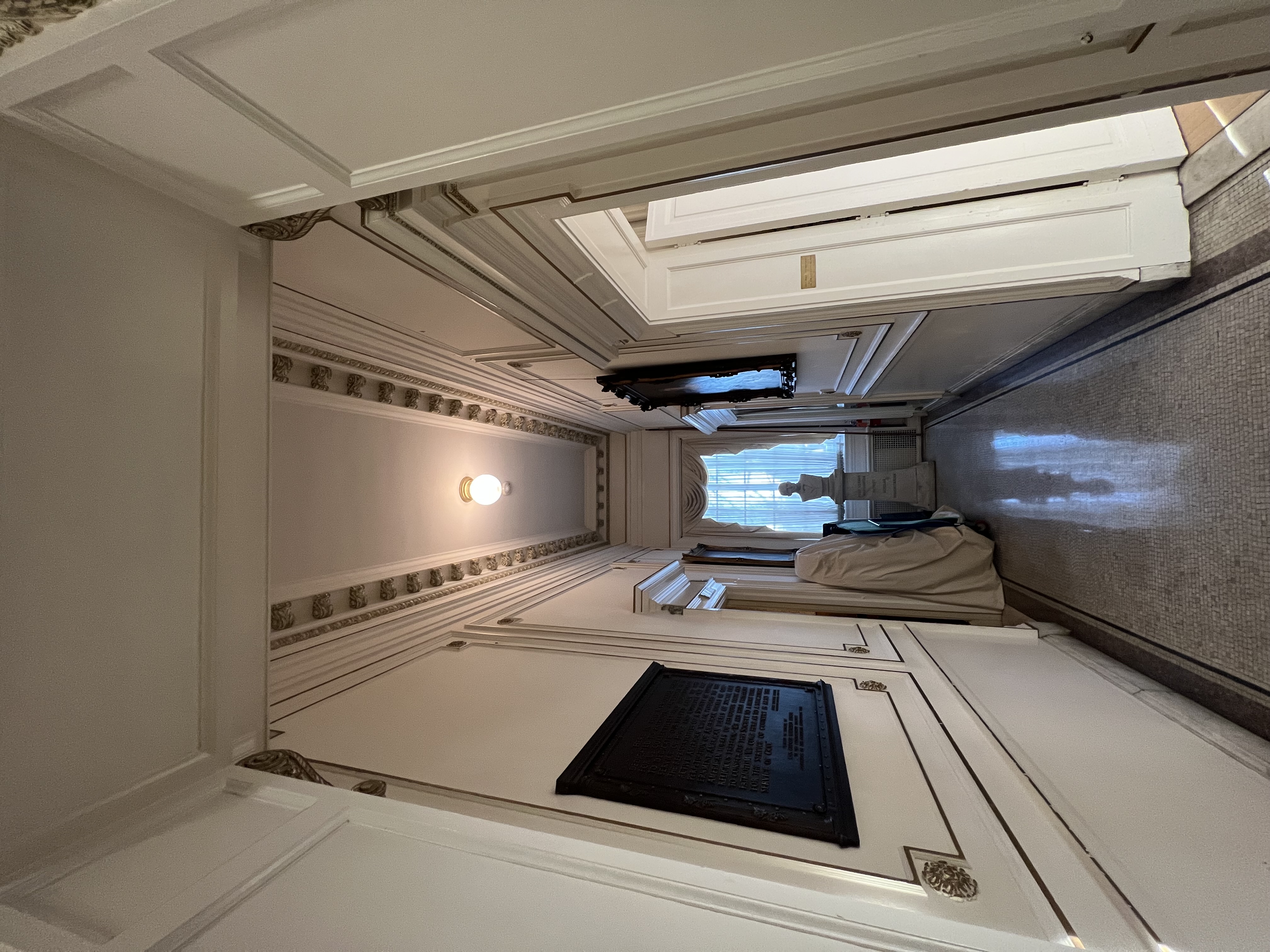
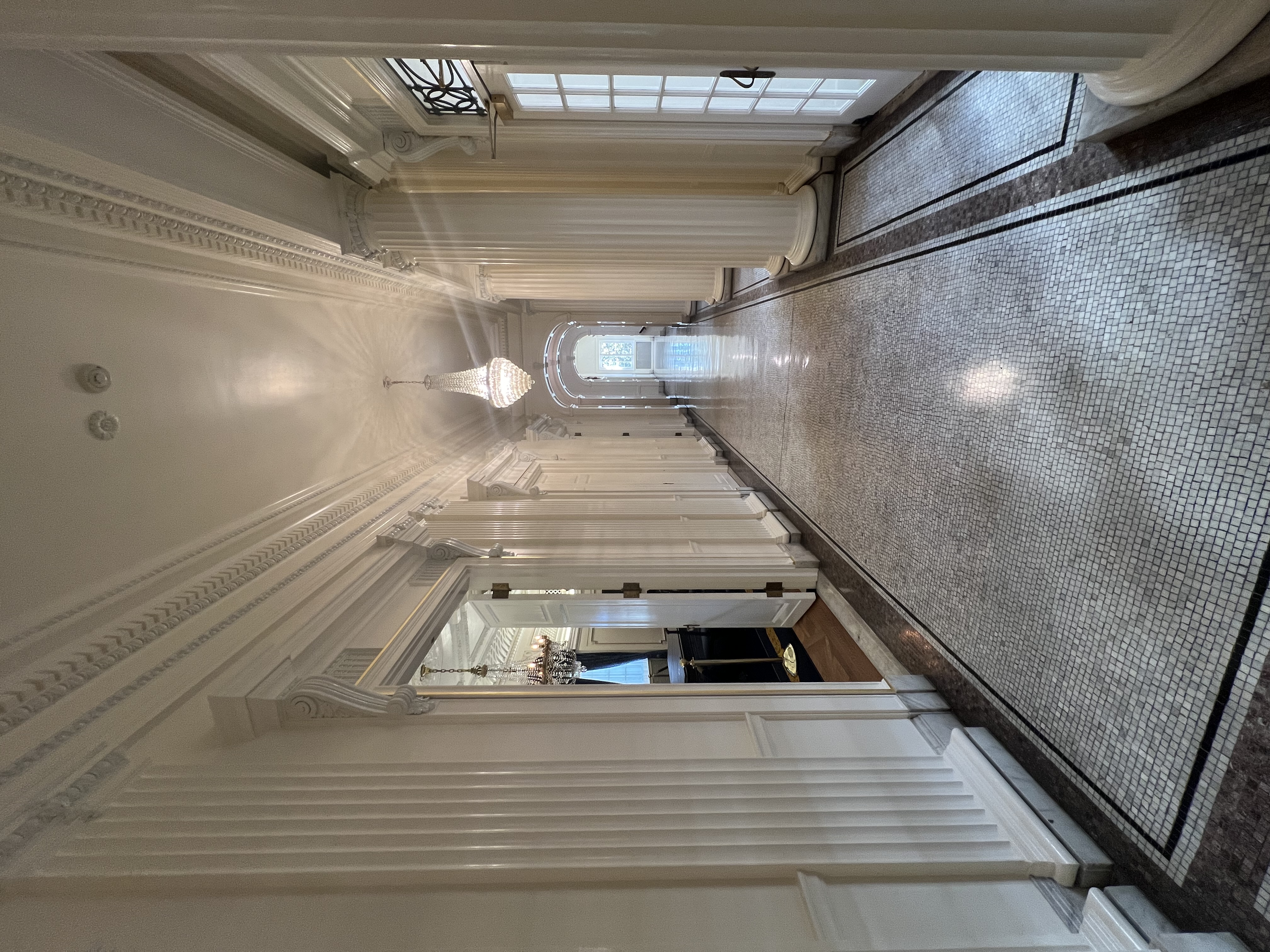
The newly applied 1910 era paint colors have transformed the interior of Memorial Continental Hall. All gone is the faux gilding likely applied in the 1950s, the peeling paint and water damaged plaster which made the space look dingy and dark. The understated simplicity of the paint colors, cream and light gray, helps accentuate the many architectural details throughout MCH.
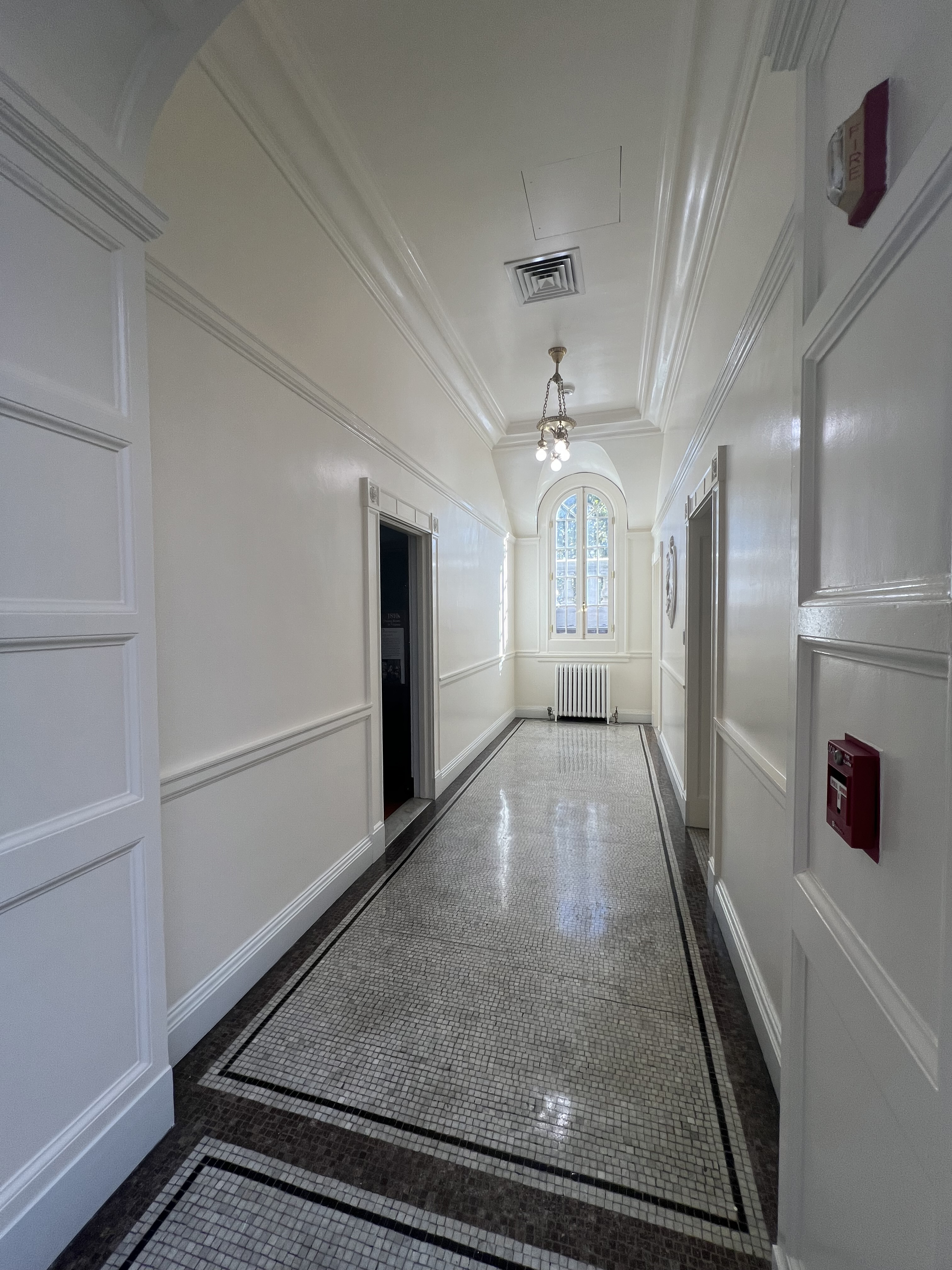
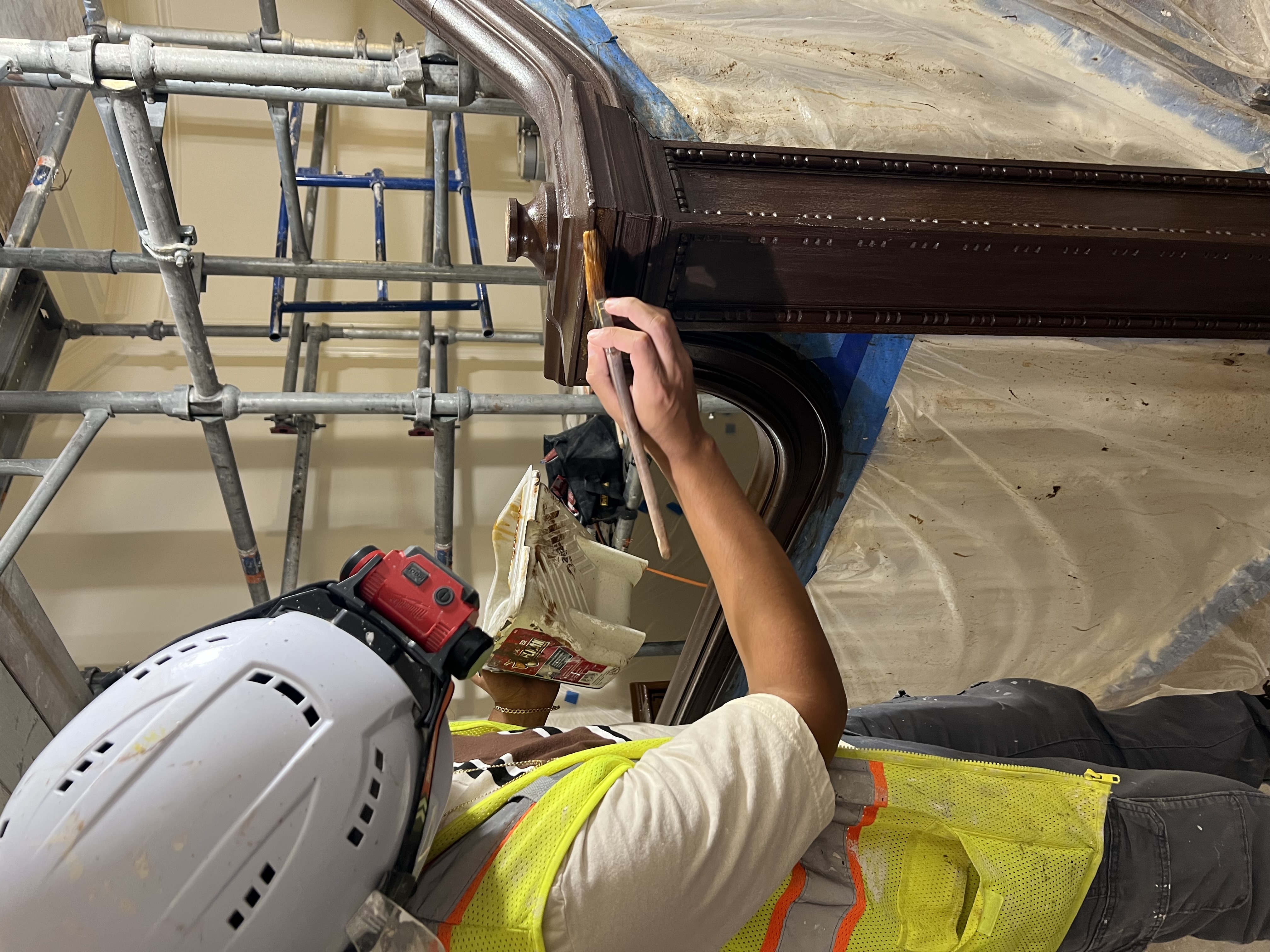
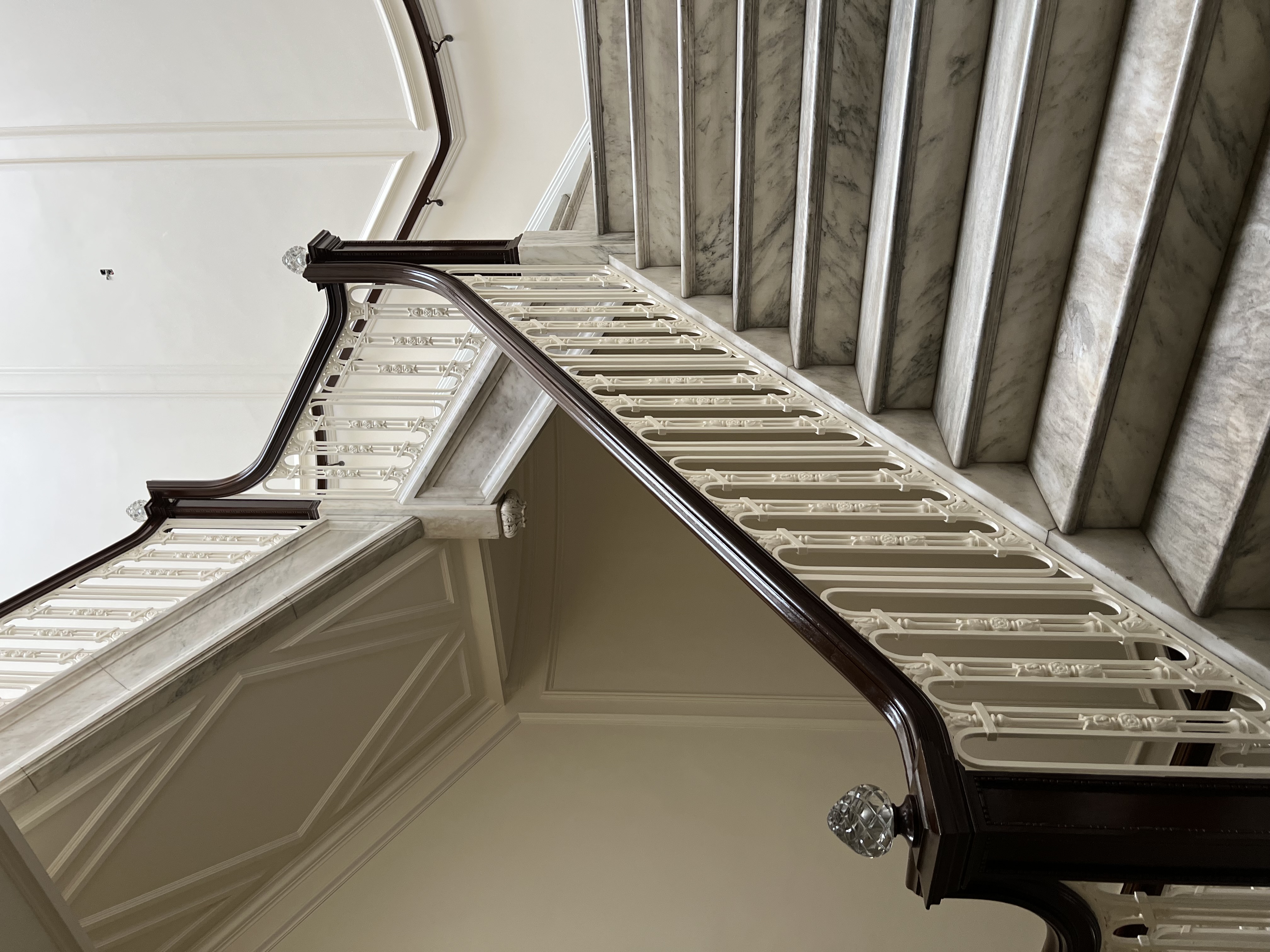
Before the restoration, these details were hard to distinguish because of the heavy application of the faux gold paint which had oxidized to brown over the years. The new reveal is bright and airy with a touch of real gold leaf highlighting specific architectural elements. Research into original documents from the construction of the building held in the NSDAR archives uncovered the original 1910 specifications for the finish to be applied to the staircases’ mahogany railings. Following the removal of layers of old finishes, the craftsmen used the same techniques and materials laid out in 1910 to apply the new finish.

Much still needs to be accomplished to bring Memorial Continential Hall back to its original luster, but we are well on our way. If you would like to see and learn more about the building’s restoration, visit the DAR Museum’s YouTube page.
Photo Credit: Amy Hollis