
 Today's DAR
In addition to celebrating Easter with my family in New York, I had the opportunity to attend two simply remarkable events this past weekend. One involved honoring the life of a Real Daughter, i.e. a DAR member whose father had served in the Revolutionary War, and the second involved a chapter that has been vibrantly fulfilling our National Society’s mission in the City of New York for more than 125 years. Here are select highlights of these two exceptional events.
Honoring a Remarkable Real Daughter – and a Chapter’s 125th Anniversary
Honoring Eunice Russ Ames Davis
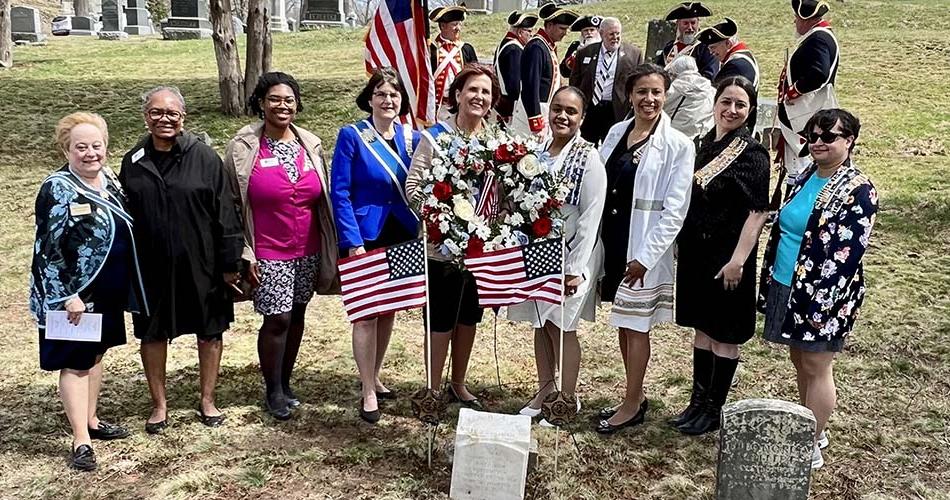
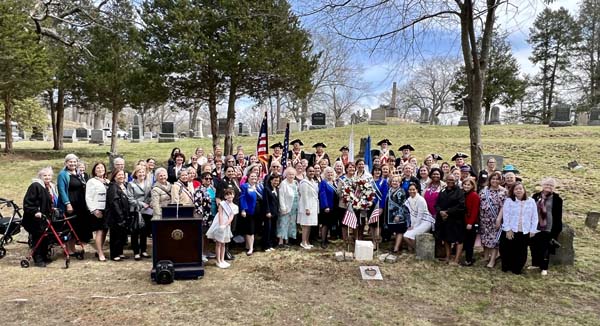
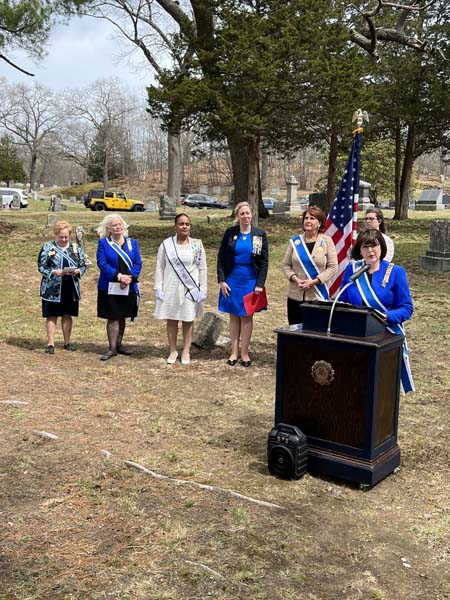
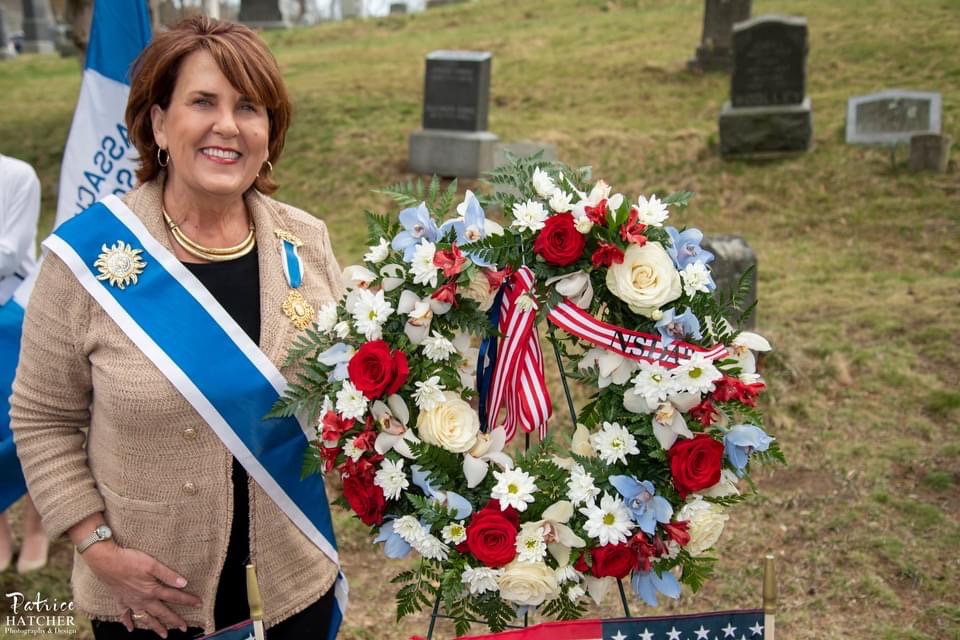
More than 100 Daughters and guests gathered on Saturday at the Brookdale Cemetery in Dedham, Mass., to honor the extraordinary life of Eunice Russ Ames Davis by placing a permanent marker on her final resting place. She was the daughter of Patriot Prince Ames, as well as a noted abolitionist and a member of the Old South DAR Chapter of Boston.
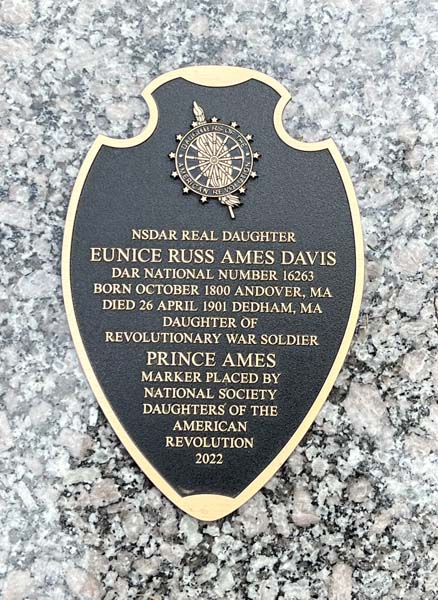
Eunice’s parents were Prince and Eunice Russ Ames. Prince Ames’ mother was Narragansett Native American and African American, his father was white. Eunice Russ Ames was also bi- or tri-racial, with white and Penobscot Native ancestry. Prince Ames served at Lexington, Concord and Bunker Hill. Mrs. Davis was a founding member of the Boston Female Anti-Slavery Society. When she died at 100 years old in 1901, she was the oldest living female abolitionist in the nation.
I have known about Mrs. Davis’s remarkable achievements for about a decade, and I am so pleased that the National Society has now placed a permanent marker to honor both her life and DAR membership. I am deeply grateful to Historian General Laura McCrillis Kessler, who prepared Saturday’s ceremony. Here is the tribute she read about Mrs. Davis:
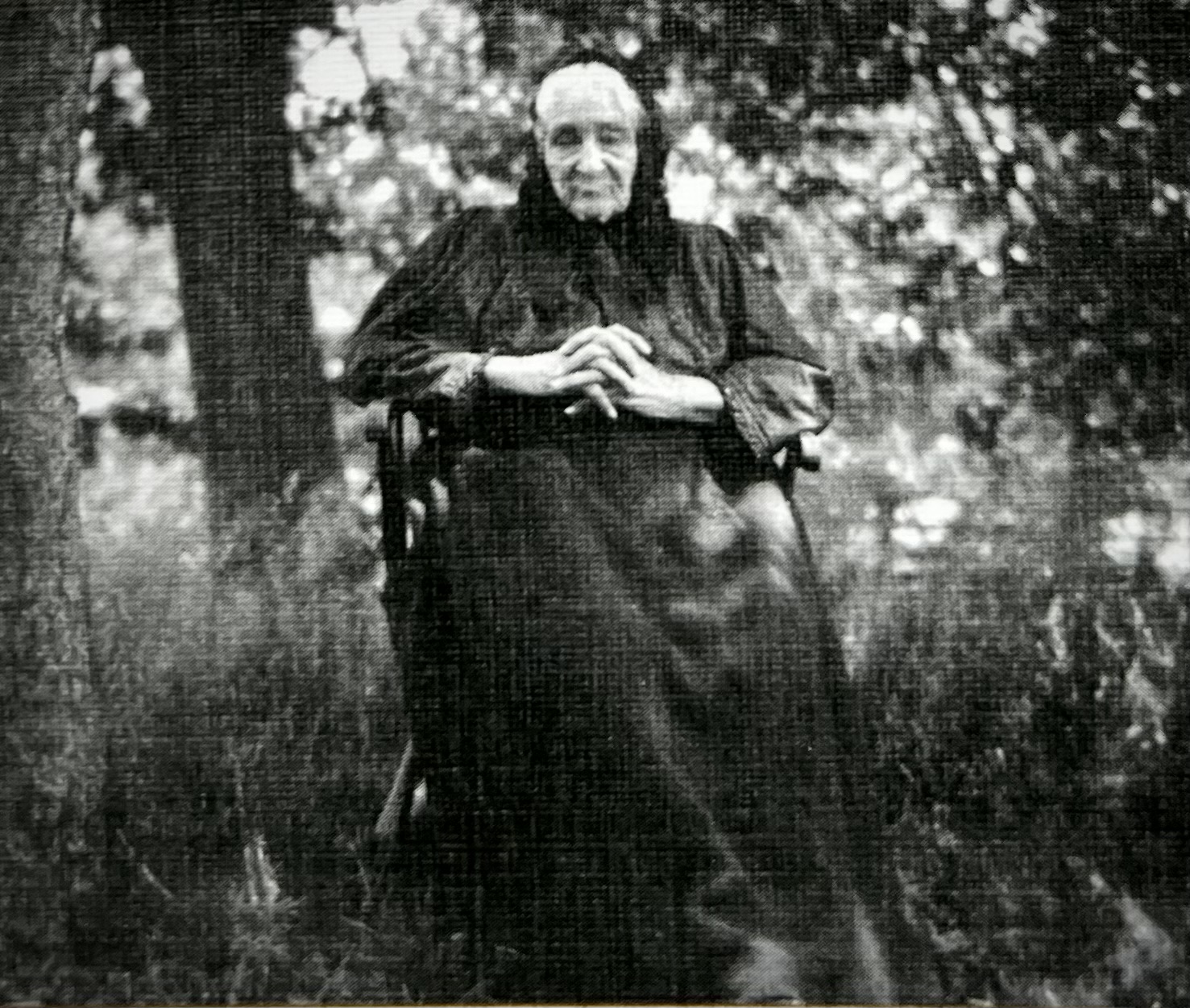
With a passion for religion and the abolitionist movement, Eunice Russ Ames Davis, a woman of color, led an extraordinary life spanning three centuries. She made a difference.
One of ten children of African American and Narragansett Tribe descent, of Prince Ames and Eunice Russ of Andover, Massachusetts, Eunice was born in October 1800. Her father served as a private in the army through much of the Revolutionary War, enlisting for three years in 1777 and later reenlisting until the end of the war in 1783. He served in the 5th, 10th and 15th Massachusetts Regiments under Captains Abbott, Farnum and Emerson.
Eunice married her first husband Robert Amos in 1818 (Boston Daily Globe, October 27, 1897), they had two sons and a daughter. “The family lived in Lowell, MA, during their marriage, but after her husband’s sudden death in 1825, Eunice moved to Boston. Her second husband, John Davis, was an African American Baptist minister. According to the Boston Daily Globe in 1897, Eunice was ‘of a deep religious nature’ throughout her life. She became president of the First Independent Baptist Female Society and was actively involved in her own church as well as other local black churches.”
Gail Coughlin mentioned in her article for the Dedham Historical Society, Davis’ importance in the abolitionist movement, that “Davis always worked and advocated for the well-being of both free and enslaved people of color. Davis was mentioned frequently in the Boston-based abolitionist newspaper, the Liberator, along with her daughter Dorcas Amos Revaleon and her mother Eunice Ames. Davis served on committees concerning the rights of women, equal access to schooling for children of color, fundraising for individuals of extreme poverty, and organizations that helped the abolitionist movement. She signed petitions for the abolishment of slavery and a petition declaring Massachusetts’ ban on mixed-race marriages unconstitutional.”
On December 3,1896, Davis became a member of the Old South Chapter of the Daughters of the America Revolution, Boston. She was one of seven Real Daughters to join this chapter. A “Real Daughter” was “distinguished because she was a DAR member as well as the actual daughter of a soldier or patriot.” The January 1, 1901 Boston Daily Globe mentions that “one of the cherished trips of the members is to her home on her birthdays. She has a gold spoon given to the real daughters of the revolution.”
Davis was not only proud of her father, Prince Ames’ military service in the Revolutionary War, but also of other family members’ service in the War of 1812 and the Civil War.
On April 26, 1901, at the age of 100 years, six months, Eunice Russ Ames Davis died at her home on Washington Street, Dedham, Massachusetts. The April 27, 1901 Boston Evening Transcript noted that “Mrs. Davis had the distinction of being the only surviving member of the Woman’s Anti-Slavery Board of Boston and the oldest female abolitionist in the United States. She was a witness of the mobbing of William Lloyd Garrison, assisted at the memorable reception to Frederick Douglass, and was present at all the notable anti-slavery gatherings in Boston.”
Eunice Russ Ames Davis. An extraordinary life well-lived…a daughter, wife, mother, grandmother, patriot, devout member of her church community, advocate and abolitionist. We pay tribute to and honor her today for her life and contributions to her community and society.”
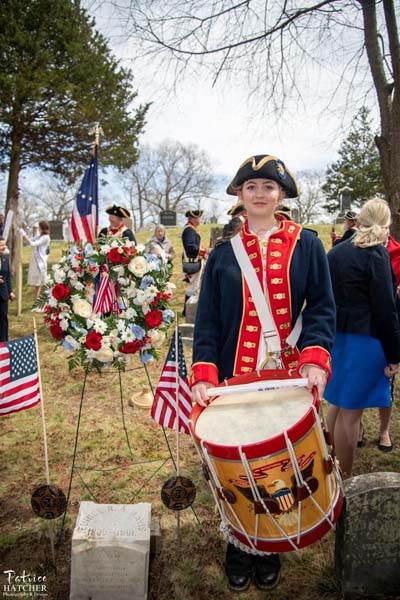
Though the marker and ceremony were sponsored by our National Society, we are most grateful to the Massachusetts Daughters for their stewardship of the entire project. Massachusetts State Regent Paula Renkas, in particular, was the guiding force. And the involvement of the Col. Henry Knox Regiment color guard was made all the more special when we learned that the young (C.A.R. female) drummer was using President General Ann Fleck’s own drum!
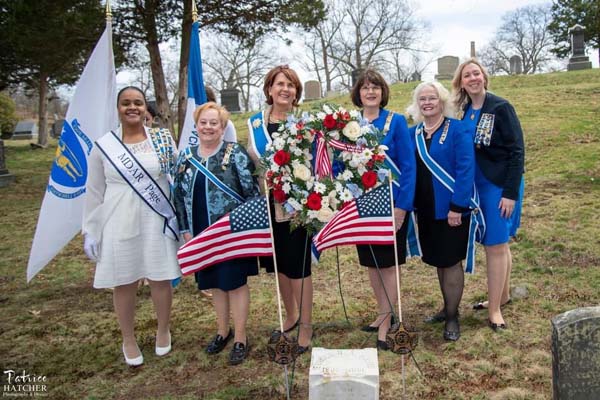
The skies cleared just in time for our ceremony — and I felt Mrs. Davis joined us, as a strong breeze buffeted the service. Following the dedication, the local VFW hosted a marvelous reception — where we had a chance to sing Happy Birthday to Mrs. Renkas, who graciously shared her special day with us — and Mrs. Davis.
Mary Washington Colonial Chapter Marks 125 Years of Service
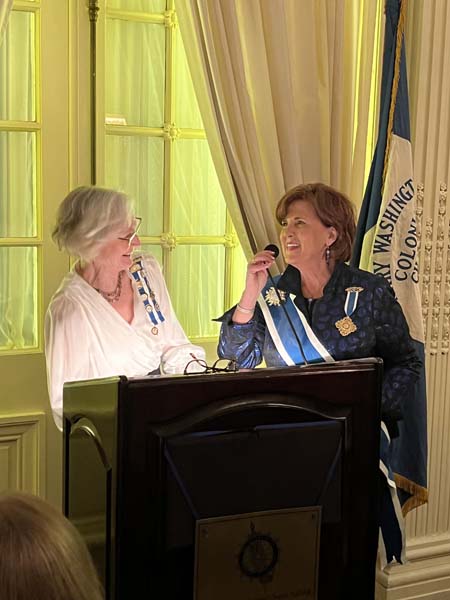
After having been postponed several times due to the pandemic, it was truly joyful for me last week to provide the keynote address for the celebration of the 125th anniversary of the Mary Washington Colonial Chapter, held at the fabulous Lotus Club on the upper east side of Manhattan. Their chapter motto is “Come for the Service, Stay for the Friendships!” That joyous spirit of dedication was on full display. I am grateful to Chapter Regent Debbie Kopinski for the honor of attending and for her vibrant leadership of this active group of dedicated Daughters.
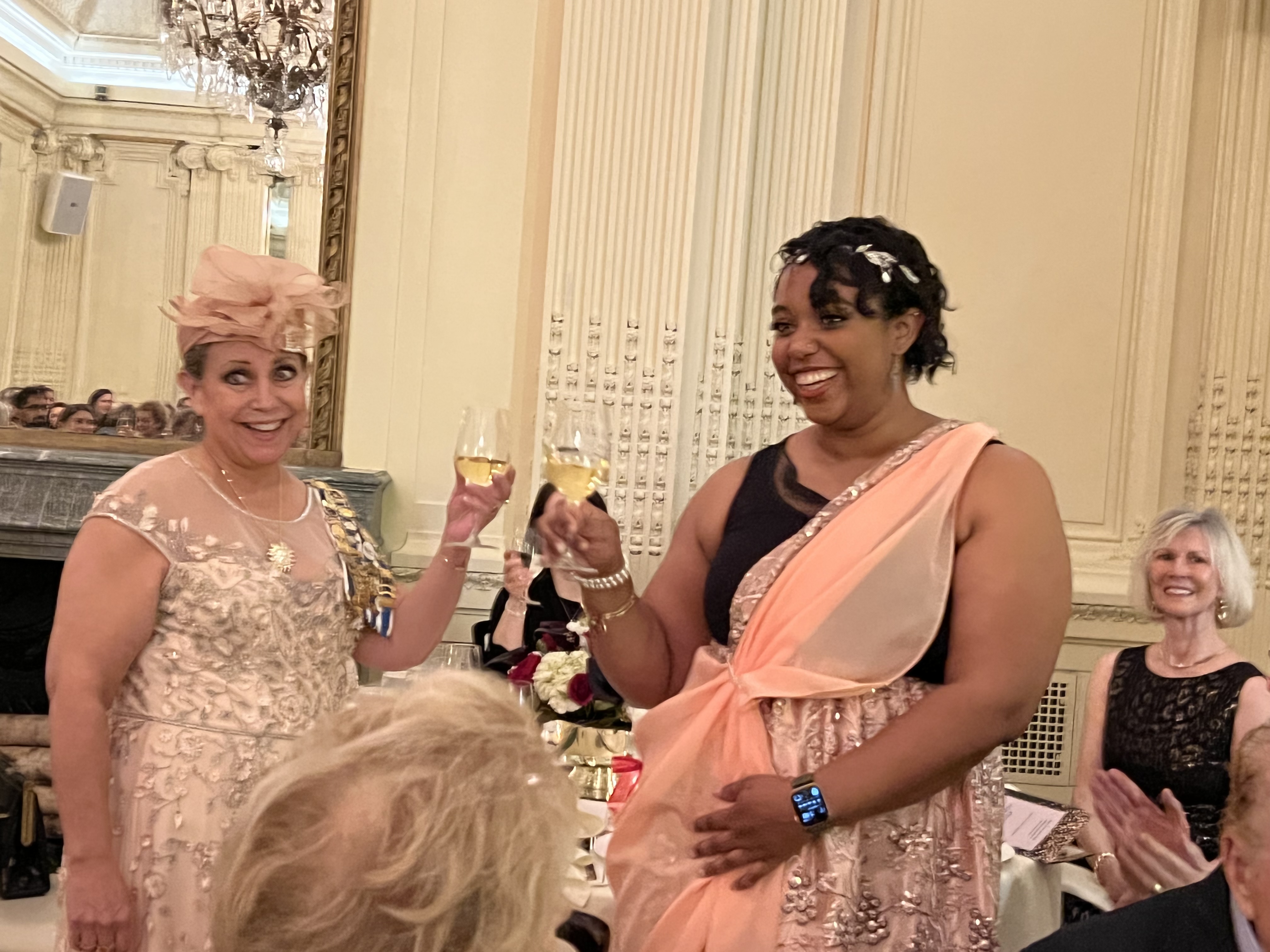
Mary Washington Colonial Chapter was organized on November 28, 1896, when its founders chose to honor Mary Ball Washington, mother of George Washington, as their chapter namesake. (To read more about her life and our National Society’s involvement in completing the monument to her, please read the cover story of the January/February 2022 edition of American Spirit magazine.) Mrs. Washington was deemed by the chapter founders “to be the most sacred and noble character among women in the annals of American colonial and revolutionary history.” Colonial was added to the chapter’s name to acknowledge the debt that the American Revolution owed to the colonial years, when the foundation of the republic was laid and the principles of self-government fostered.
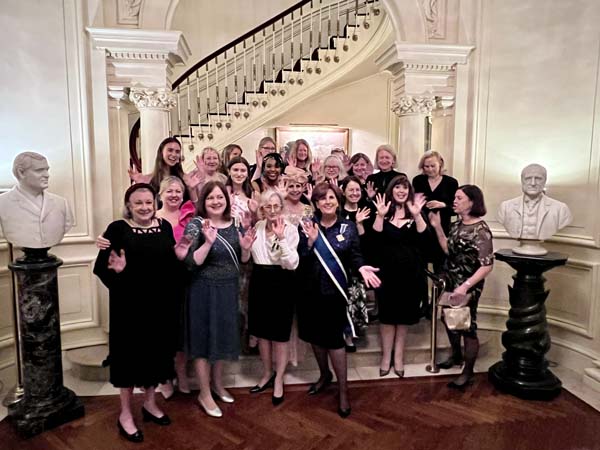
Through the decades, the chapter has amassed an impressive record of marking places of historic significance in New York City, including plaques honoring Nathan Hale (at the site of his hanging as a spy), the first Presidential Mansion in lower Manhattan, Margaret Corbin (America’s first female to receive a military pension) and the Battle of Fort Washington. The chapter has more than 125 members and provides continuing support to veterans and active-duty military personnel, awards JROTC and DAR Good Citizens Medals to NYC-area students and supports patriotic events such as the New York City Flag Day and the Veterans Day parades. They are, indeed, an impressive group of patriotic women.
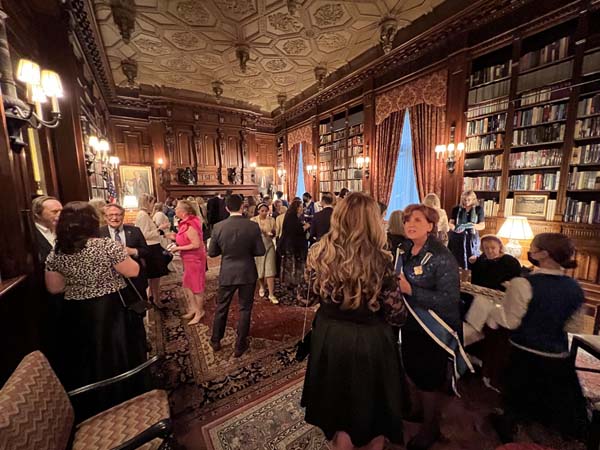
It was a joy to meet many of them during this sold-out event. I am deeply grateful to share that they also surprised me with a very generous gift to my President General’s Project. I feel blessed beyond measure! Congratulations, Mary Washington Colonial Chapter, and best wishes for the next chapter in your illustrious record of service to our National Society and its enduring purpose.
P.S. Lots more photos from these two events on my DAR President General’s Facebook page. Please tag along on my journey representing you by following the page.
