Honoring a Hero of the American Revolution – On Two Continents!

Denise Doring VanBuren, President General

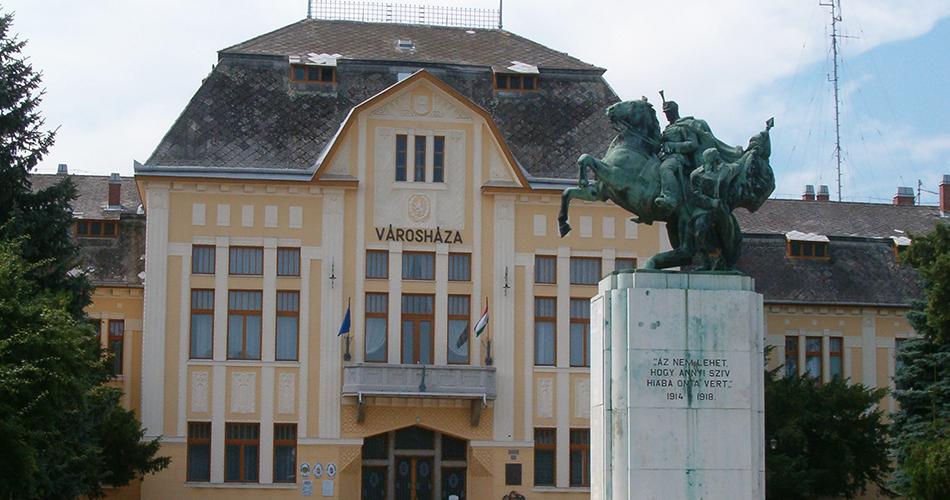
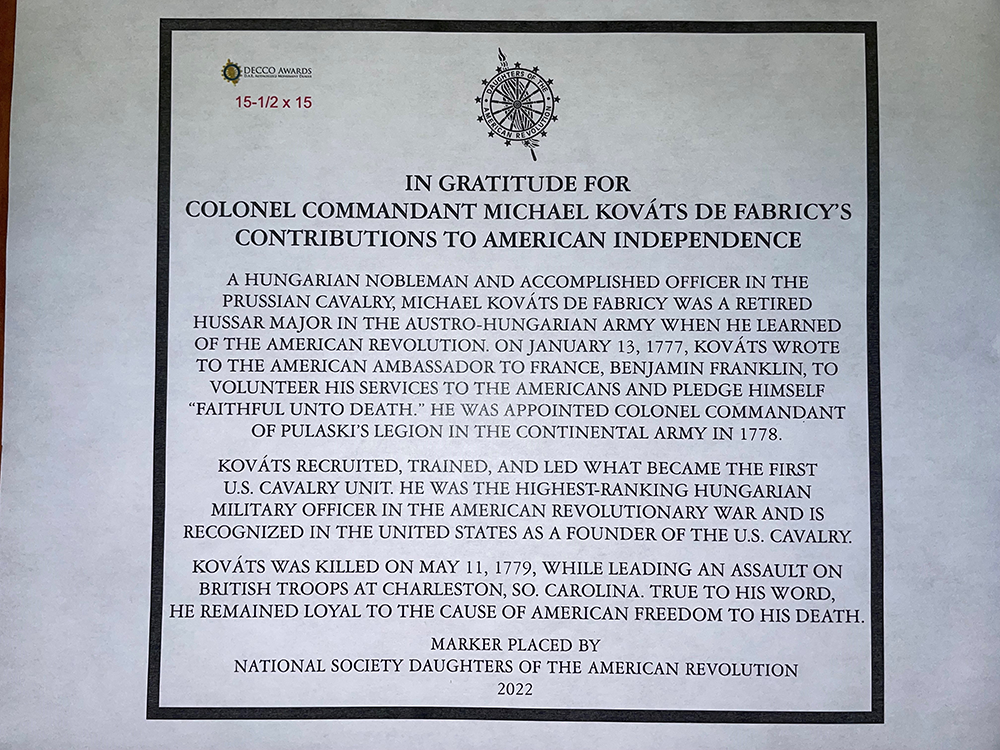
He lies buried in an unknown location in an unmarked grave somewhere in Charleston, South Carolina, near where he fell in battle. He was born 5,048 miles away in a small town in Hungary. Now, this hero of the American Revolution, considered the Father of the U.S. Cavalry, will be honored with companion plaques erected by our National Society in both locations in order to commemorate his noble sacrifice on behalf of our independence.

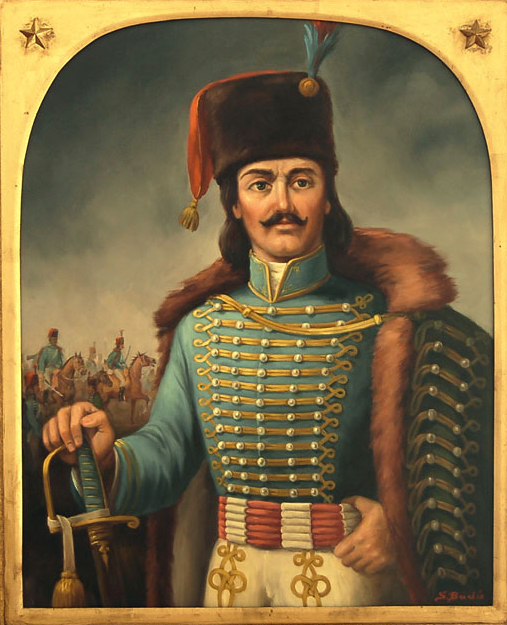
Michael Kovats de Fabricy was born in Karcag in 1724. A nobleman, he became an officer in the Hungarian cavalry under Habsburg Sovereign Maria Theresa. He later became captain in the Prussian Cavalry, serving under Frederick the Great and earning the highest distinction in the Prussian Army; next, he fought alongside freedom fighters in Poland. In 1777, after learning about the American Revolution, he offered his sword to the American ambassador in France, Benjamin Franklin.

In a letter that has since become famous, he wrote in Latin (excerpted here) :

“Most Illustrious Sir:

            Golden freedom cannot be purchased with yellow gold.

            I, who have the honor to present this letter to your Excellency, am also following the call of the Fathers of the Land, as the pioneers of freedom always did. I am a free man and a Hungarian. As to my military status I was trained in the Royal Prussian Army and raised from the lowest rank to the dignity of a Captain of the Hussars, not so much by luck and the mercy of chance than by most diligent self-discipline and the virtue of my arms. The dangers and the bloodshed of a great many campaigns taught me how to mold a soldier, and, when made, how to arm him and let him defend the dearest of the lands with his best ability under any conditions and developments of the war.

            I now am here of my own free will, having taken all the horrible hardships and bothers of this journey, and I am willing to sacrifice myself wholly and faithfully as it is expected of an honest soldier facing the hazards and great dangers of the war, to the detriment of Joseph (note: i.e. Maria Theresa’s son) and as well for the freedom of your great Congress. … I beg your Excellency, to grant me a passport and a letter of recommendation to the most benevolent Congress. I am expecting companions who have not yet reached here. Your Excellency would be promoting the common cause by giving … authorization to expedite their passage to the Colonies once they have arrived here.

            At last, awaiting your gracious answer, I have no wish greater than to leave forthwith, to be where I am needed most, to serve and die in everlasting obedience to Your Excellency and the Congress.

            Most faithful unto death,

                                    Bordeaux, January 13th, 1777. Michael Kovats de Fabricy

P.S.: As yet I am unable to write fluently in French or English and had only the choice of writing either in German or Latin; for this I apologize to your Excellency.”


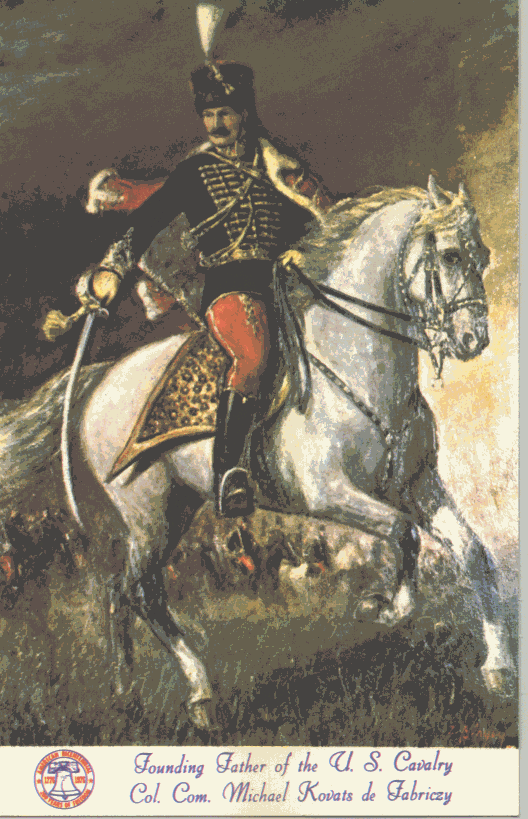
Upon his arrival in America, Kováts joined Polish Count Casimir Pulaski, who was then brigadier general and commander-in-chief of Washington's poorly trained cavalry. On February 4, 1778, Pulaski proposed a plan for the formation of a training division of hussars. In a letter to Washington, Pulaski wrote: "There is an officer now in this Country whose name is Kovach. I know him to have served with reputation in the Prussian service and assure Your Excellency that he is in every way equal to his undertaking."

Pulaski's Legion was commissioned by the Continental Congress on March 28, 1778, and Kovats was named colonel commandant of the legion on April 18, 1778. The recruiting of cavalrymen began almost immediately, and by October 1778, the legion consisted of 330 officers and men. Kovats trained these men in the long, proud tradition of Hungarian hussars.

In New Jersey in October, the legion battled the British at Osborne Island on the 10th and Egg Harbor on the 14th. With winter's approach, they were ordered to Cole's Fort, where they spent the first part of the winter in training. On February 2, 1779, the army marched to South Carolina to join the forces of General Benjamin Lincoln. During the long march, smallpox took its toll: only 150 soldiers arrived in besieged Charleston—more than half of the legion had died of disease along the way.

The situation was critical. Pulaski's legion arrived in early May, and unsuccessfully attacked the British troops on May 11. Colonel Kováts lost his life in combat and was buried where he fell. His British opponent in the battle, Brigade Major Skelly, paid Pulaski’s Legion the highest of compliments during the requiem, describing it as, "the best cavalry the rebels ever had."

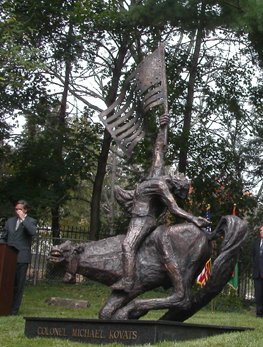
Our National Society has been given approval to place a permanent marker in Kovats’ hometown in Hungary on February 22; a small delegation led by National Chair of DAR Tour and Travel Virginia Lingelbach will participate in formal ceremonies to dedicate the bronze memorial. Then on May 10, an identical companion plaque will be dedicated at the Old Exchange in Charleston to memorialize Kovats’ line-of-duty death. Finally, we will participate with the Hungarian Ambassador to the United States Szabolcs Takács in a wreath-laying ceremony at the Hungarian Embassy in Washington, D.C. at the equestrian statue of Michael Kovats on May 11, the anniversary of this Hungarian Patriot’s death.

Due to travel demands, I will not be blogging during this trip. However, it is my intention to post photographs at least once per day. Please follow my DAR President General Facebook page to join me on this journey to honor a Hungarian nobleman who was “most faithful until death” in support of our nation’s independence. Thank you for the privilege of serving as your President General and enabling me to complete important work such as this to honor the men and women who achieved American independence!


send-a-commentSend Us a comment