
 Today's DAR
In honor of National Historic Preservation Month this May, we are highlighting one of the DAR mission pillars that serves as a common thread throughout so many of our initiatives: historic preservation. At its core, historic preservation is about commemorating the places, stories, and landmarks that connect us to our shared American heritage. For the DAR, preservation is not limited to a single month of recognition — it is woven into everything we do. From restoring historic sites and monuments to safeguarding genealogical records and archival treasures, DAR members across the country work year-round to ensure the stories of our Founding generation are preserved for future generations.
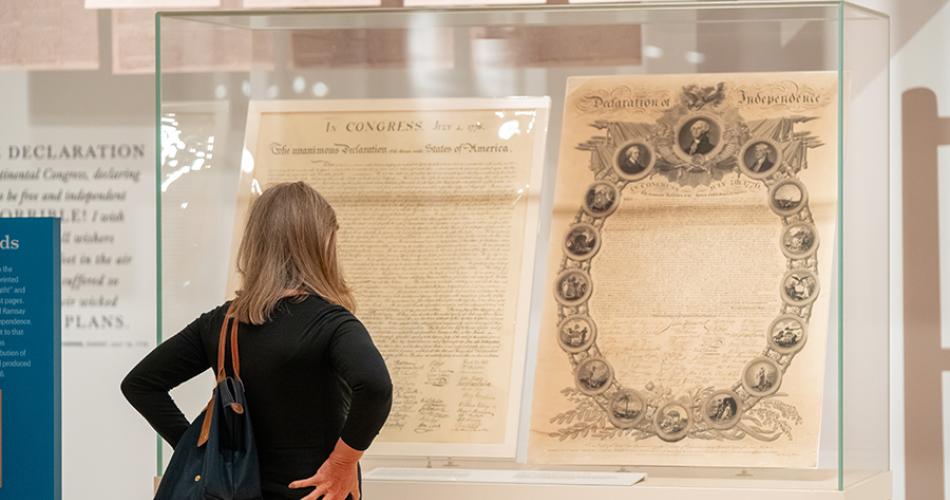
Preserving a Piece of History
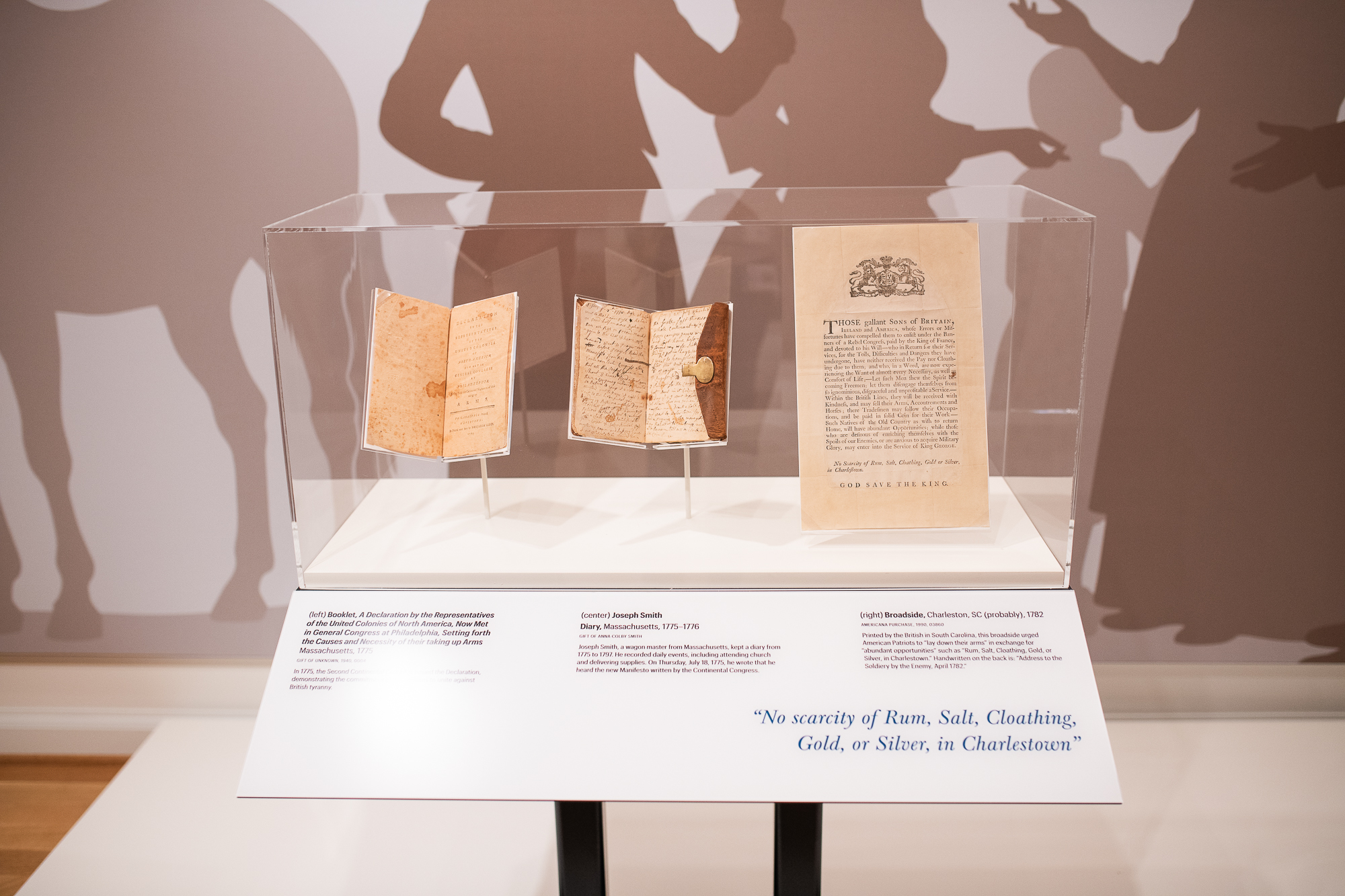
We are especially excited to spotlight a preservation project featured in the DAR Museum's latest exhibition, Revolution in Their Words — an America 250! exhibition that brings the founding era to life through the firsthand accounts. Drawing on letters, diaries, pamphlets, and broadsides, the exhibition captures a wide range of voices, from prominent figures like John Hancock to soldiers, women, farmers, and enslaved individuals. As the country reflects on 250 years of independence, Revolution in Their Words is a chance to experience the Revolution not through the lens of history books, but through the words of the people who lived it.
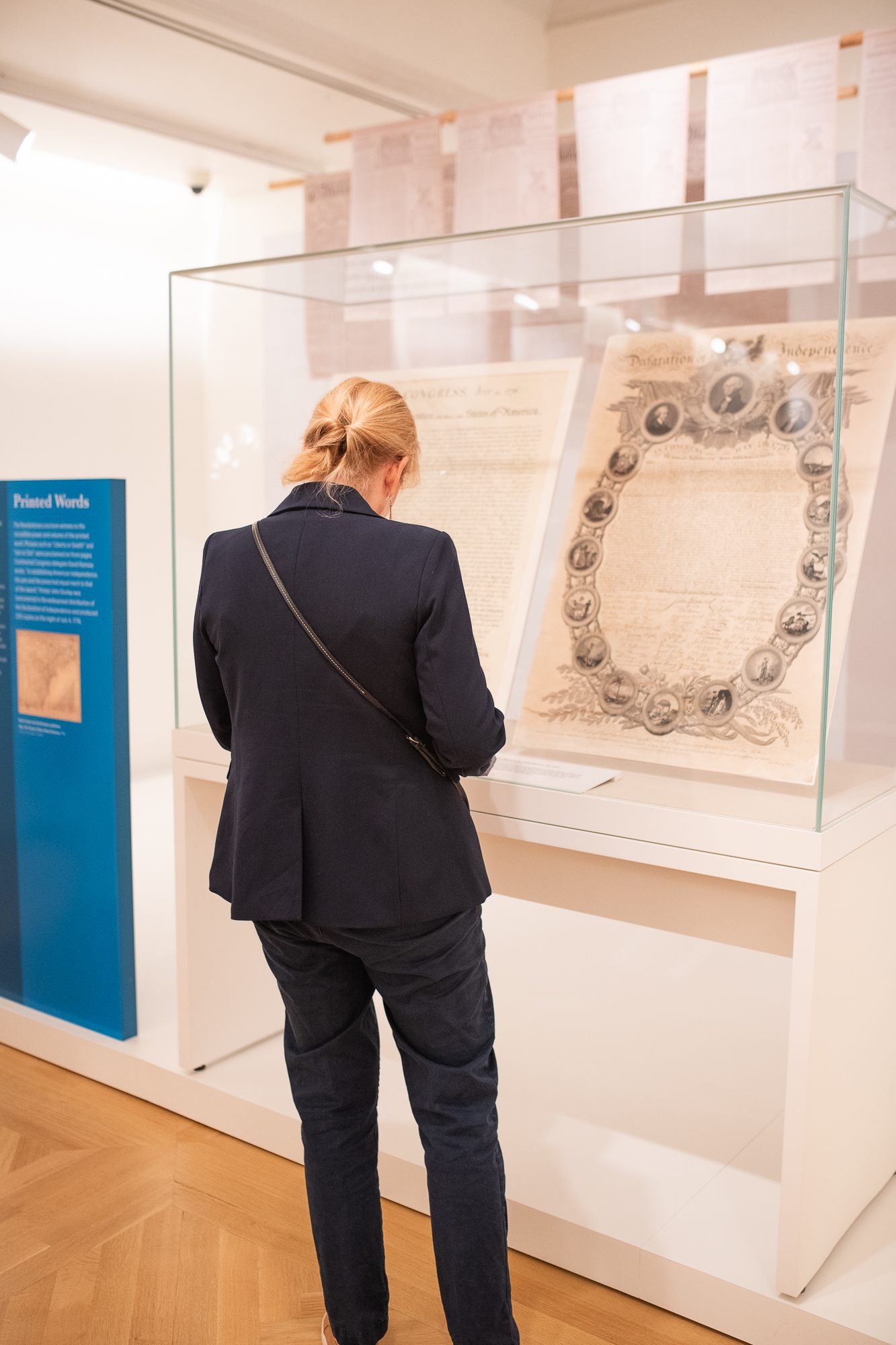
Among the standout objects in the exhibition is the DAR's original 1819 Binns engraving of the Declaration of Independence. In the years following the War of 1812, a wave of nationalism renewed public interest in the founding documents, and several ceremonial copies of the Declaration were produced. Irish-born Philadelphia publisher John Binns set out to create the most ambitious of them all. After years of assembling artists and engravers, soliciting input from Jefferson and John Adams, and corresponding with the State Department for accurate impressions of the U.S. and state coats of arms, the finished product was a striking 26" x 36" engraving surrounded by portraits of Washington, Jefferson, and Hancock, the seals of the original 13 states, and a certification from Secretary of State John Quincy Adams confirming the signatures were exact imitations of the originals. Only an estimated 100 copies are known to exist today.
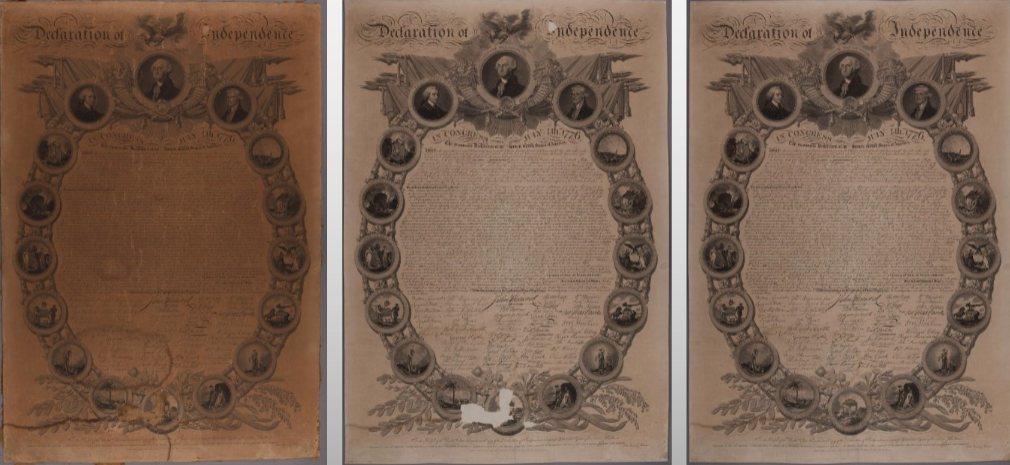
The DAR's copy was donated to the Americana Collection by Rosalind Barton in 2016 and is one of the highlights of Revolution in Their Words. Its conservation was generously sponsored by the DAR's America 250! Committee, and the DAR Museum brought in Morgan Browning — a Washington, DC-based paper conservator with Washington Conservation Studio — to stabilize and restore it for display. Morgan joined us in April as the featured speaker for the Museum's Tuesday Talk series to share the story of his work firsthand.
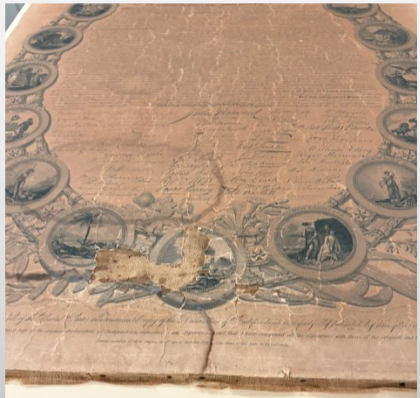
The Binns Declaration was, by his own account, "one of the most technically challenging and hair-raising that I've encountered in almost 30 years of working in conservation." The process began with separating the engraving from its mounting board, cleaning both sides, and humidifying it before immersion in purified water. Stubborn adhesive deposits required an enzyme treatment, and remaining discoloration was tackled through light bleaching and additional cleaning solutions before the document was rinsed, deacidified, dried, and flattened.
From there, Morgan turned to the physical repairs. Cracks and losses were filled using paper pulp and Japanese tissue paper, and missing sections of the engraved design were reconstructed using scans from a pristine copy, printed onto handmade paper toned to match the original. The before-and-after images he shared during his talk told the story better than words could. If you want to hear the full process directly from Morgan, please visit @DARMuseumDC's on YouTube to view the Tuesday Talk recording.
The Binns Declaration is just one of many remarkable objects on view in Revolution in Their Words, which is open through March 27, 2027, and free to the public. If you haven't had a chance to visit the DAR Museum, we hope this story inspires you to come see it for yourself.
Photo credits for the conservation process photos: Morgan Browning
