
 Today's DAR
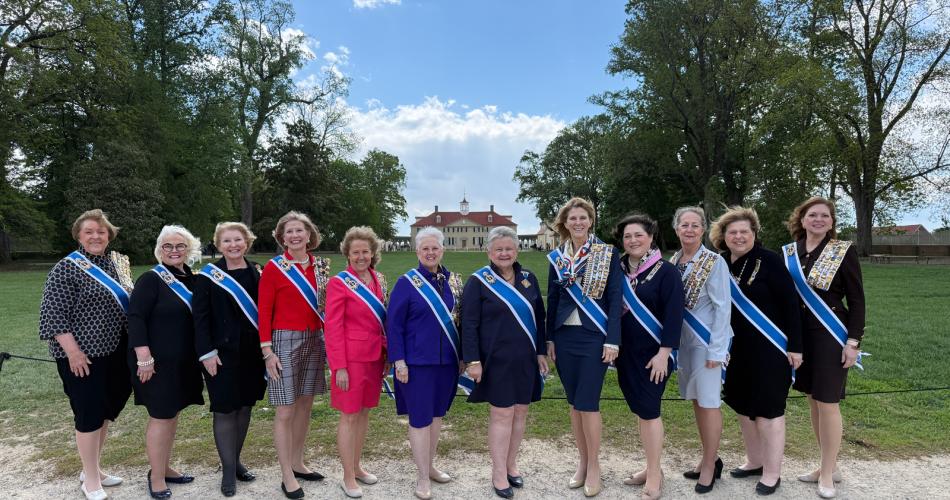
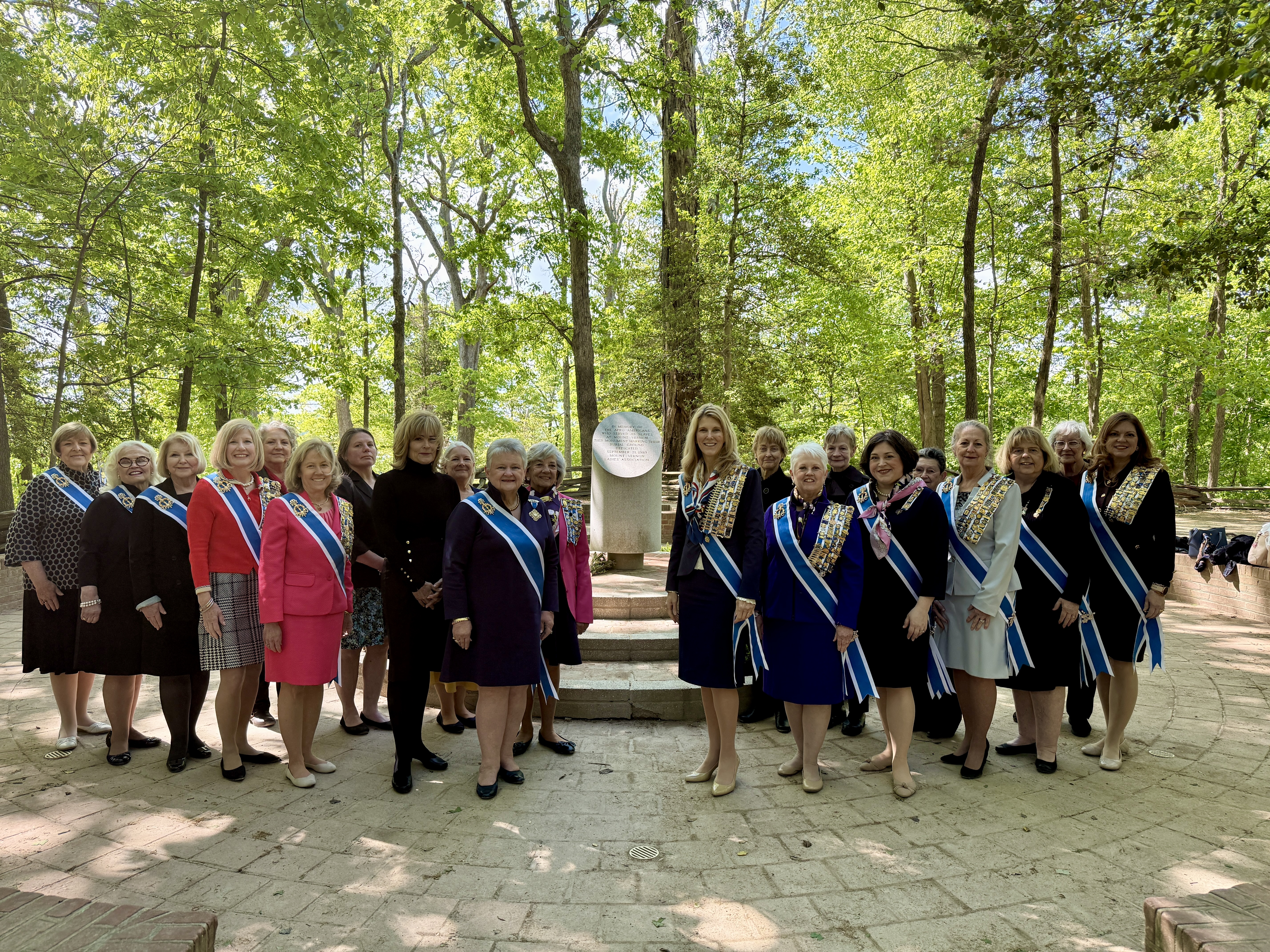
On April 20, 2026 the President General and Executive Committee made the National Society’s annual pilgrimage to Mount Vernon to honor George and Martha Washington by laying a wreath at their tomb. They also continued the tradition begun during the Wright Administration by placing a wreath at The Slave Memorial and African American Burial Ground. Upon their arrival the group was greeted by Mount Vernon Chapter Regent Ann Badway and members of the chapter, who joined them at the gravesites. Following the conclusion of the ceremonies, the executives were treated to a private tour of the newly-renovated mansion, which was organized by Jo Porter of the Life Guard Society for Historic Mount Vernon and Advisor to the President General. The tour was followed by a buffet lunch in the Inn located on the estate after which the ladies boarded the bus to return to headquarters.
Mount Vernon Wreath Layings
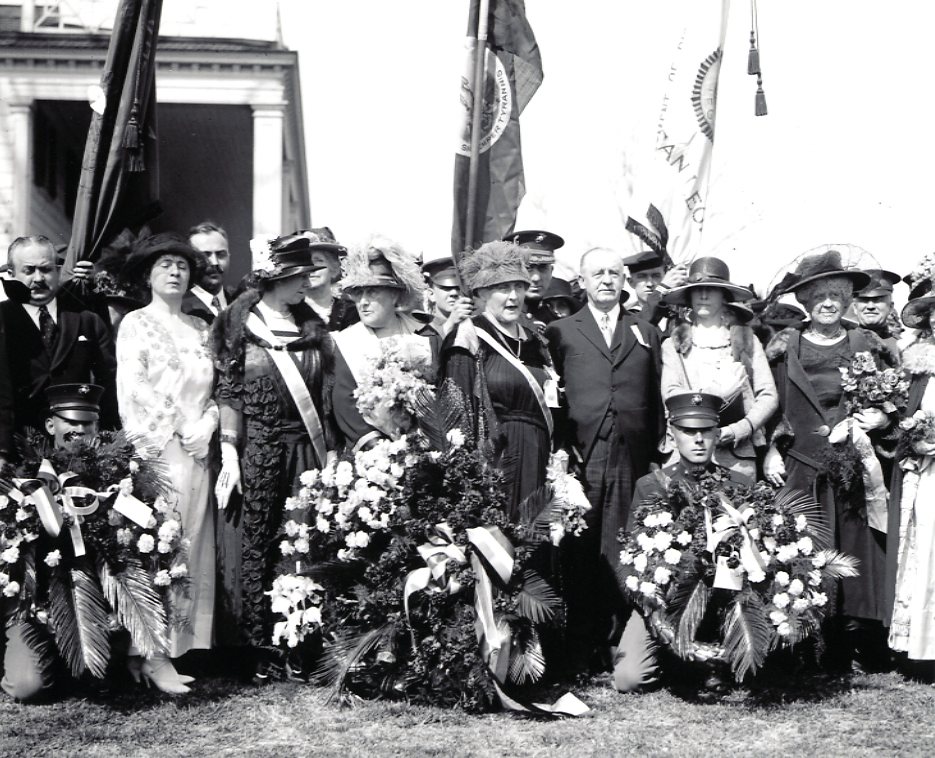
The National Society has a longstanding tradition of laying wreaths at Mount Vernon. According to DAR Archivist Joy O’Donnell, Daughters at the 22nd Continental Congress in 1913 proposed that the National Society begin laying wreaths annually on the tomb of George and Martha Washington during Congress, and that the Committee on Preservation of Historic Spots did so the following year in 1914. O’Donnell added that Daughters had made visits to their tomb on earlier occasions but noted the first documentation of a pilgrimage to Mount Vernon in the official Smithsonian Reports was not until the 27th Continental Congress in April 1918 (21st Report, page 73). (Photo: NSDAR Archives - 1923 Mount Vernon Wreath Laying)
It was humbling to see how many passersby paused to gather around the perimeter during the two wreath-laying ceremonies. The words spoken during the ceremonies served to honor and perpetuate the memory of those who helped establish our nation and secure its freedom.
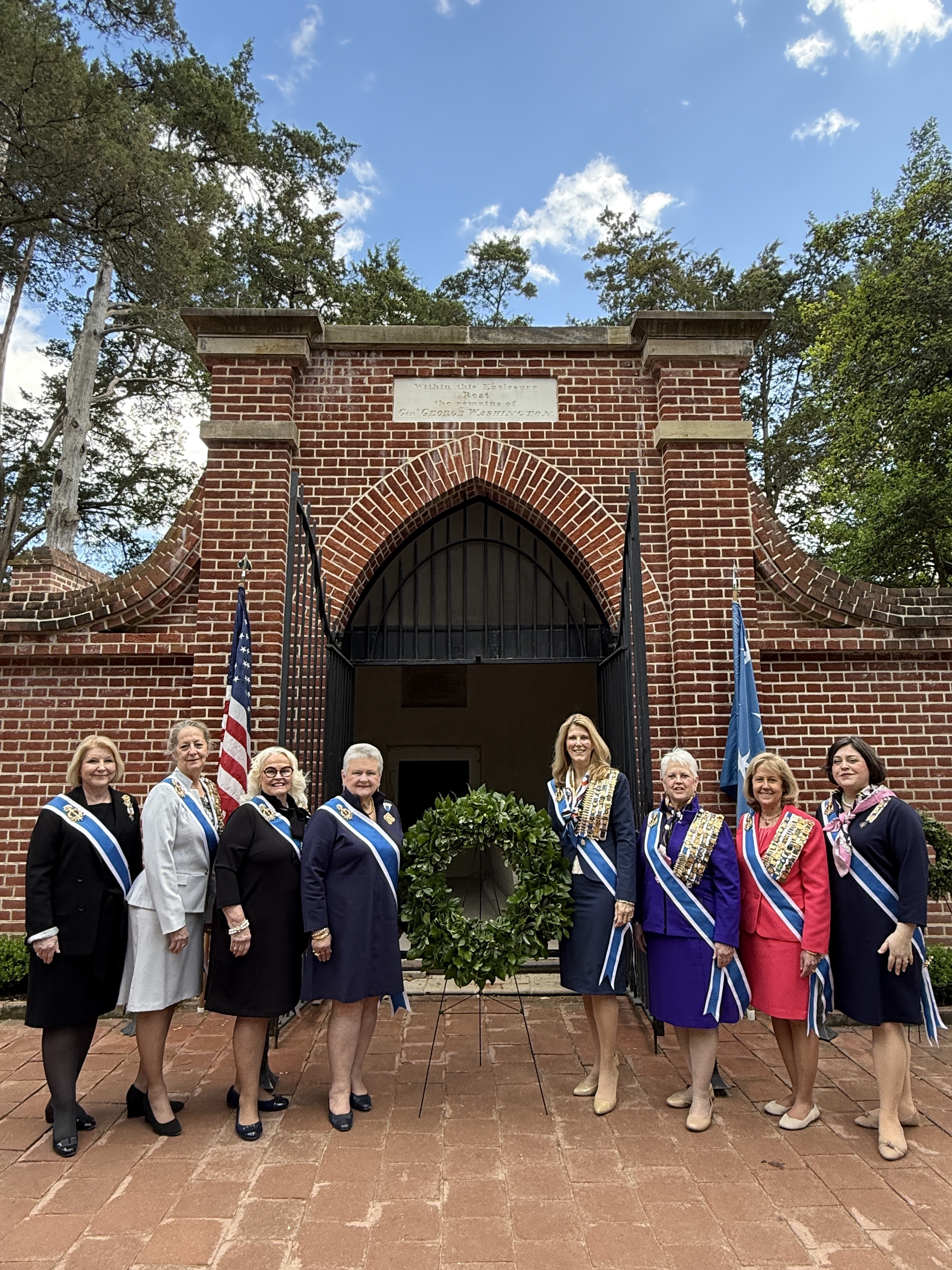
George Washington, Commander in Chief of the Continental Army, led a fledgling nation through the crucible of the American Revolution. Against the greatest military power of his age, his steadfast leadership secured American independence and gave birth to a new republic. In 1789, he was unanimously elected the first President of the United States, establishing enduring precedents: the peaceful transfer of power, the formation of a Cabinet, and the principle of civilian authority over the military. By voluntarily relinquishing power after two terms, he affirmed that the presidency was a public trust. Devoted to honor, reputation, restraint, and civic virtue, Washington believed that true leadership rested not in ambition or force, but in integrity and self-sacrifice. His example reminds us that the strength of a nation depends upon the character of those who serve it.
Martha Dandridge Custis Washington was the nation's first "First Lady” and made vital contributions to the cause of liberty. During the Revolutionary War, she spent many winters with the army, including the encampment at Valley Forge, offering encouragement and support to soldiers and officers alike. At Mount Vernon, she managed extensive domestic and agricultural affairs, overseeing the household and helping administer the Washington estates. She used her social position to support charitable causes, hosting fundraising events, receptions and dinners that brought together leaders of the new nation, fostering unity and diplomacy. She sustained an extensive family network that included numerous extended relatives and, for nearly forty years, stood beside George Washington as his trusted confidante and steadfast partner in both private life and public duty.
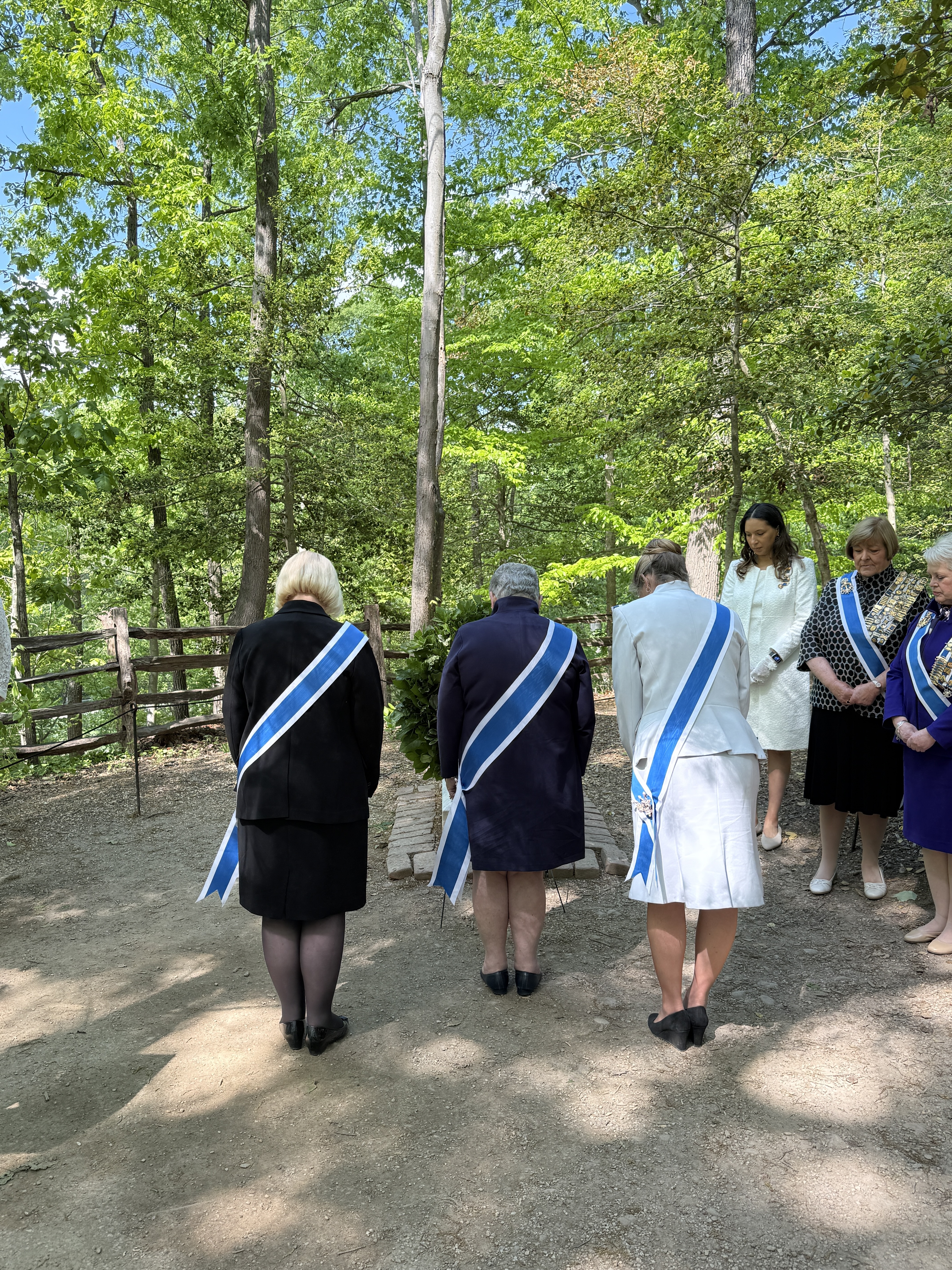
At the time of George Washington's death in 1799, Mount Vernon was home to more than 300 enslaved men, women, and children. They labored on the estate along with a few members of the free African American community. A separate burial ground was established as a final resting place for these enslaved and free African Americans. The graves date from approximately 1760 to 1860 and were either left unmarked or their markers have not survived. In 1929 the Mount Vernon Ladies' Association (MVLA) placed a marble marker at the site to acknowledge its significance. In 1983 the MVLA partnered with Black Women for Action to dedicate a new memorial designed by students of architecture at Howard University. Since 2014, Mount Vernon has undertaken a multi-year archaeological project to survey the cemetery, with 87 graves identified to date.
It was indeed a privilege for your executive officers to ensure the individuals interred at Mount Vernon were honored with the utmost respect. This role also placed them in a position to engage with the public in ways they had not imagined. Throughout the day the executives were stopped by groups of adults and schoolchildren who were curious about their DAR insignia and sashes. The executives seized the opportunity to share DAR’s mission and to speak with interested listeners about DAR scholarships and other initiatives. It was one of the many unexpected blessings of the visit.
Grateful appreciation is extended to the President General Ginnie Sebastian Storage, National Chair of Tours and Events Rebecca Grawl, National Chair of Pages Rebecca Hough, and dedicated pages who participate in these events.
