
 Today's DAR
The 250th Anniversary of the Battle of Great Bridge was celebrated on December 5-6. It was the 125th anniversary of the Great Bridge Chapter's commemoration of their historic namesake and their 72nd wreath-laying ceremony held around the Battle of Great Bridge obelisk in the Great Bridge Battlefield and Waterways Historical Park. The obelisk was erected as part of Honorary Virginia State Regent, Mary Jane Irwin Davis’ state regent project. Mary Jane was a past Vice President General, and past chapter regent. For the last fourteen years, DAR has partnered with SAR to host the event. Elizabeth Vittone, Great Bridge Chapter Regent, and Donald Ferguson, Great Bridge SAR Chapter President, served as the hosts of the ceremony, which included 65 wreaths from various DAR, SAR, C.A.R. chapters and societies as well as several other lineage organizations. Over 300 people attended including DAR President General, Ginnie Sebastian Storage, SAR President General Michael J. Elston, both Virginians, as well as the Virginia State Regent, Kathleen Mayer Rugh, VASSAR State President, Dr. Michael Weyler, and Virginia State President, V.S.C.A.R., Meredith Hopkins, who all brought greetings.
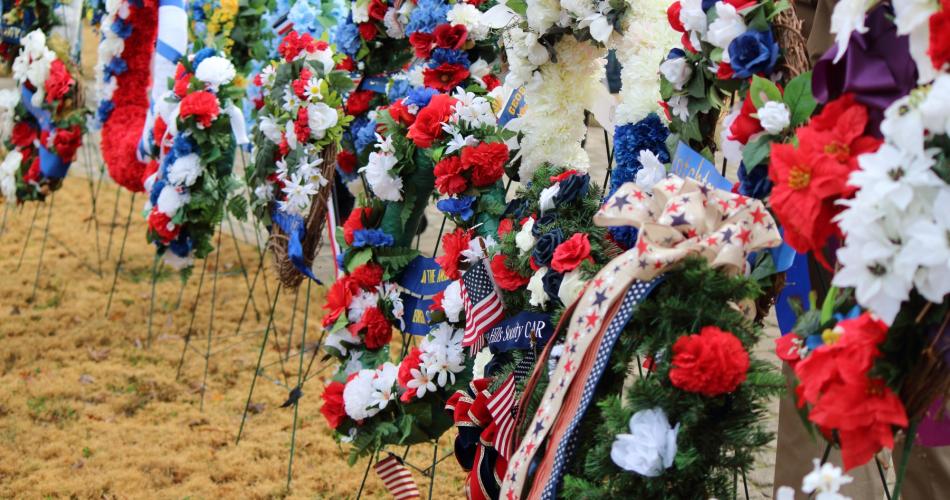
Battle of Great Bridge Commemoration
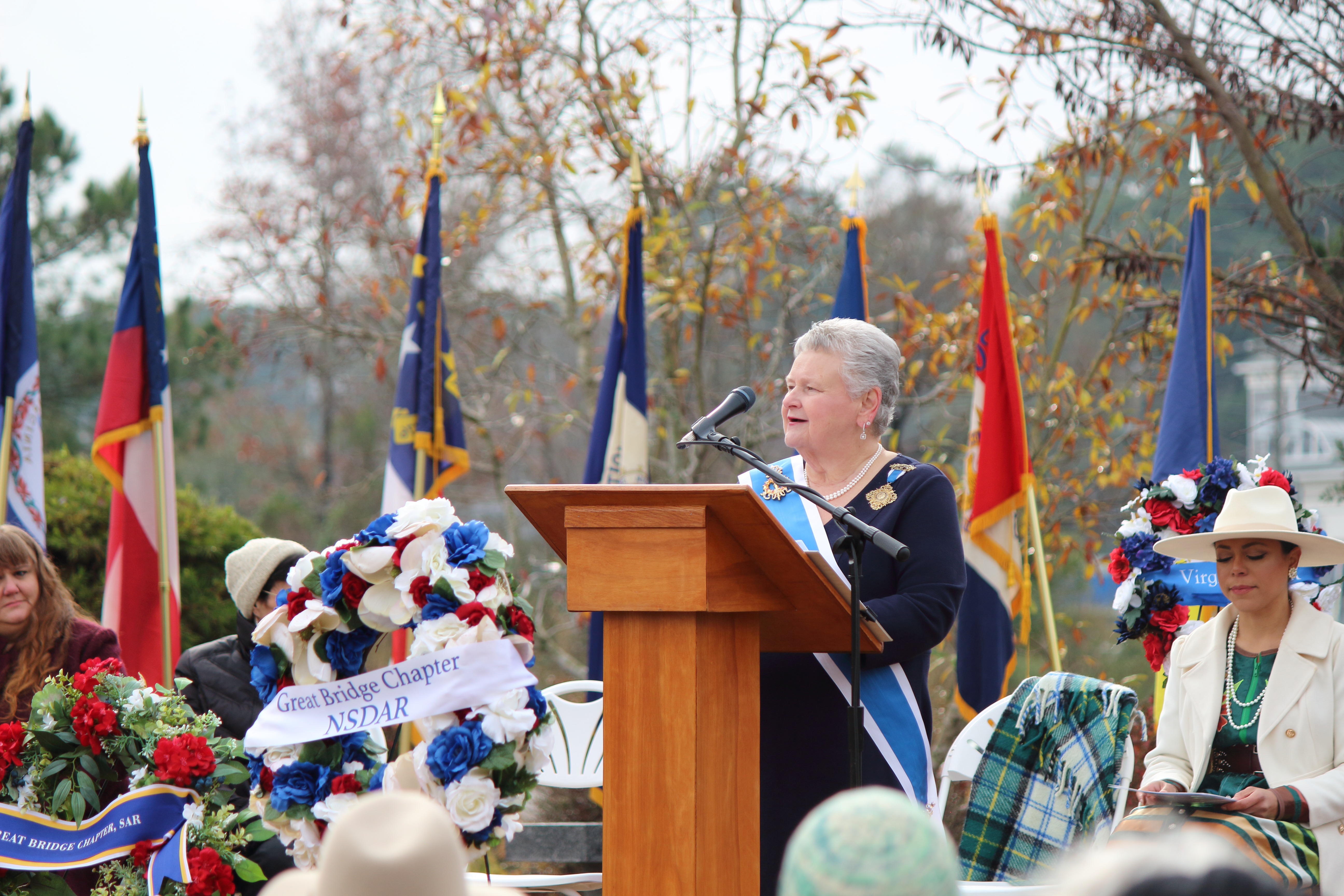
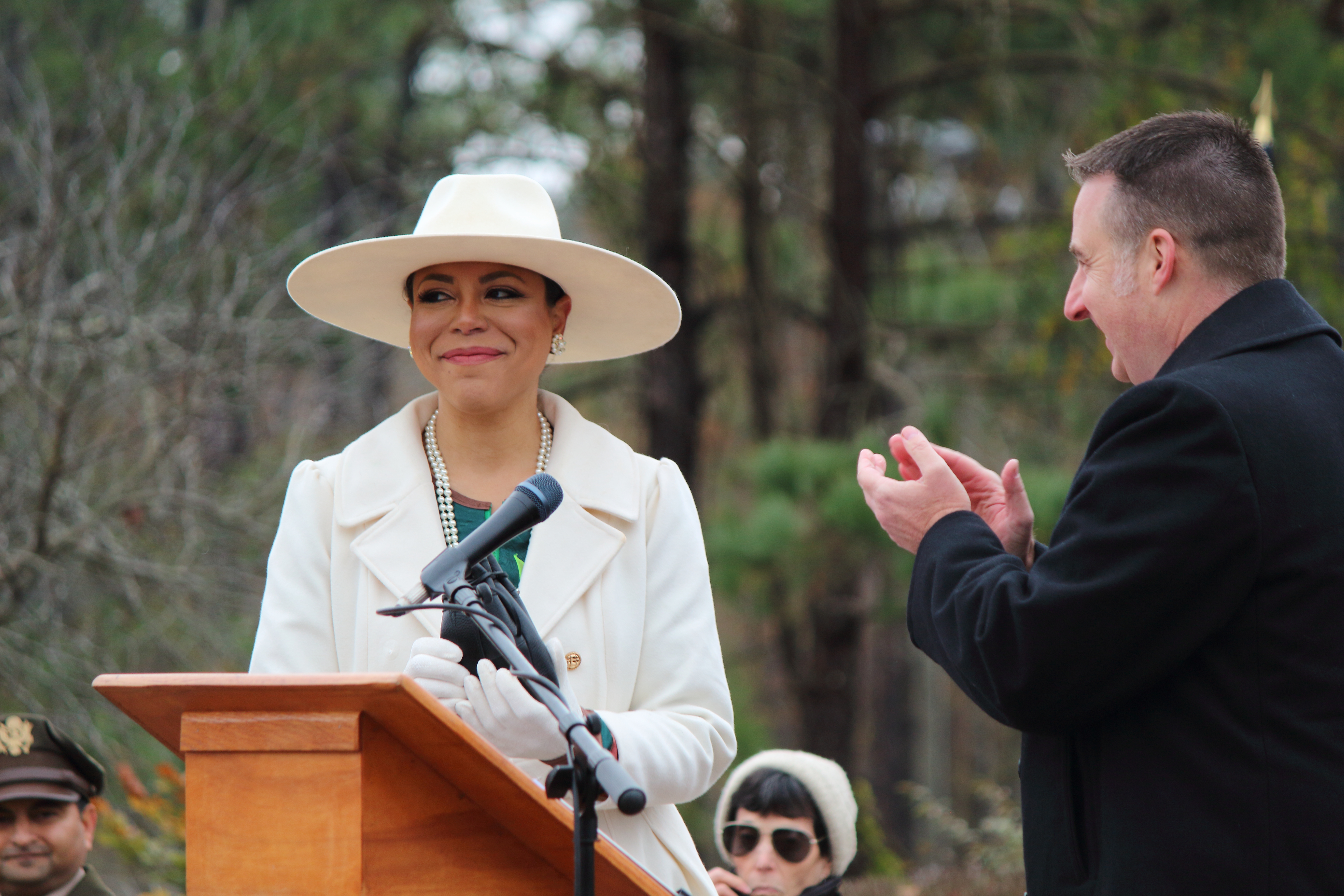
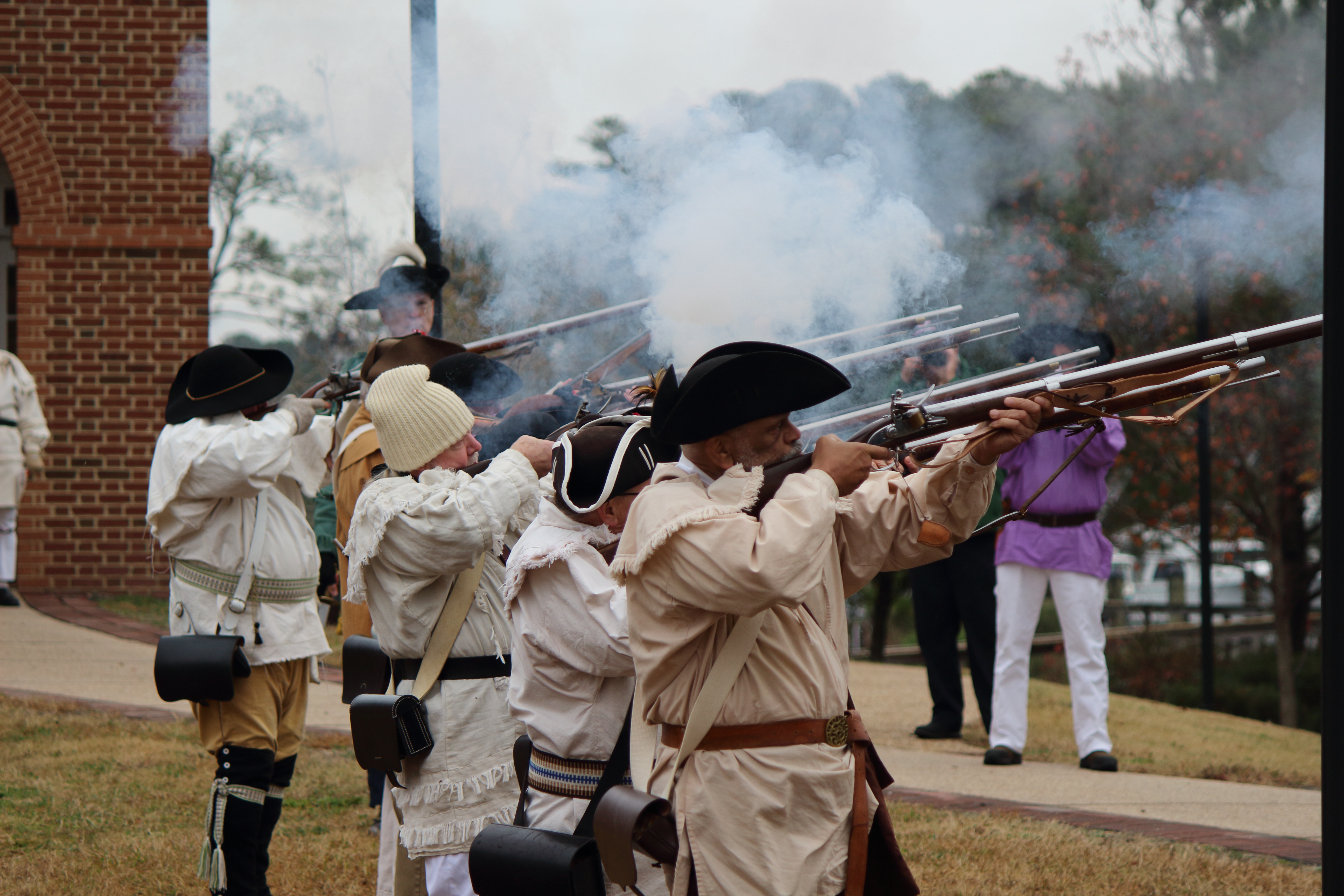
The guest of honor and keynote speaker on Saturday was Nikki Bass, Assistant Chief, Nansemond Indian Nation, who is a direct descendent of James Bass, a 15-year-old Nansemond Indian, who valiantly fought in the Battle of Great Bridge. James served a total of eighteen months of active Revolutionary War service with the Virginia militia. Thirty people served in the color and honor guards representing the SAR Color Guard, the British 14th Regiment of Foot Color Guard and the Honor Guard. There was a six-person musket/rifle squad that fired a 3-shot salute followed by the playing of “Flowers of the Forest” by the only class 1 bagpiper in the Hampton Roads area, Jim Roberts, in honor of Capt. Charles Fordyce who had led the imposing British grenadiers and light infantry across the bridge.
The actual battle took place on December 9, 1775, and lasted about half an hour. Capt. Fordyce died only a few yards from the Patriot earthworks; his body riddled with more than 10 rounds. During the battle, a detachment of the Culpeper Minute Battalion, armed with rifles, manned the Patriot earthworks on the right, exposing the advancing British to flanking fire from the time they crossed the bridge. Lt. Edward Travis and 25 men of the 2nd Virginia Regiment manned the breastworks on the causeway. Heroic sentinel William Flora, a free Black Patriot (whose descendants were in attendance on Saturday) fired eight rounds at the British, to delay the Grenadier advance before retiring to the breastworks. Patriots reinforced the trenches while Lt. Travis ordered his men to hold fire until the British were within 50 yards. The rifle fire and volleys at close range took a terrible toll on the attackers. Remarkably, only one Patriot was wounded in the hand. One-half of the British assault force was killed, wounded, or captured. Lord Dunmore, the royal Virginian Governor, reported sixty-one regular casualties. Colonel William Woodford, the commander of the Patriot forces at the battle, estimated the number was likely closer to 100. The Patriots treated the defeated British soldiers with respect. A young and brave woman, Polly Miller, dressed the wounds of the British. The humane treatment induced Captain Samuel Leslie, commander of the British 14th Regiment of Foot, to come out of Fort Murray to bow in gratitude.

Saturday’s commemorative events were preceded by a dinner reception on Friday evening at the Great Bridge Battlefield & Waterways History Museum. Michael Cecere, retired high school and college level American History teacher and author of twenty-five books and numerous articles on the Revolutionary War, was the keynote speaker. Mike dressed in period militia attire discussed the lead up to the battle and challenged the eighty attendees to consider “what if the battle did not occur” and “what if the Patriots had not won so decisively?” The museum had the American Revolution Experience traveling exhibit on display in the lobby as well as the Great Bridge Chapter’s America 250 traveling exhibit consisting of three banners: one on the Battle of Great Bridge, one on the diversity of the people in the battle, and one on the Burning of Norfolk, which occurred in January 1776. Hands-on exhibits with docents dressed in period clothing were added to create an even more immersive experience.
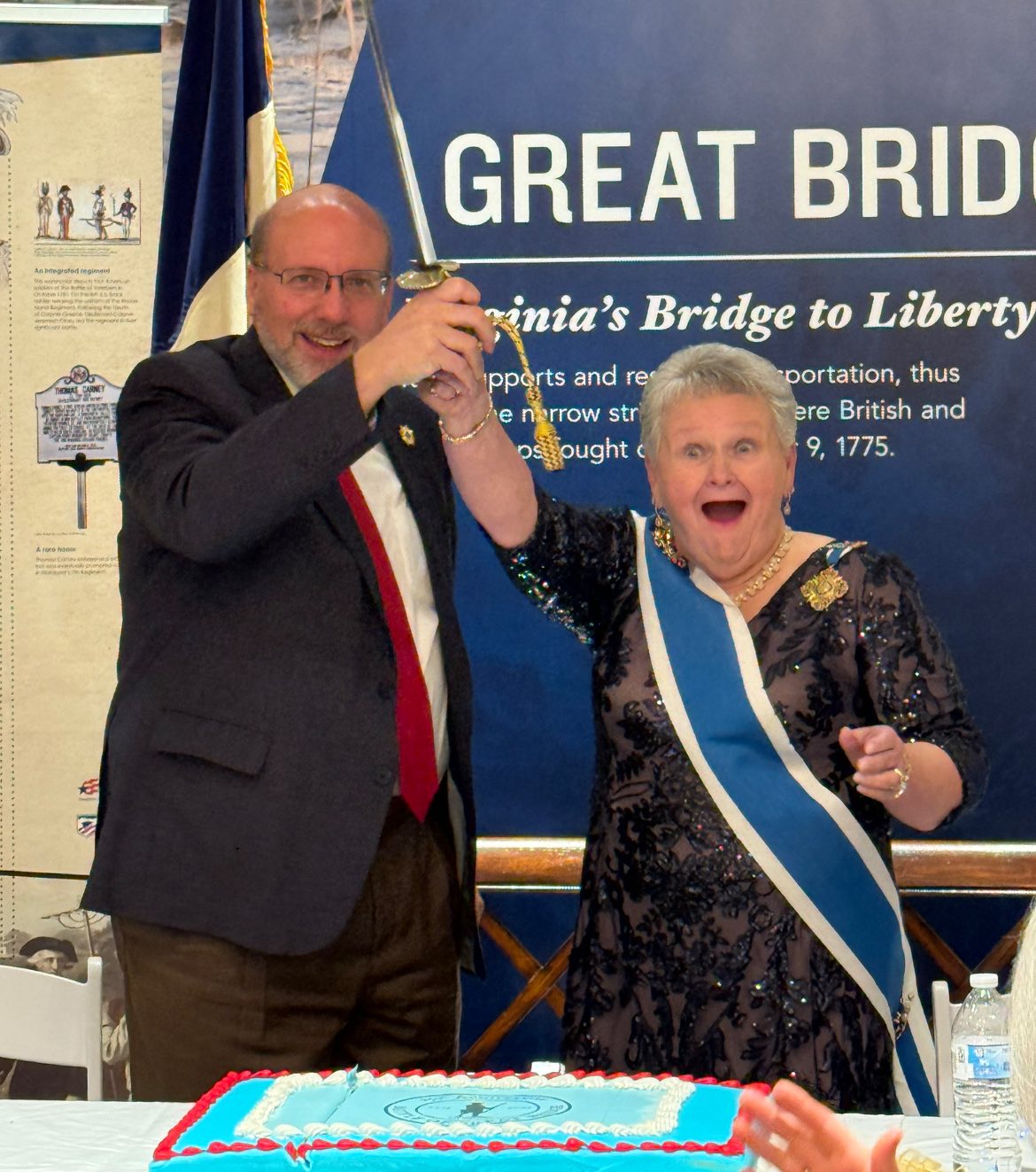
Mrs. Storage and Mr. Elston used Don Ferguson’s U.S. Naval Academy saber to cut the anniversary cake creating an unusual and perfect photo opportunity. The evening concluded with awards where honorary regent Lisa B. Davis was awarded the Lydia Darragh medal from VASSAR for behind the scenes distinguished service to the SAR for many years. Little did the SAR know that the DAR Great Bridge Chapter, was organized in 1894 by Sallie Newton Page, whose revolutionary ancestor was Lydia Barrington Darragh, and whose descendants, Lydia Strain, and Darragh Walker, are chapter members today.
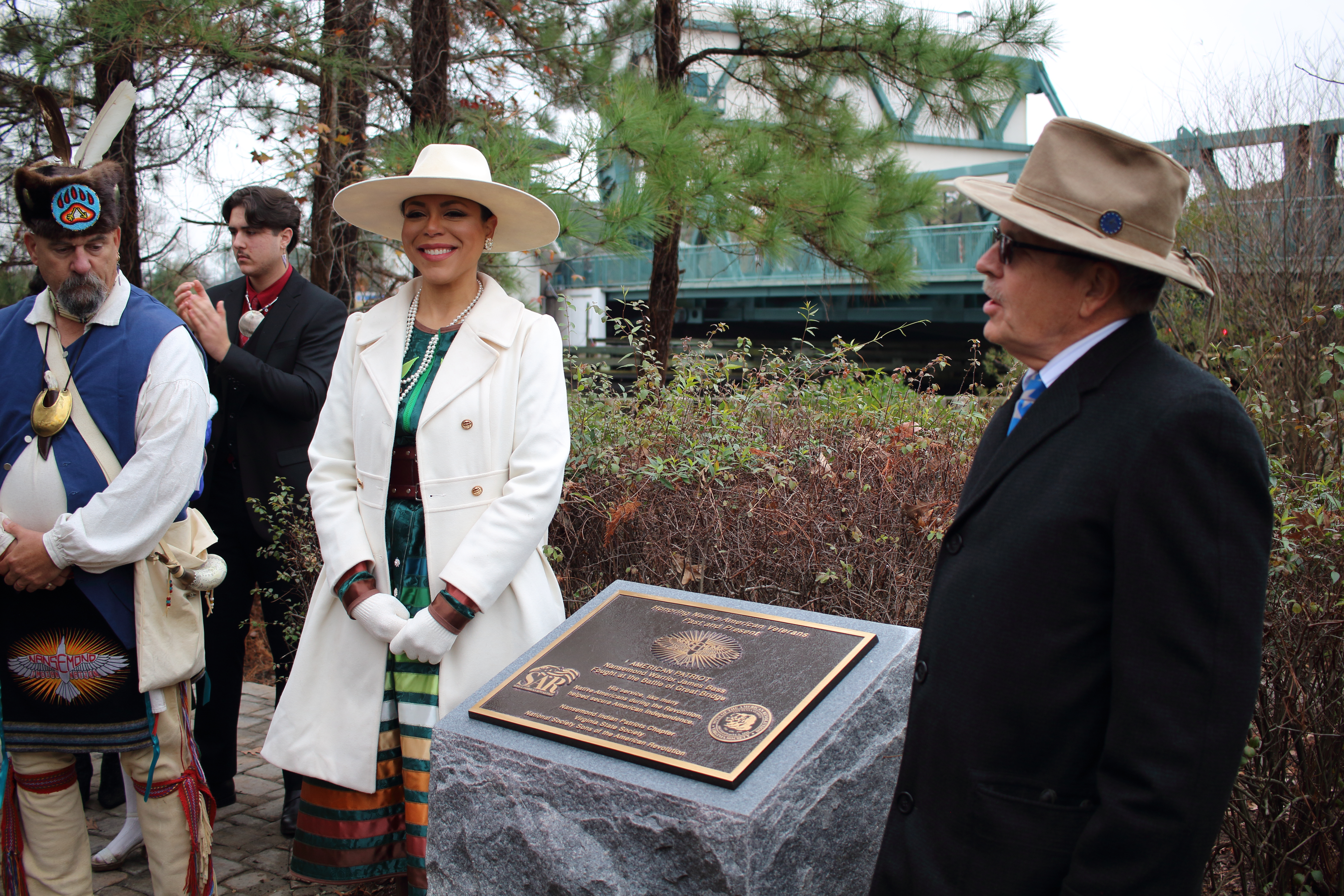
After Saturday’s ceremony, an SAR historical marker, and an interpretive panel sponsored by the DAR Great Bridge Chapter for James Bass were unveiled and dedicated. President General Storage said in her remarks on Saturday that “As members of the National Society Daughters of the American Revolution, we are entrusted with the sacred task of preserving this legacy” and that “it is our responsibility to educate others about our rich history and to inspire future generations to carry the torch of patriotism and service.” She encouraged everyone to extend the mission beyond commemoration and to nurture “the ideals of our founding fathers ensuring that the torch of freedom continues to shine brightly.” Mrs. Storage challenged us to “make a difference in our communities and beyond, carrying forward the legacy of those who came before us and leaving our own legacy.” This blog post describes just some of the ways the Great Bridge Chapter is Illuminating Our Legacy.
Together, we can make a difference in our communities and beyond, carrying forward the legacy of those who came before us and leaving our own legacy.
