
 Today's DAR
The España Chapter based in Madrid, Spain wanted to ensure that the people of the United States of America and Spain understood the significance that Spanish Patriots played in our cause for independence. Chapter Regent Dr. Elane Granger Carrasco spearheaded the efforts to bring the two parties together in an education forum followed by a marker placement ceremony. Shari Thorne-Sulima, National Chair Units Overseas; Anthony Startz, National Chair Specialty Research; Jill Brooks, National Vice Chair Commemorative Events, Celebrate the Legacy of Bernardo de Galvez; Molly Long, National Vice Chair Specialty Research, Spanish Research; Elizabeth Wise, National Vice Chair Specialty Research, Spanish Research Communications and I had the opportunity to attend.
Special Events Exploring the Role of Spain in the American Revolution
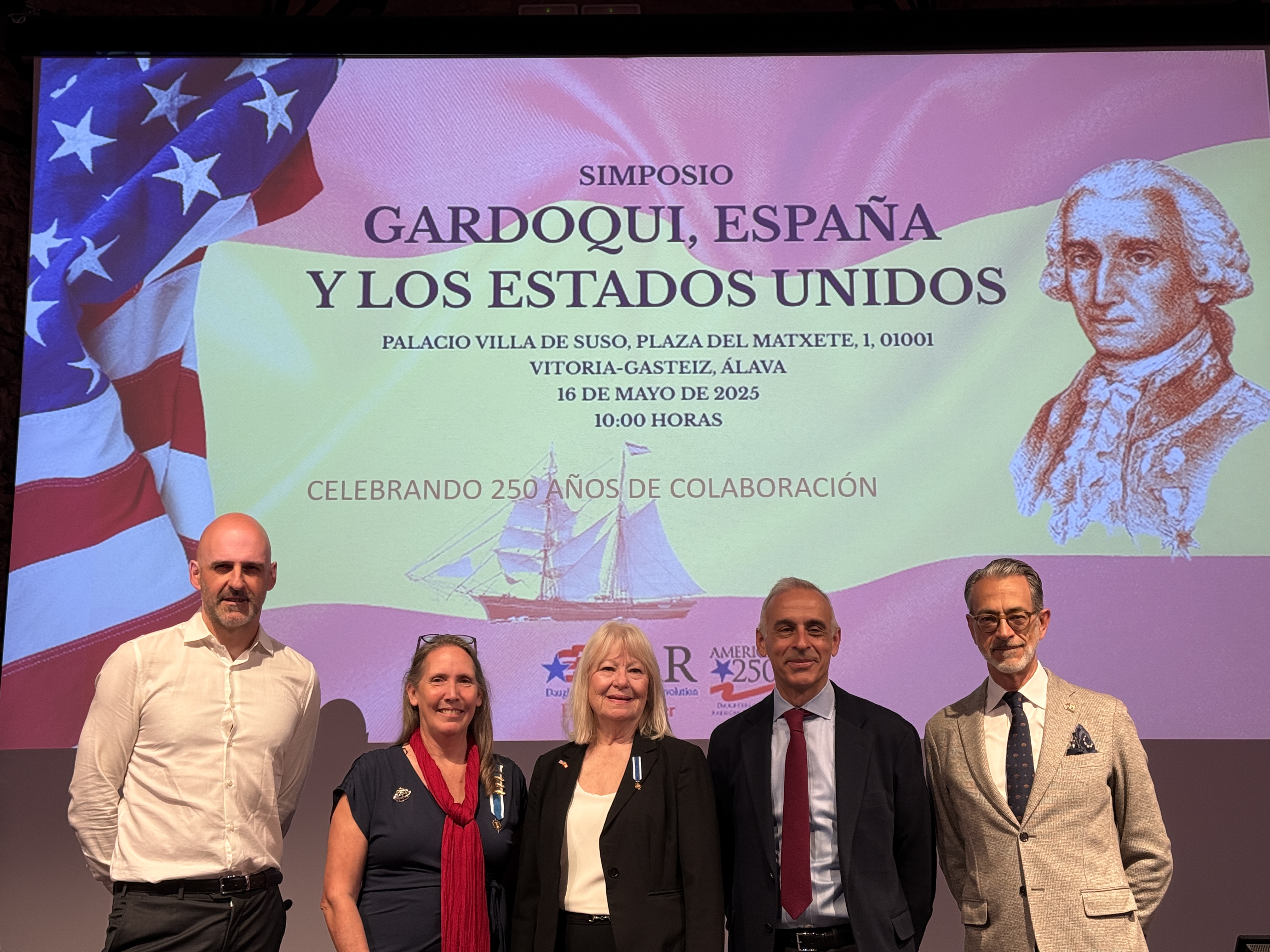
The group of España Chapter members, Nick Donovan Hayes representing Spain’s SAR President and descendent of King Charles III of Spain, Francisco de Borbón, and numerous guests met in Bilboa, Spain. This northern city of Spain is situated in a valley surrounded by mountains with the Nervión River flowing northerly into the Cantabrian Sea. This seaport town during the American Revolution was a key, yet clandestine, supply route, thanks to Spanish merchant and Revolutionary War Patriot, Diego de Gardoqui.

Wednesday evening, May 14th, the group gathered at the Victor Montes restaurant in the old quarter of the city in a private dining space. We witnessed Curran Reid sign her membership application and then enjoyed a robust dinner and energetic conversation with members interpreting the Spanish for the U.S. guests.

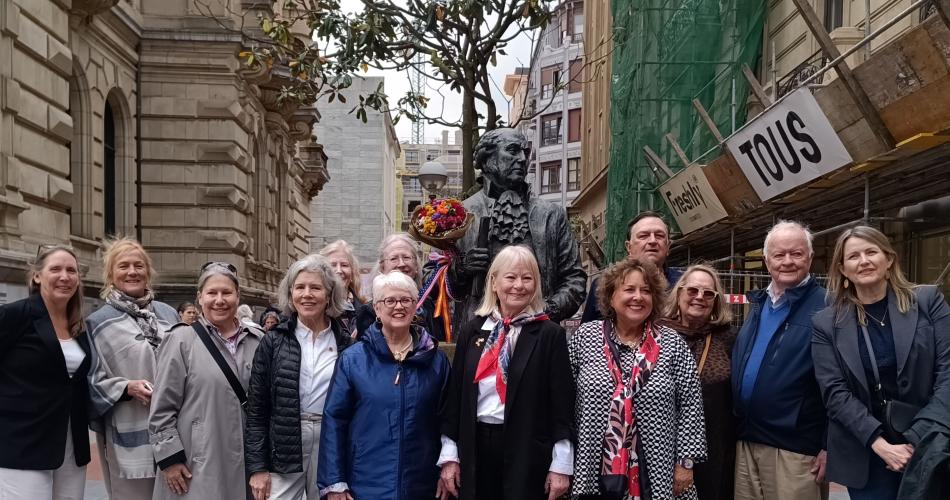
The following morning the group toured the Maritime Museum and learned about the importance of the geography and waterways to the economy of the Biscay region, and specifically to the city of Bilbao, and the history and importance of the consulate, which had responsibility for trade and economic opportunity, and its relationship with Diego de Gardoqui. Following our visit, we walked through the old sections of Bilbao that Gardoqui would have known including the Posada de San Nicolás, Calle Correo, the Palace of Admiral José de Mazarredo and the place where Gardoqui was born and worked in the family business. Crossing the gardens of Doña Casilda and Gran Vía the group stopped at the figure of John Adams which is next to the Palace of the Provincial Council and placed a bouquet of flowers tied with ribbons symbolizing the American and Spanish flags.
Having worked up an appetite, the group had the delightful experience of dining in the Social Club of Bilbao which was founded in 1839. After lunch the group boarded a bus to Vitoria, Spain for events of the next day.
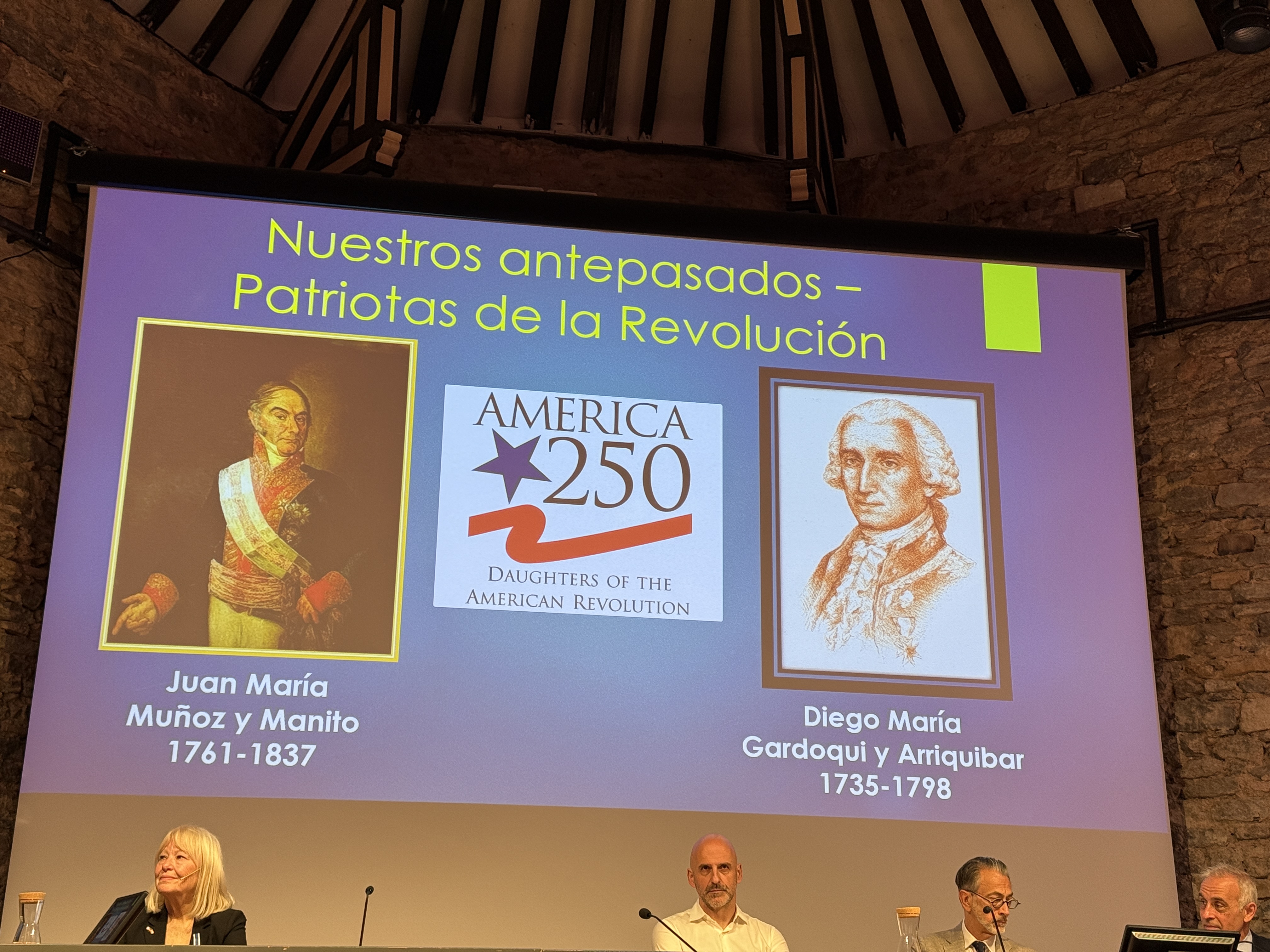
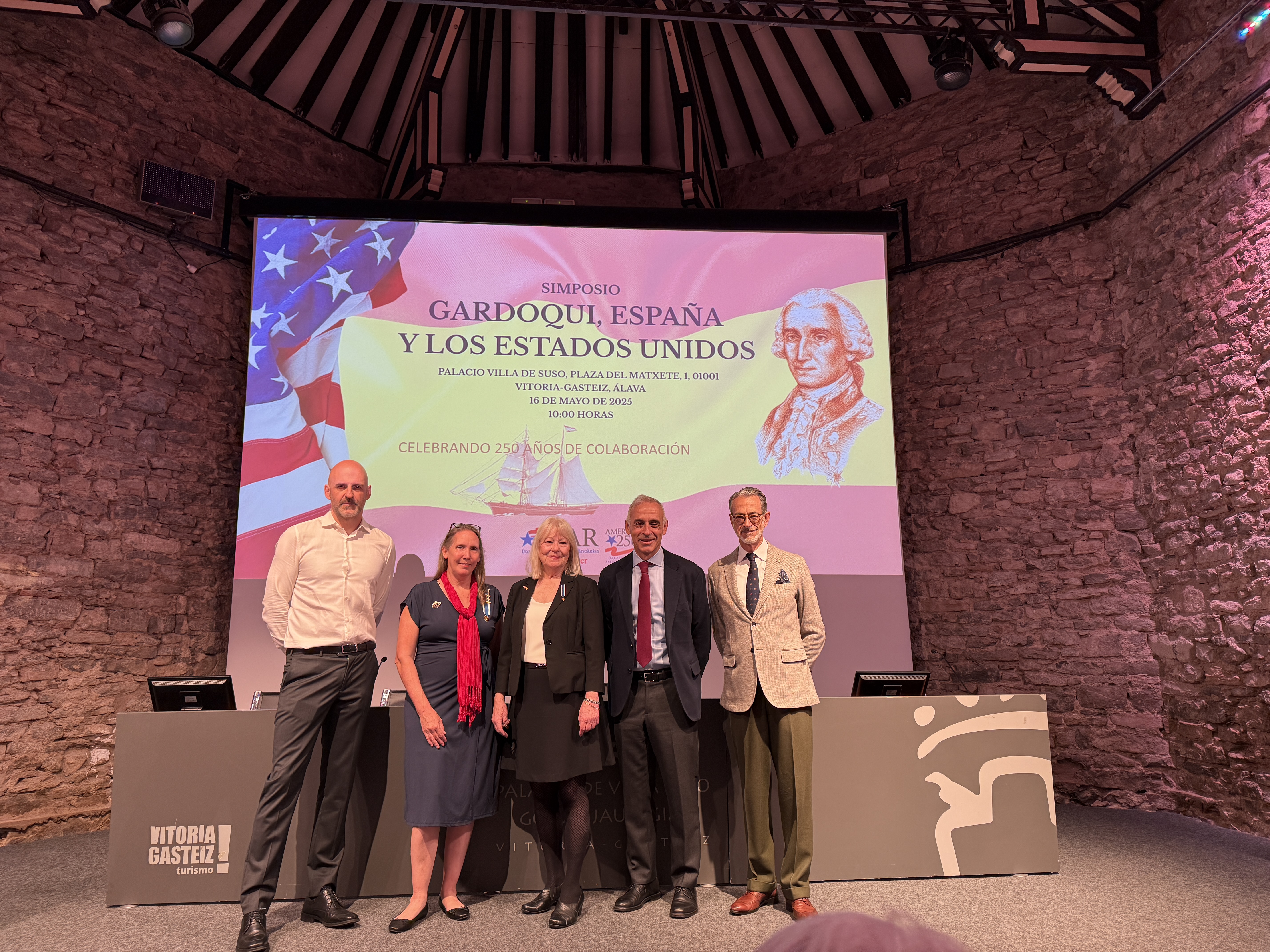
As a prelude to the commemoration of 250 years of collaboration between Spain and the United States, a public conference was held which focused on the key role played by Bilbao, the capital of Biscay (Bizkaia) and the birthplace of Diego de Gardoqui, in achieving the American victory. It offered an overview of the decisive role Spain played in the triumph of the American Revolution and delved into the life of Diego de Gardoqui, who, relying on his family's maritime trade network with New England and in compliance with the wishes of King Charles III, actively contributed to the colonist victory in the Americas. The challenges of the maritime context of the time were explored: the constant threat of pirates, the urgent need for absolute discretion and the importance of maintaining mutual trust. Gardoqui confronted these realities, facilitating the transport of war supplies and large sums of money destined for continental troops. Finally, connecting our shared past with the present the panelists addressed the current state of commercial and civil relations between Spain and the United States, and the opportunities that may lie ahead.
Chapter Regent Granger Carrasco moderated the event with the following participants and their topics: Kristine Sjostrom, Chapter Vice Regent and historian on the Spanish Participation in the United States War of Independence; José Manuel Guerrero Acosta, Colonel (retired) Spanish Army and historian on Gardoqui, on a Key Figure in Spain’s Support for U.S. Independence; professor Xabier Lamikiz Gorostiaga on Cod Trade and Bonds of Friendship between Bilbao and the Ports of Massachusetts ca 1630-1820; and Fernando Prieto Ríos, Secretary General of the Spain-U.S. Council Foundation on Gardoqui as a Reference for Economic Relations Between Civil Societies of Spain and the United States.
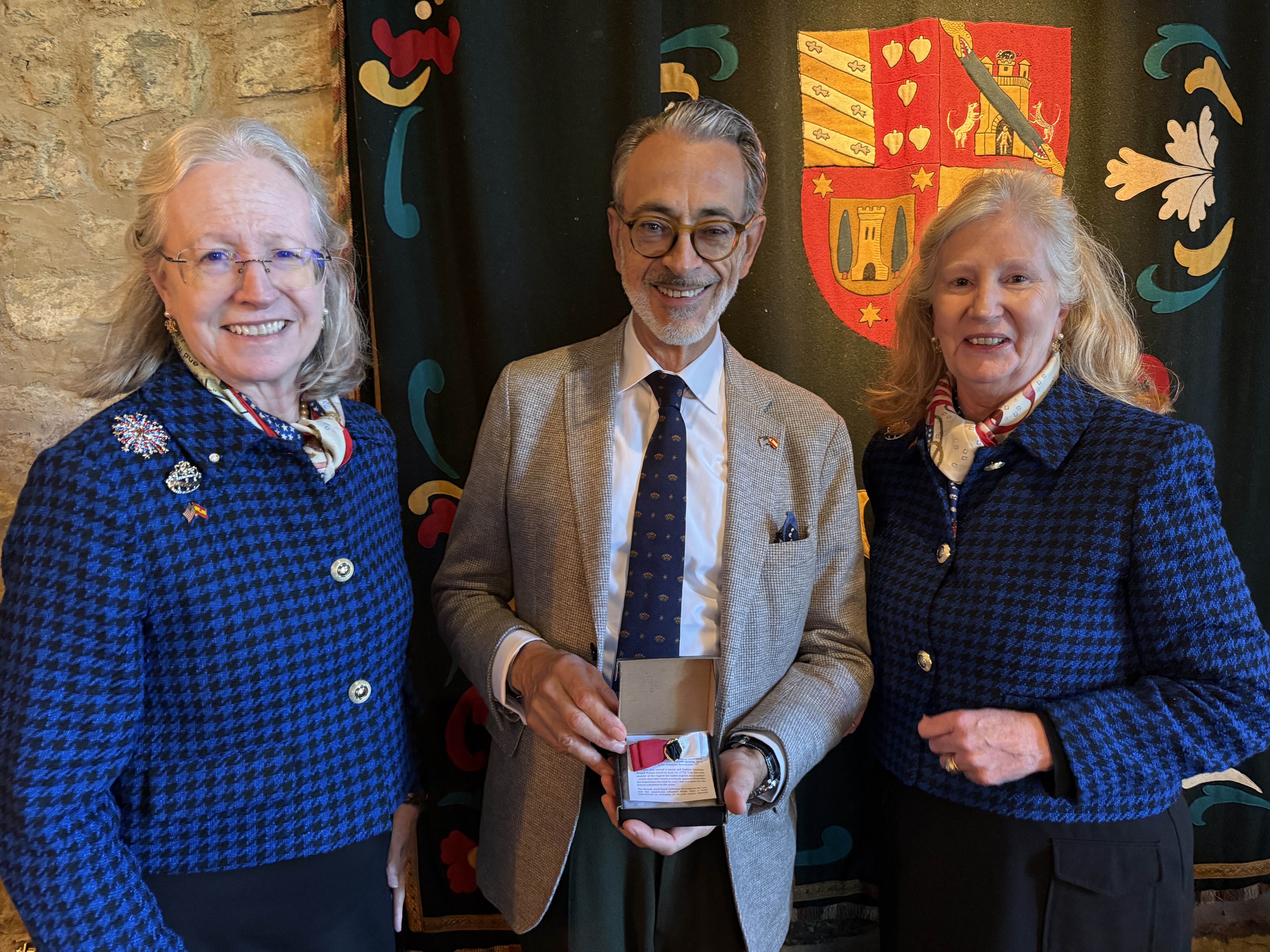
Colonel José Manuel Guerrero Acosta presented me with a book, Spain and the Hispanic Contributions to U.S. Independence which will be in the DAR Library as soon as I have read it.

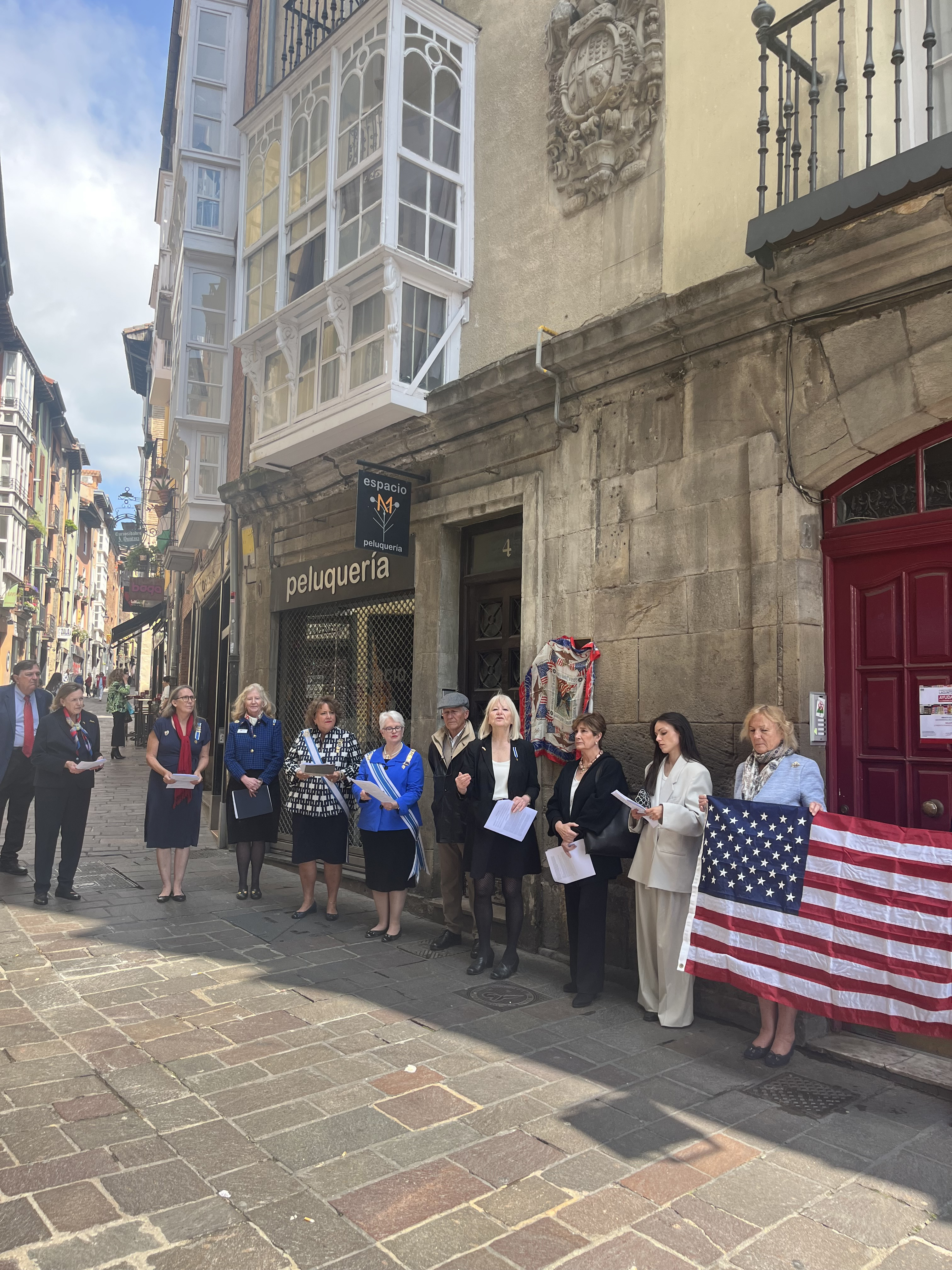
Following this symposium, the Espana chapter, placed a plaque commemorating the clandestine meeting held in 1777 with Diego de Gardoqui acting as translator (having been educated in London for five years), between the Spanish Minister of State Jeronimo Grimaldi, and Arthur Lee, an envoy from the Continental Congress, which sought to arrange for King Charles III’s vital support for the American Revolution. The plaque included text in three languages: English, Spanish and Basque. Descendants of King Charles III and Diego de Gardoqui including member Ana Baraibar Echaniz and Andrea Cano de Gardoqui, attended the marker dedication and joined our group for a delightful Spanish lunch before the group departed back to Bilbao.
The role of Spain in the American Revolution is complex but vibrant. It spans from New England to Florida, the West Indies to California and Patriots abound. Learn more by reading the referenced book and checking out the committee webpage for Specialty Research on the member’s site.
Looking for another opportunity to learn about the importance of Spanish Patriots? The DAR is proud to be working with the Queen Sofia Spanish Institute to host upcoming Spain and the Birth of American Democracy Symposium at DAR Constitution Hall in September 2025.
