 Today's DAR

Our DAR Museum Study Gallery has hundreds of objects of every type that we collect, not only in the glass cases but hidden in the top drawers of each case. The curators rotate new selections into their drawers every year or so, and recently it was time to switch out the textile drawers.
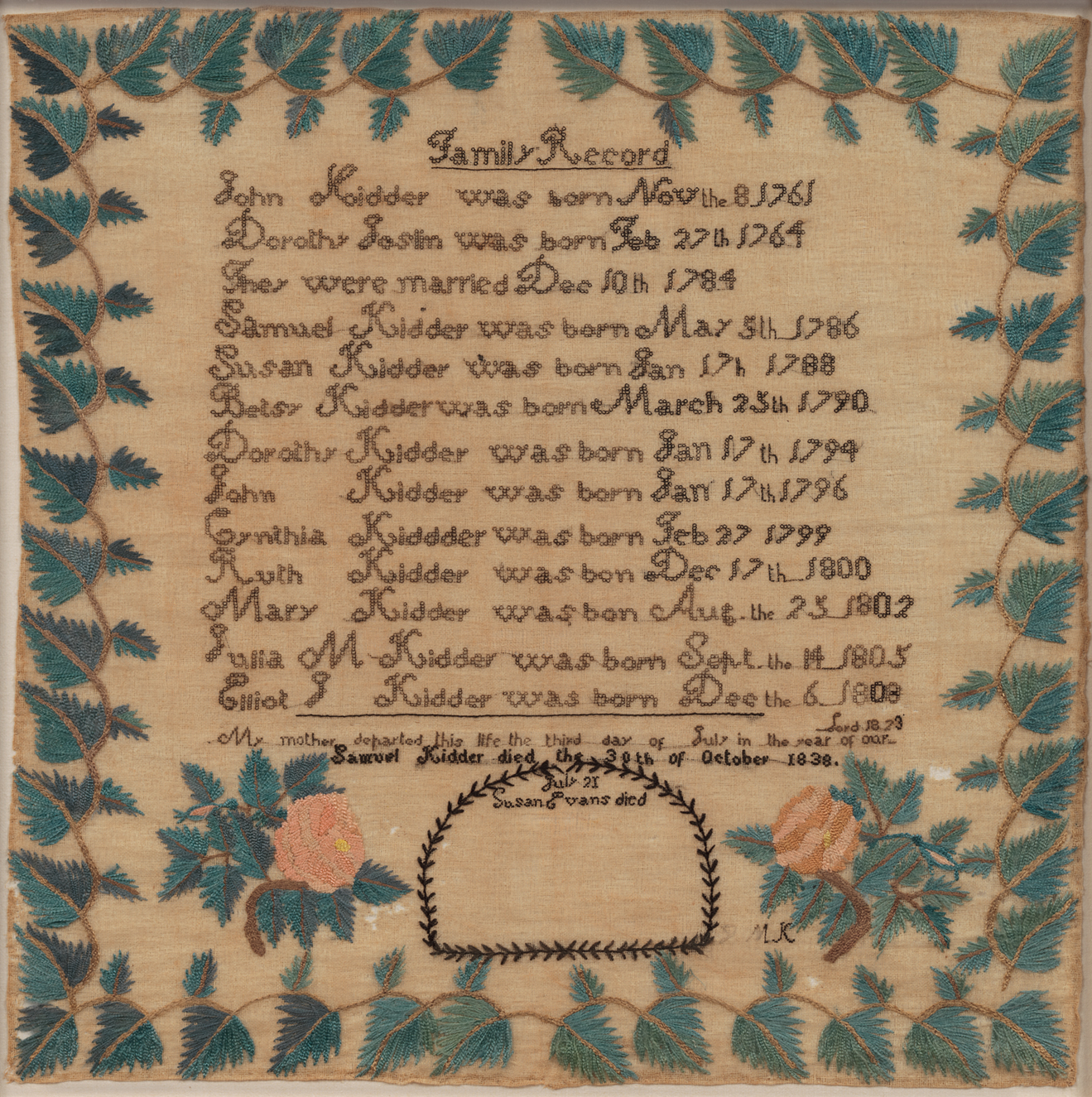
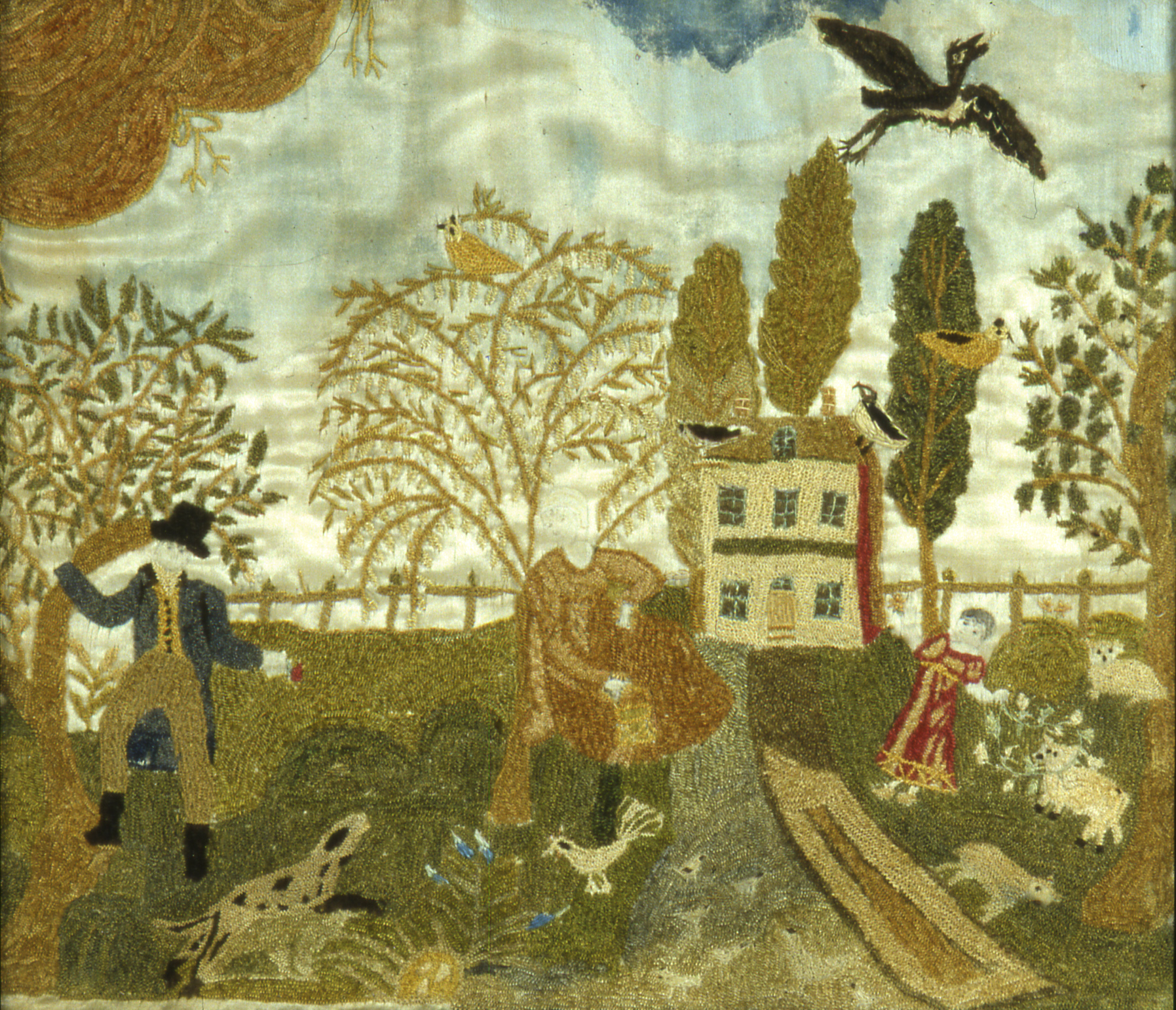
As Curator of Costume and Textiles, I am in charge of the samplers and other needlework (family records and pictorial embroideries including mourning pictures). I always choose examples of every type of needlework to show the range of our collection and of what was being produced by schoolgirls and women in the 18th and 19th centuries.
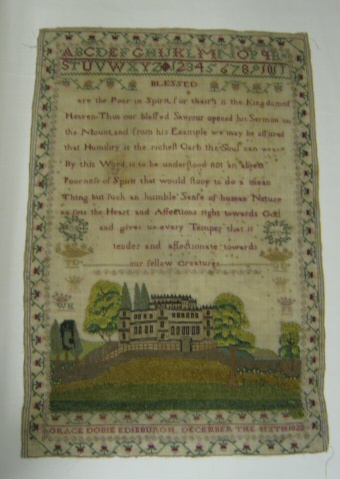
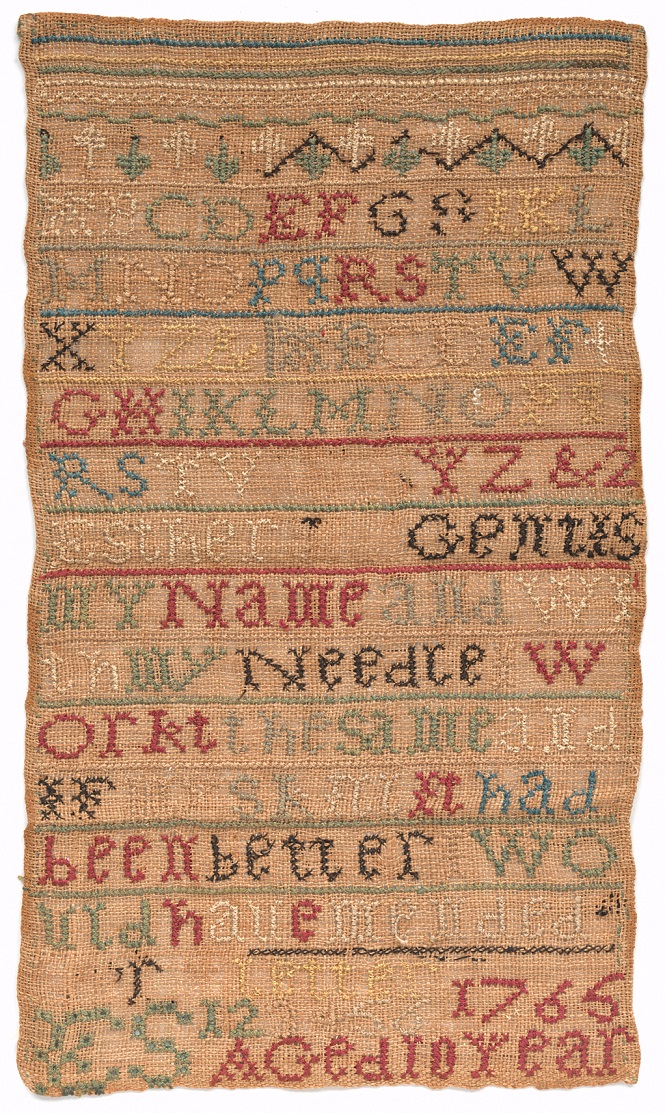
I start with a few basic “marking samplers,” with basic alphabets and numbers, made by young girls to learn how to mark all the sheets, table linens, and undergarments in the household. I aim for a broad date range and a variety of geographical locations; One of our earliest samplers is Esther Sargent’s from 1765, from Norfolk, Massachusetts, but you’ll also see some from Virginia and Alabama this time around.