
Celebrating American Archives Month at DAR Headquarters

Tracy Robinson, DAR Director of Archives and History

October is American Archives Month. The goal of Archives Month is to raise awareness of the value of archives and archivists. Archives Month was introduced several years ago by our professional organization, the Society of American Archivists, as “Archives Week” and in recent years it has evolved into a month-long celebration of archives programs in the United States.

Common archival theories and practices began to evolve at the end of the 19th century in response to the rapid expansion of the historical profession at that time. The American Historical Association was created in 1884 and it inspired several groups with interests in archives management including, in 1909, a Conference of Archivists. Congress established the National Archives as an independent federal agency in 1934 and the Society of American Archivists was founded in December 1936 at a meeting in Providence, Rhode Island.

Although archivists still come to the profession from a variety of backgrounds, in general it’s an archivist’s job to acquire appropriate material to add to the collection, to ensure that diverse materials are safely stored for long-term preservation, and to ensure that materials are sufficiently described so that they may be quickly retrieved for research use.

It is the purpose of the NSDAR Archives to document all DAR activities that originate at the National level. The NSDAR Archives is the repository for the inactive, permanent records created in the course of business by the National Society. In addition to correspondence, meeting minutes, project files, and photographs, the Archives houses many objects associated with DAR’s history. Let’s look at just a few of them.
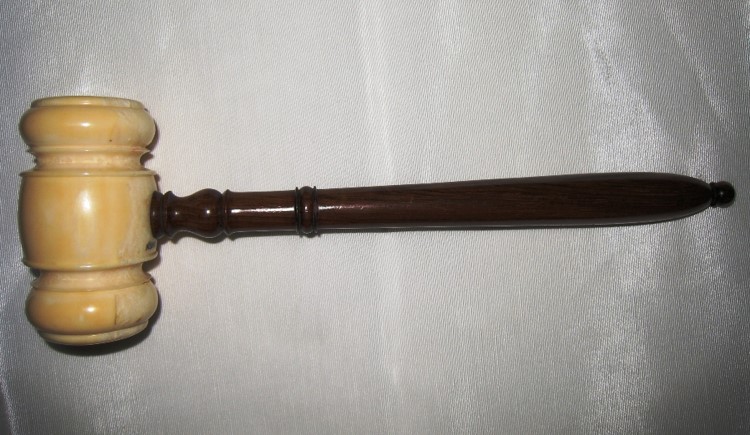
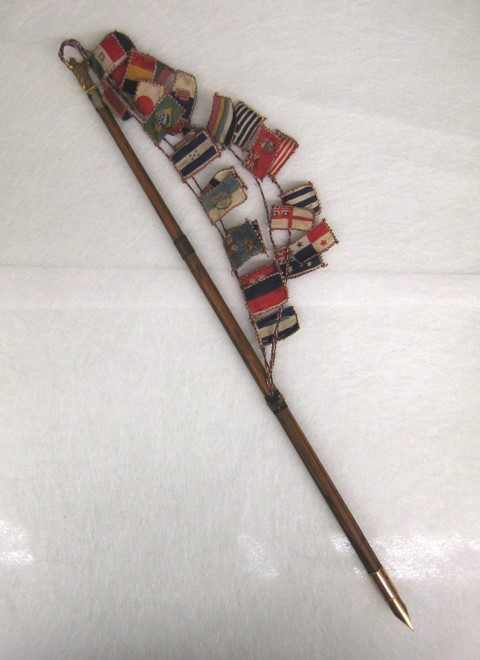
This gavel with a wooden handle and ivory head was used during DAR’s first Continental Congress in 1892.

This pen was presented to Secretary of State Charles Evans Hughes in December 1921. Hughes used the pen to sign the Arms Limitation Pact during the Conference on the Limitation of Armament held in Memorial Continental Hall from November 1921 to February 1922. Hosting that conference was the event that earned Memorial Continental Hall its designation as a National Historic Landmark. 

Amelia Earhart autographed this page’s sash when she was a guest speaker at Continental Congress in 1933. Of her trans-Atlantic flight, she told the assembly that she “didn’t have any purpose in flying, excepting I thought it was time that a woman should fly across the Atlantic.”

This is one of our most recent acquisitions for the NSDAR Archives. While talking with DAR Museum staff one day, we found out they had at some point acquired First Lady Florence Harding’s insignia pin. After some conversation, we agreed that the pin was more appropriate for the Archives and the transfer was made. Museum curators and archivists are aware that collections are not static and change over time. We are also mindful of our responsibility to keep the holdings as true to their collecting policies as possible and we are constantly working to perfect the collections.

It is important to remember that history is not what happened in the past, it is the interpretation of what happened in the past. Therefore, the accuracy of an account of a historical event is directly and completely dependent on the quality of the surviving primary-source evidence. Archivists are trained and experienced to deal with the various questions and problems which arise in the preservation of such material.

The Office of the Historian General is open Monday through Friday 8:30 to 4:00 to view the exhibits. Access to the collections for research use requires an appointment. Please see our webpage at www.dar.org/archives for more information about what we do and to browse our collection of online exhibits. Contact us by email at [email protected].   

send-a-commentSend Us a comment