
Meeting Members, Making Memories in Mississippi and New Mexico

Denise Doring VanBuren, President General

My weekend afforded me the opportunity to meet with hundreds of dedicated members through two enjoyable and informative state visits. I hope you enjoy reading about the work that is being accomplished by our Daughters in these active chapters.

March 31 - April 1: Welcomed at Rosalie, Natchez, Mississippi 

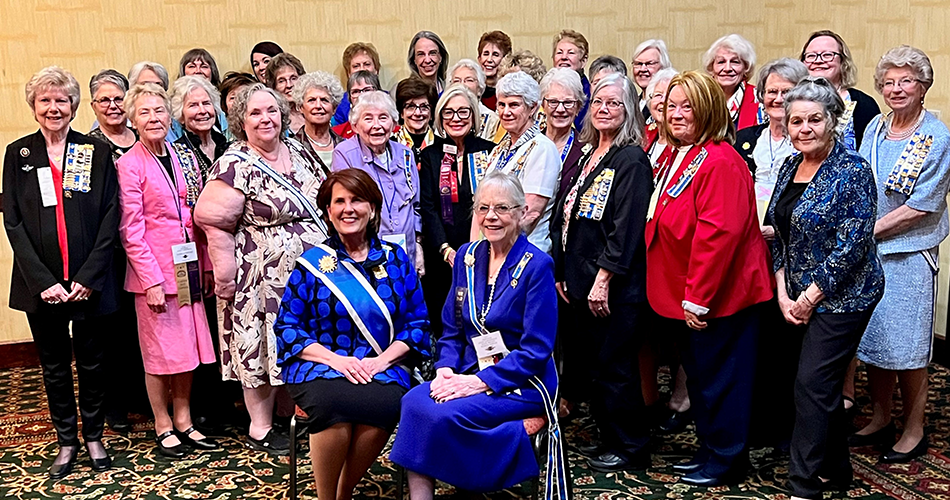
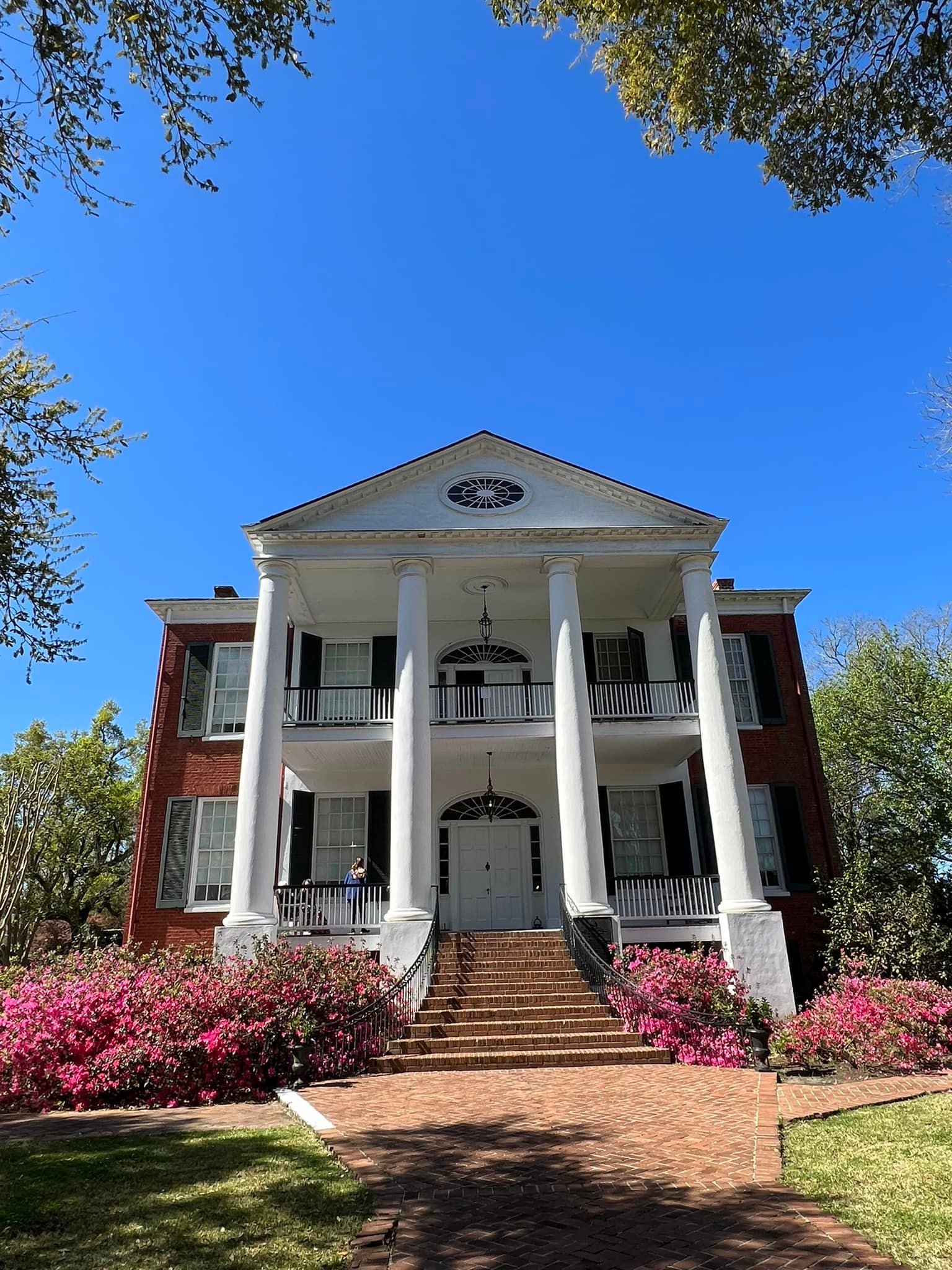
For more than 65 years, the Mississippi Daughters have annually invited costumed guests to welcome visitors to their historic Natchez home, Rosalie — an 1823 mansion on a bluff above the Mississippi River. I have always hoped to participate in “Out-of-State Visitors Day,” and I extend my sincere appreciation to State Regent Hellen Hicks Polk for the kind invitation that allowed me to experience this year’s edition. Six executive officers, the National Parliamentarian and 12 state regents donned historic dress and joined Mississippi Daughters to welcome more than 350 tourists to the historic house museum, which annually hosts more than 10,000 visitors. 
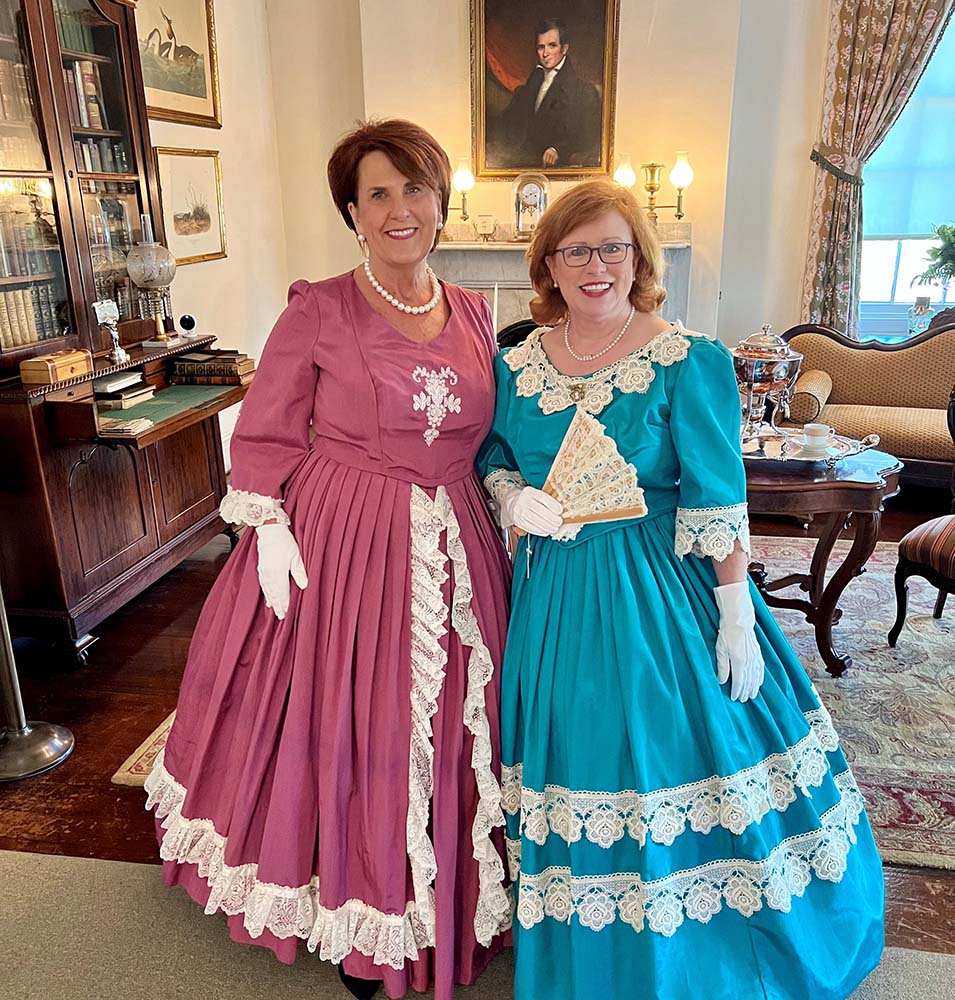
A little more about the house: The French had built a fort in 1716 on the bluffs of Natchez and named it Rosalie in honor of the Countess of Pontchartrain. A century later, Pennsylvanian Peter Little purchased a portion of that land on which to build his home, which he would occupy with his bride Eliza by 1823. By all accounts, Peter and Eliza remained deeply devoted to each other throughout a 45-year marriage, though they welcomed no children of their own. In 1853 at the age of 60, Eliza died of yellow fever. Three years later Peter died, at the age of 74, without a valid will, forcing an auction of the estate. Two other families would come to occupy the home, but in 1938, hard times forced the remaining heirs to sell Rosalie to the Mississippi State Society of the DAR. These dedicated women have painstakingly operated it as a remarkable house museum ever since. I am so proud of their devotion. It is considered an excellent example of the Greek Revival style, with a floor plan that had a major influence on antebellum architecture in the region.

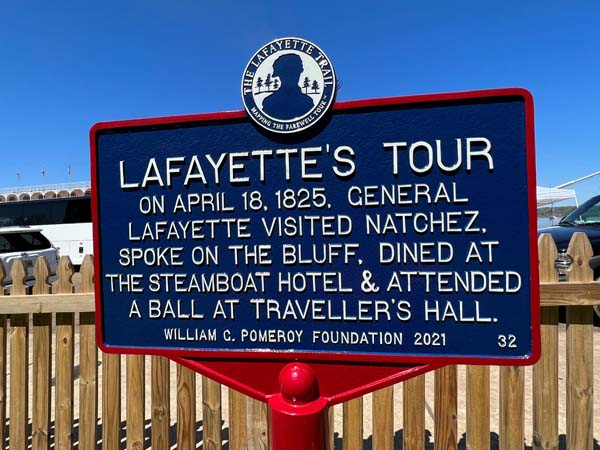
We also had the opportunity to learn about the historic significance of Natchez, including its connection to Revolutionary War Generals Bernardo de Galvez and the Marquis de Lafayette. I visited three additional (and equally astounding) historic homes, as I next toured Longwood Plantation, an example of an impressive Octagon House – rare for its design but especially unique for the fact that its workmen put down their tools and returned to Pennsylvania at the outbreak of the Civil War – never to return, and leaving the upper floors unfinished to this day.

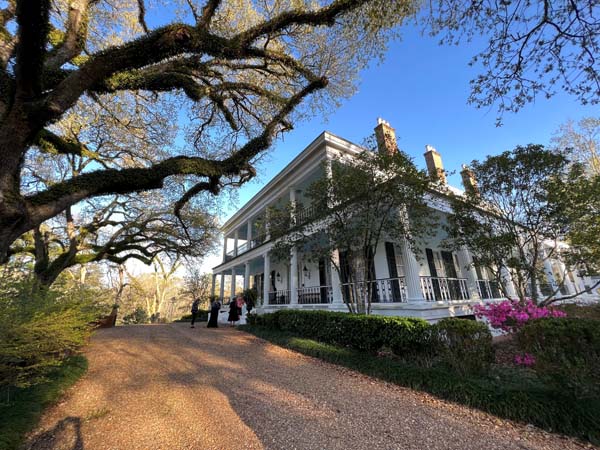
We later dined at historic Brandon Hall, an 1856 Greek Revival that now operates as a B&B and wedding venue. And finally, we gathered for brunch the next morning at Choctaw Hallbuilt about 1836 in a blend of Greek Revival to Federal styles. Four floors, a swirling oval staircase, double porches with white columns that bookend the front and back of the mansion and a breathtaking collection made for a marvelous experience. I will be sending certificates and medals for Excellence in Historic Preservation to each of these properties to express our gratitude for their devotion to historic restoration. (This recognition is noncompetitive and can simply be ordered from the DAR Store to acknowledge those in your community who rescue historic buildings, cemeteries, records, etc.)

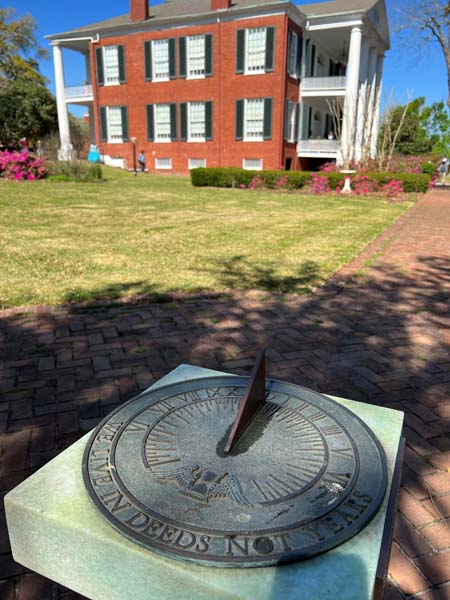
Mrs. Polk has chosen the historic sundial at Rosalie as the official symbol of her administration. It is inscribed: “We live in deeds, not years.” I could not help but feel as though I had traveled through time witnessing superb and inspiring examples of Americans past and present who had, indeed, lived in deeds – deeds that continue to resonate.

April 2 - 3: Enjoying the 101st New Mexico State Conference 

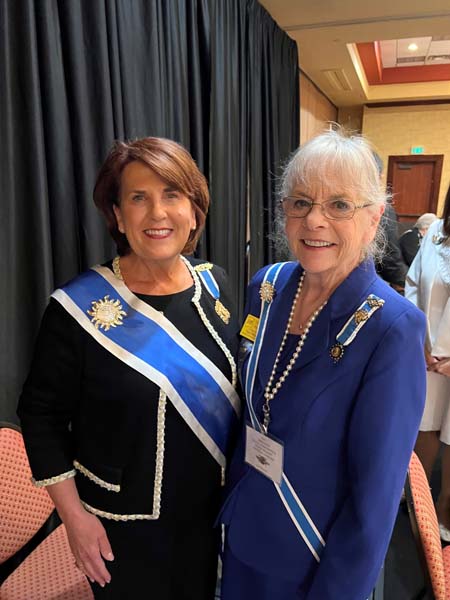
It is easy to see why New Mexico is called the Land of Enchantment, and I wish that my travel schedule had allowed me to stay longer in order to explore more of the rich history here. Yet I was immensely grateful that State Regent Patricia Barger accommodated my travel complexities and allowed me to address approximately 100 members and guests at the banquet of her state conference during my brief stay here.

The theme of the 101st New Mexico State Conference was “Rising to the Challenge!” – and it was clear that these 750 statewide Daughters have done just that during the last year. I was touched to hear more about their support for veterans and to learn about projects such as the donation of 1,200 books to the Navajo Preparatory School. Special presentations featured remarks by the manager of the local Fisher House and “Women of the Santa Fe Trail,” by Henrietta Martinez Christmas, a DAR member who descends from 11 soldiers who came in 1598 with Juan de Onate, explorer and founder of the first European settlements in the upper Rio Grande valley of New Mexico.

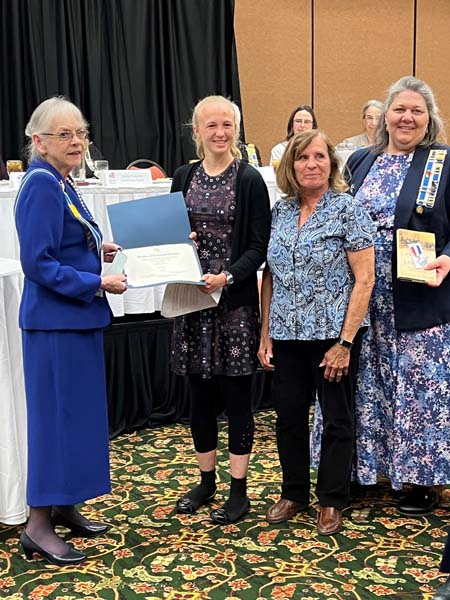
Their annual awards luncheon recognized Good Citizens, the State Outstanding Teacher of American History and a dozen DAR Leadership Training Course graduates. It was particularly moving to listen to their American History Essay Contest winners, and I was delighted to meet the New Mexico winner of our new high school-level essay contest on figures of the American Revolution. This accomplished young student chose to write about the Father of the American Navy, John Paul Jones.

During each of my visits, I try to hold a brief reception to thank the generous members of the Heritage Club, who support the mission of our National Society through financial donations. I was very pleased to update approximately a third of the conference attendees regarding the latest news about DAR Constitution Hall, membership growth, headquarters highlights and Continental Congress headlines during our tea here in Albuquerque. I always look forward to the questions these dedicated women ask – it helps me to keep my finger on the pulse of issues that are important to our members everywhere.

Mrs. Barger’s symbol is the Bee, and her motto is “Bee all that you can bee.” She has selected a unique project that will fund the creation of pollinator hotels. I had never heard of such structures, and she explains them here in this short video. Conservation Committee projects are so rewarding and can often be done as a group – for example, if you or your chapter have not considered planting a pollinator garden of your own, please consider doing so this spring.


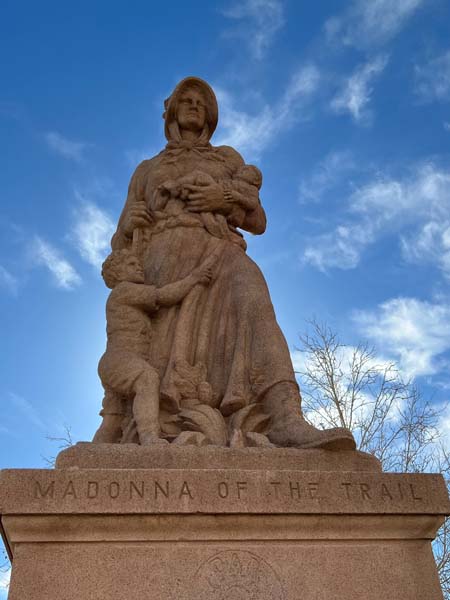
Before departing from Albuquerque, I had the chance to visit the downtown Madonna of the Trail – one of 12 such monuments erected by our National Society in the late 1920s to honor the intrepid spirit of the women who crossed the continent to settle the west. I have now had the pleasure of seeing five of these statues (New Mexico, plus California, Missouri, Ohio and Pennsylvania). Put them on your travel list!

Postscript: As always, you can find more photos of my trip (and follow my future travels) by visiting my DAR President General Facebook page. If you are wondering, it is my hope to complete all 50 of my official state visits – as I will not allow the pandemic to have kept me from fulfilling this joyful obligation as your President General. This has meant, of course, moving many of the planned-but-postponed 2020 and 2021 official visits into the first half of 2022. My progress has been made possible by supportive Sol Sister state regents, who have frequently staged special events to accommodate my schedule, and I thank them

Thus far, I have traveled to 41 states (four via virtual conferences) and five foreign countries (Bahamas via a virtual conference). I have nine states and a visit to Canada to complete before Continental Congress. If you are a member in any of these locations, I certainly hope to greet you in person in the months ahead as we continue to together Rise and Shine for America!

send-a-commentSend Us a comment