
 Today's DAR
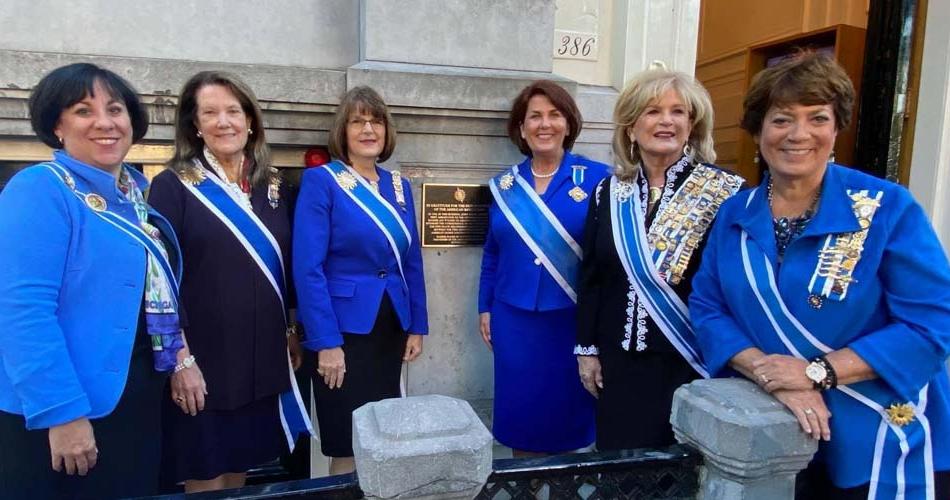
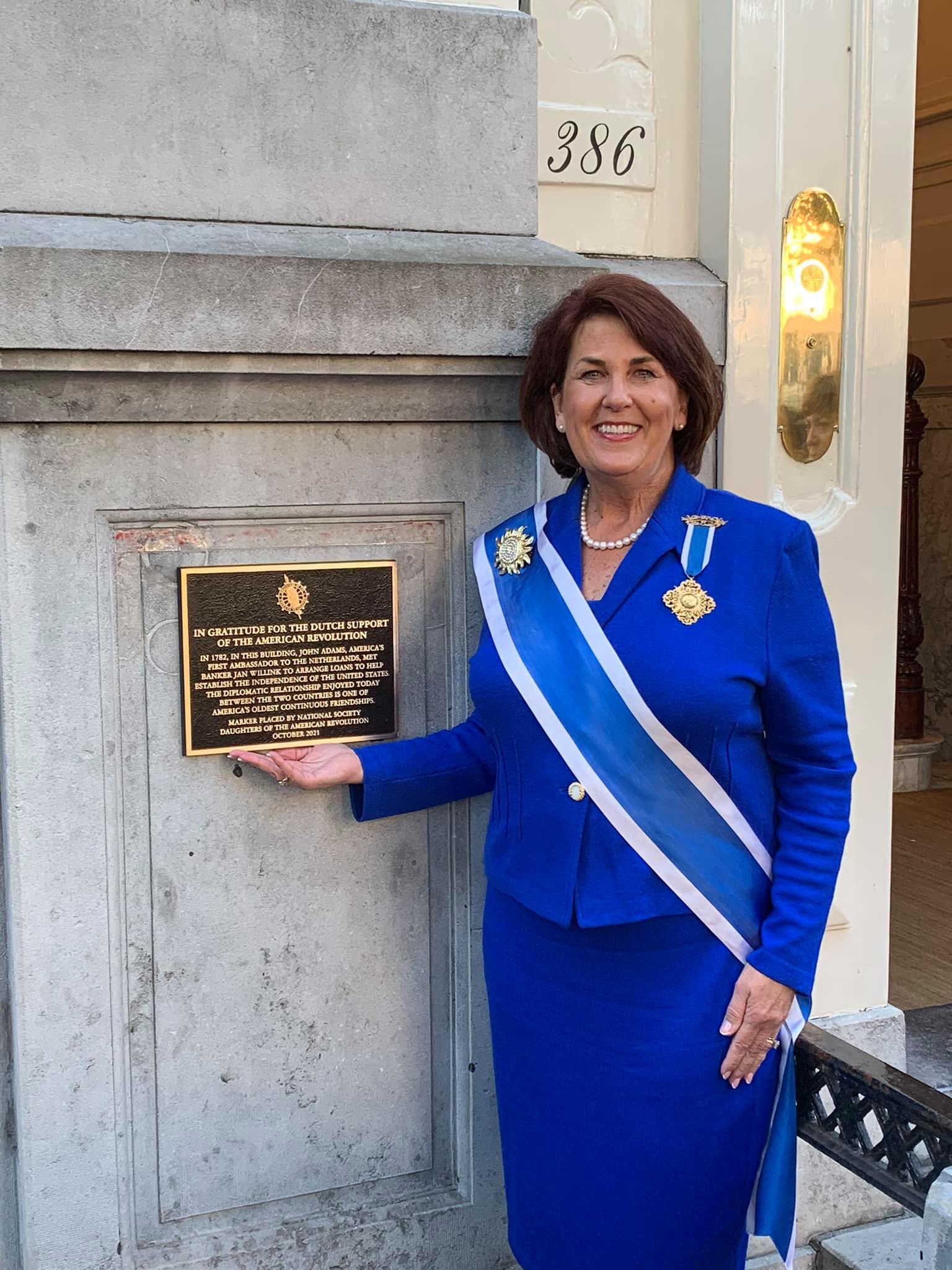
As many of you know, President General Denise VanBuren recently traveled to Amsterdam to place a marker honoring the centuries-old diplomatic ties between the United States and the Netherlands. This achievement led us to wonder about the extent to which DAR members are familiar with the National Society’s rich history regarding the placement of commemorative markers overseas. Our records indicate NSDAR has placed at least 16 markers in at least eight countries covering a variety of historical topics. Let’s take a closer look at just a few of these beautiful markers and the fascinating history that inspired them.
Tales from the Archives: Placing Commemorative Markers Overseas
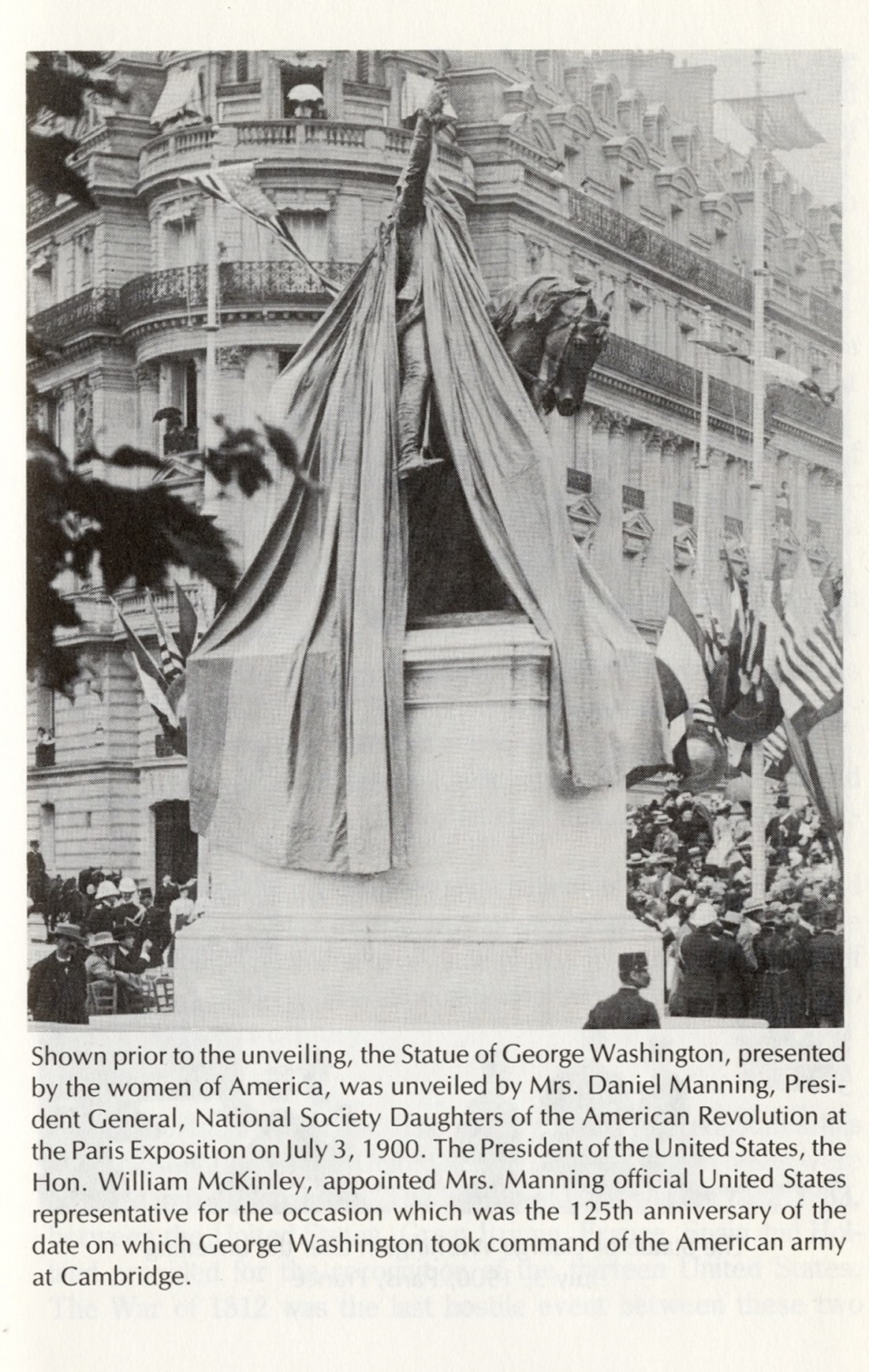
As part of the celebrations at the Paris Exposition in 1900, President General Mary Manning attended the unveiling ceremonies for two statues. In previous years, DAR members had participated in fundraising for the Association of American Women for the Presentation of a Statue of Washington to France. Mrs. Manning proudly unveiled this statue on July 3, 1900. The text on the monument reads: “Given by the women of the United States of America in memory of the friendship and brotherly aid given by France to their ancestors during the battle for independence.”
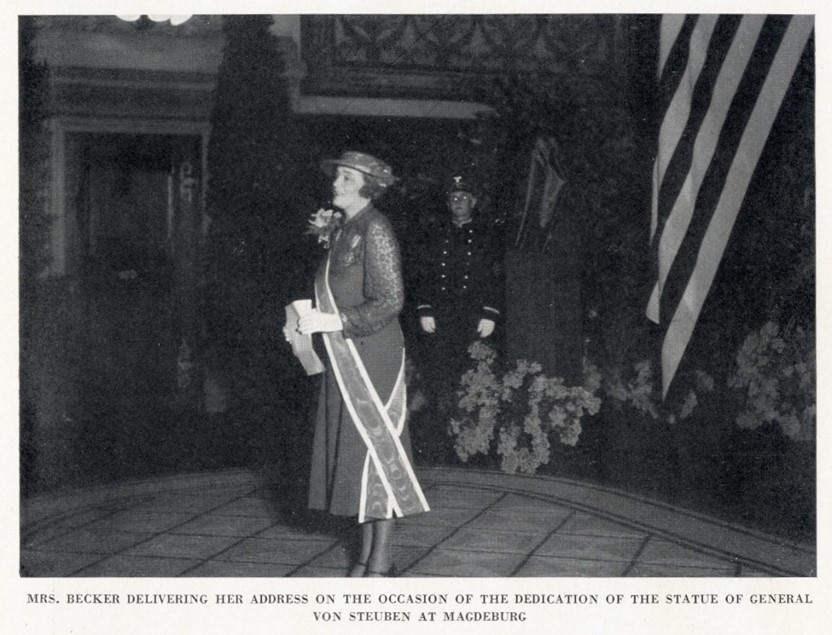
In 1937, President General Florence Becker traveled to Europe where she toured England, France, Germany, and Italy. She led the Berlin-based Dorothea von Steuben Chapter in a commemorative marker ceremony honoring General Friedrich Wilhelm von Steuben’s service in the Revolutionary War. Baron von Steuben was trained in the Prussian Army beginning at age 17 and served as General Washington’s chief of staff late in the war. He is credited with teaching essential military tactics to soldiers in the Continental Army.
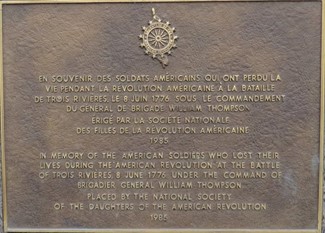
On August 26, 1985, President General Sarah King and members of her Executive Committee dedicated a marker in Quebec, Canada, in honor of American soldiers who died in the Battle of Trois-Rivières on July 8, 1776. The battle was part of the American attempted invasion of Quebec, which had begun in September 1775.
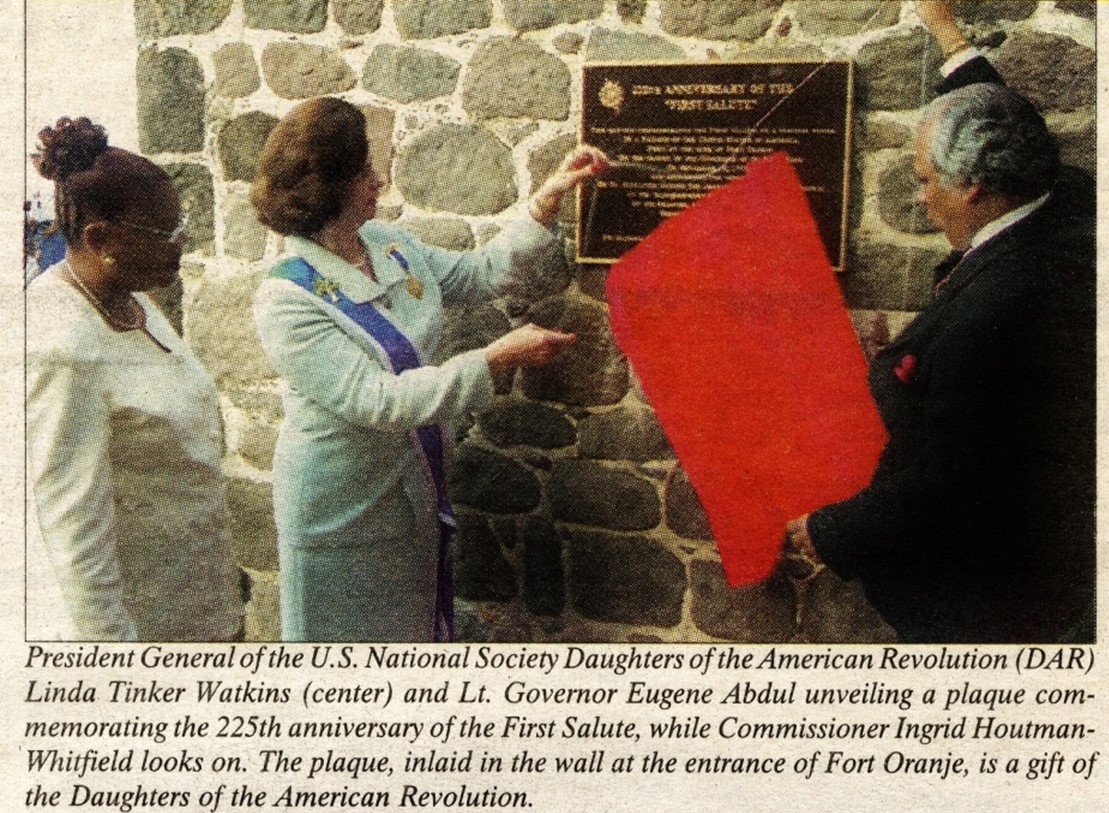
On November 16, 1776, St. Eustatius, an island in the Caribbean and a special municipality of the Netherlands, became the first foreign power to recognize the sovereignty of the United States. On November 16, 2001, President General Linda Watkins celebrated the 225th anniversary of the “First Salute” by dedicating a marker at the entrance to Fort Oranje on St. Eustatius. The text reads: “This marker commemorates the first salute by a foreign power to a warship of the United States of America, fired by the guns of Fort Oranje on the orders of the Governor of St. Eustatius on November 16, 1776, and recognizes the importance of St. Eustatius during the American War of Independence as the transshipment point for a good part of the weapons, ammunition, and supplies needed by the Americans.”
It is imperative for Americans to learn how events that occur outside our borders connect to our own country’s history so we may better understand our past. We trust NSDAR will continue its patriotic traditions and educational efforts in the future through the placement of additional commemorative markers overseas.
