 Today's DAR
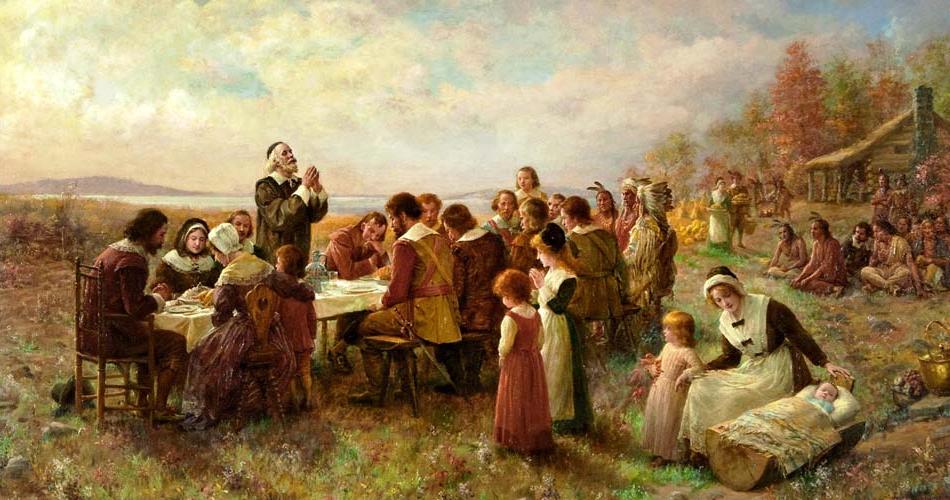
Though the Pilgrims landed in 1620, it was not until the following autumn that the dwindling survivors joined their Native American neighbors for a meal to give thanks for having persisted during a difficult first year. That, of course, makes this year the 400th anniversary of our annual rite of gratitude and feasting. What blessings we have known as a people through the ensuing four centuries of progress!
Though they aren’t often the focus of historical accounts, much of our good fortune can be credited to the women who served and sacrificed (often behind the scenes) through the decades – including those female souls who lived long enough to celebrate that first Thanksgiving. Although more than 100 men, women and children had arrived on shore, by the autumn of 1621, only about 50 remained, including just four married women. For nearly 80 percent of the women on the Mayflower died during the first winter, a far higher percentage than for men or children.
The story of their first 1621 harvest celebration didn’t emerge until Alexander Young wrote of it in his 1841 book Chronicles of the Pilgrim Fathers, citing, in part, the long-lost journal of Plymouth's Governor William Bradford, whose account had turned up in the private library of the Bishop of London. (It had apparently been stolen from Boston's Old South Church by British soldiers quartered there during the Revolution! Read more about that possibility: https://historyofmassachusetts.org/of-plymouth-plantation/).