
Never Forget Garden Blooms in Historic Mobile

Denise Doring VanBuren, President General

While I am grateful to the many individuals, chapters and state societies that have answered our call to plant Never Forget Gardens in commemoration of the centennial of the Tomb of the Unknown Soldier this year, I am especially appreciative of the Alabama Daughters who cordially invited me take part in their moving dedicatory exercises over the weekend.

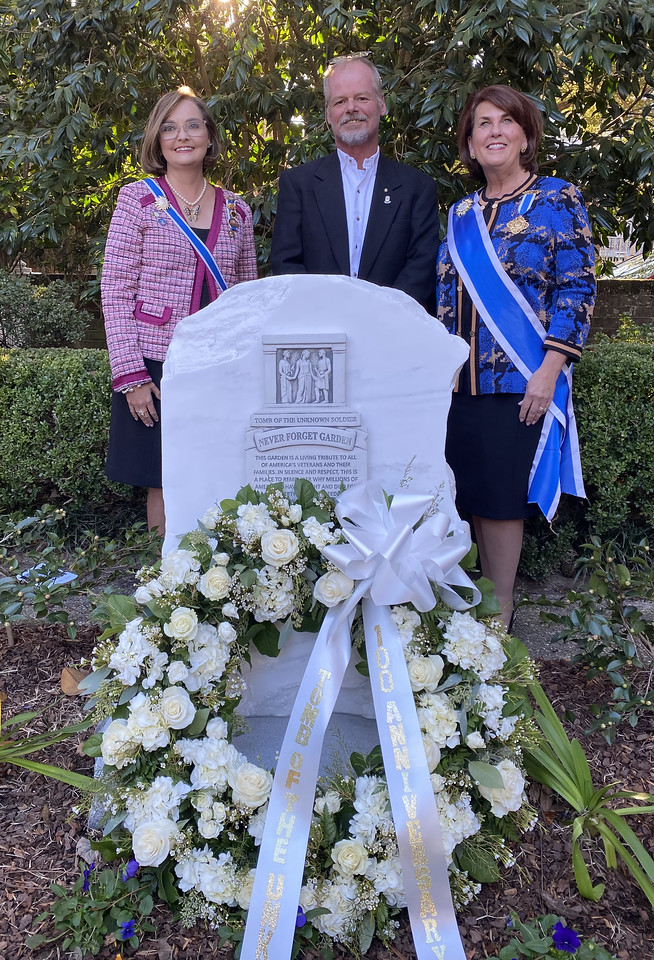
The gardens are encouraged by the Society of the Honor Guard of the Tomb of the Unknown Soldier, which officially describes them as follows: “This project is a nationwide invitation to all Americans and freedom-loving people to plant gardens as a visual way to represent unwavering commitment to our sacred duty to recognize, remember and honor our veterans and their families now and for many years to come. The Society feels that every flower, plant, or tree planted will be a symbol of love and act of unity. In the timeless language of flowers, your Never Forget Garden will quietly trumpet the message that must never weaken: one of America’s sacred commitment to never, ever, forget or forsake our veterans or the principles that define us as Americans.”
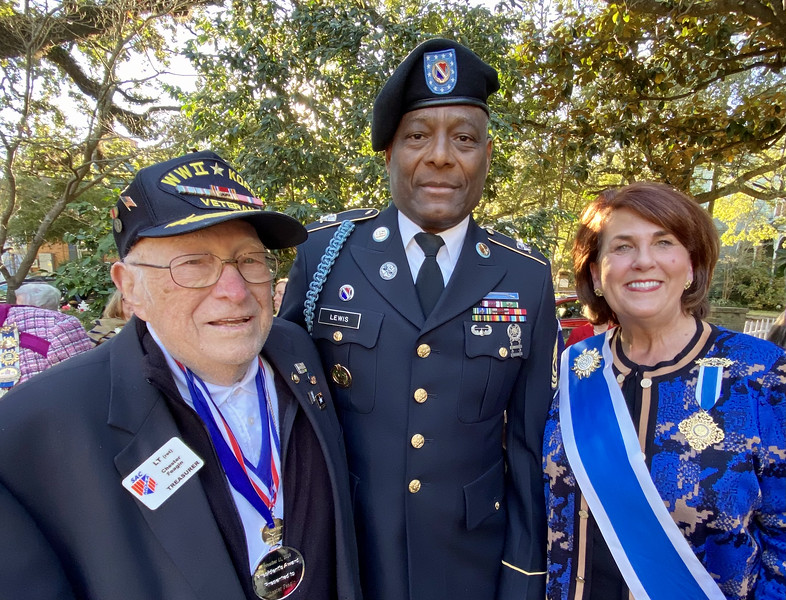
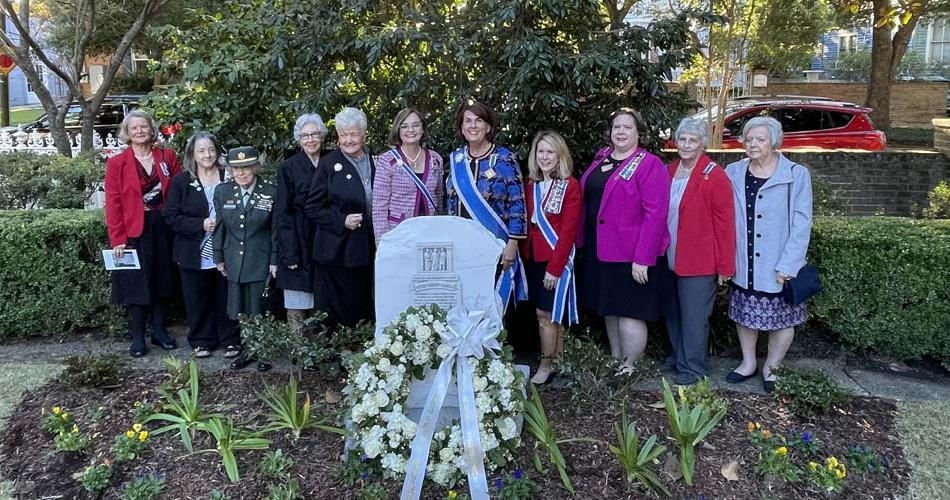
I was overjoyed to be included in the ceremonies to dedicate the new Never Forget marker in the beautiful Victorian Garden of the Richards DAR House in Mobile on Saturday. More than 200 people attended the ceremony, which was followed by an enjoyable outdoor tea on a lovely autumn afternoon. What an honor to share the day with a dozen veterans, including a gentleman who had served in World War II – and what a pleasure to be provided a “key to the city” by the mayor’s office!

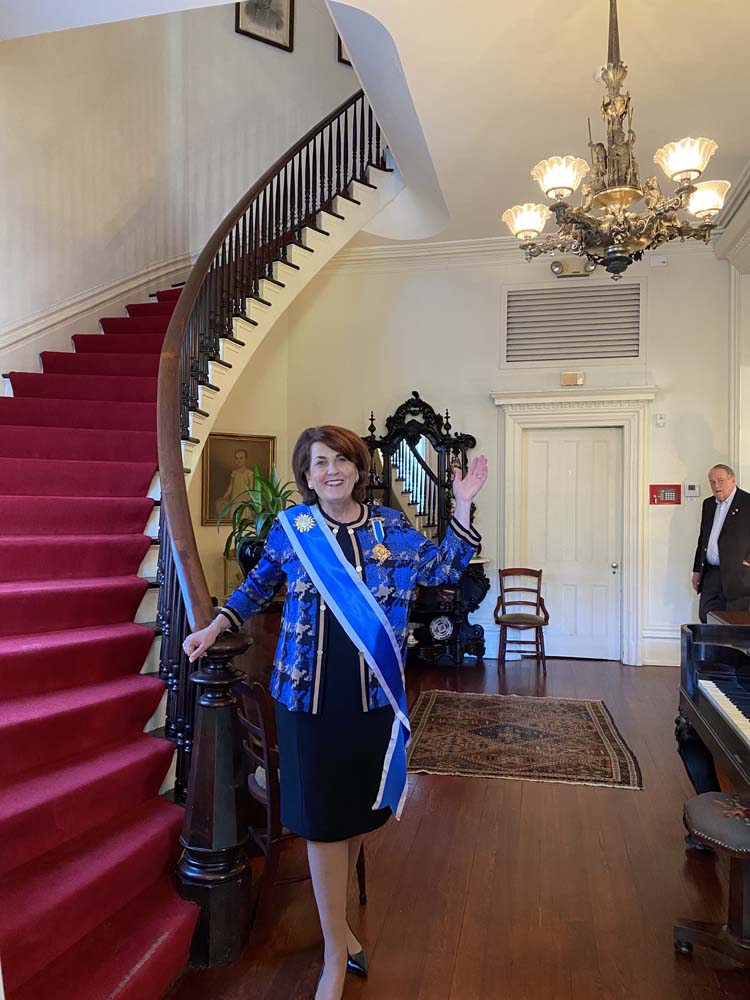
One of Mobile’s most treasured historic landmarks, the Richards-DAR House Museum is an 1860 Italianate townhouse with rare and unique porch ironwork illustrating the four seasons. Its approximately 10,000 square feet are filled with period furnishings that include Cornelius and Baker chandeliers, Carrara marble mantels, a cantilevered staircase and ruby Bohemian glass windows. Steamboat Captain Charles Richards and his wife Caroline Elizabeth Steele Richards built the mansion, and it remained in the Richards Family until 1946, when it was purchased by the Ideal Cement Company for corporate offices.

One of the De Tonti Square Historic District properties, the house was listed on the National Register of Historic Places on February 7, 1972, after coming into the possession of the City of Mobile.  Though still owned by the City, it is has been lovingly and proudly operated and maintained by four Mobile Chapters since 1973. Architectural historians consider it to be one of Mobile's best-preserved and elaborate examples of mid-19th century domestic architecture – and my too-brief tour was sheer bliss for this old house person! I am enormously impressed by the women who have so meticulously furnished, curated and cared for this home, which attracts about 1,000 visitors annually. Thank you to the members of these chapters past and present for being such excellent stewards of the property. It was a privilege for me to visit this excellent example of historic preservation, made possible due to their commitment to our National Society and its mission. And it was an honor for me to assist in the dedication of a garden that will forevermore honor the sacrifice of our nation’s military, especially as two Revolutionary War battles were fought here (in 1780 and 1781, when Fort Charlotte was contested in what was then West Florida) in its adjoining garden. The dedication ceremony was superb in every detail, and I was honored to share highlights of my recent tour of France to retrace the steps of those who returned our Unknown Soldier from the battlefields of World War I.

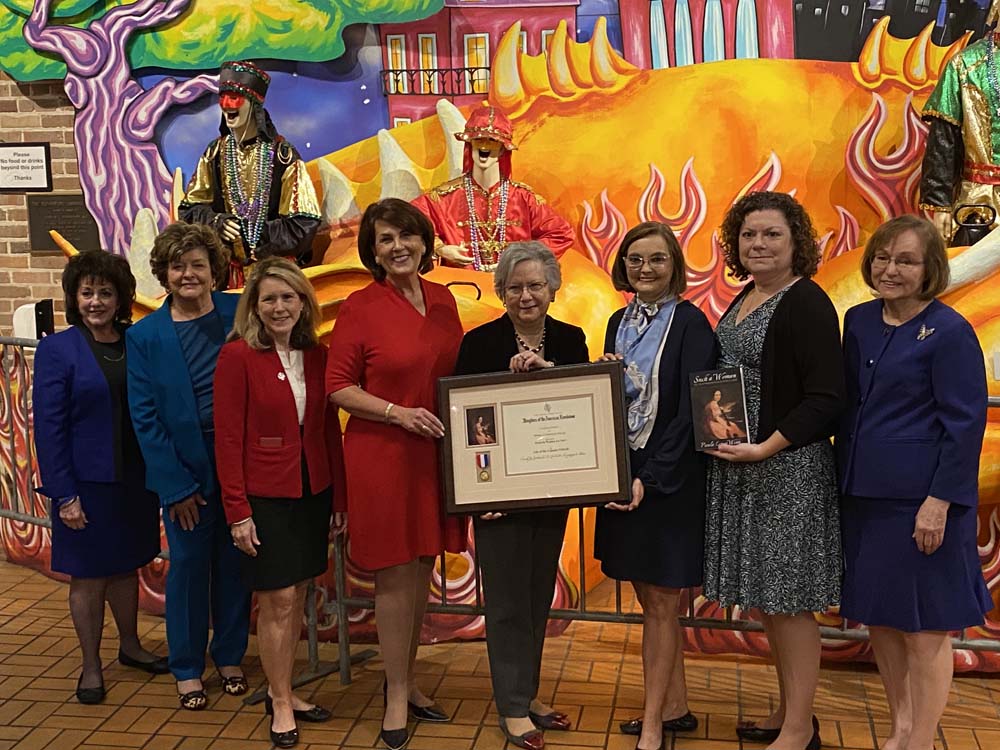
I am grateful to State Regent Patrice Donnelly and all of the gracious Alabama Daughters who frankly spoiled me throughout a weekend that was filled with wonderful camaraderie, tours, meals and shameless pampering. I was delighted to witness their recognition of Octavia Walton Le Vert with a posthumous DAR Women in History Award honoring her distinction as one of America’s first female Southern authors to win national acclaim in the 1800s and her dedication to historic preservation at sites such as Mount Vernon.

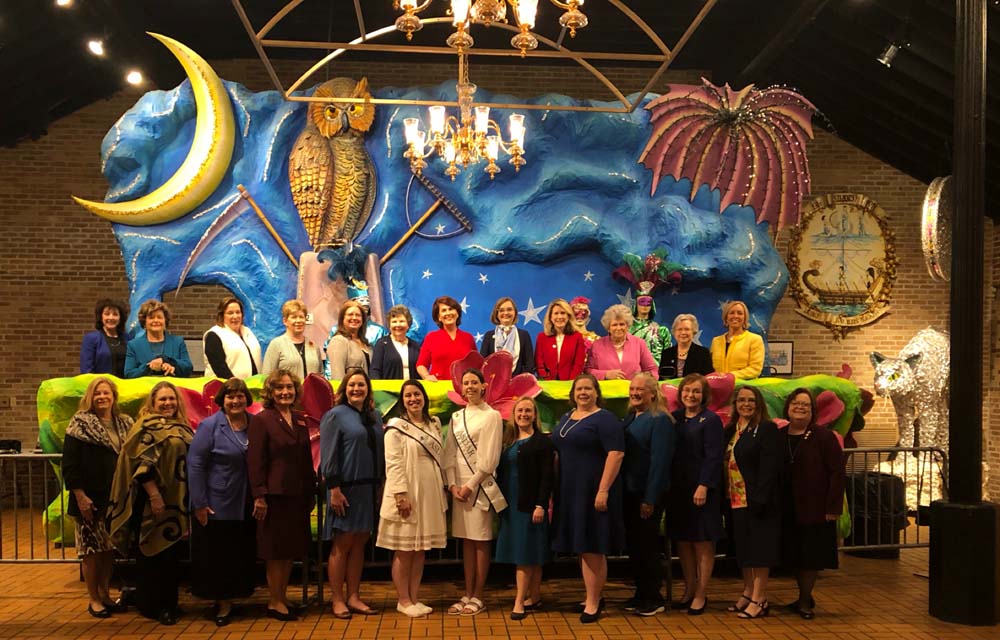
Another highlight was visiting the Mobile Carnival Museum. Did you know that Mardi Gras was conducted for the first time in the New World by French pioneers at Twenty-Seven Mile Bluff, the first settlement of Mobile way back in 1703? By 1711, Carnival was born in present-day Mobile as residents joined in song, food and dance. A Papier-mâché bull, in honor of Boeuf Gras (another name for Mardi Gras), was pulled down Dauphin Street in what is believed to have been the first carnival “parade” in North America. If you have never visited this historic community, I encourage you to do so. Its residential historic districts are breathtaking, and its vibe is a vibrant mix of history mingled with fun.

And it is not too late for you/your chapter to plant a Never Forget Garden – please visit https://tombguard.org/centennial to learn more about the commemoration and how you can support it. It is a comfort to me that generations of Americans will reflect on the sacrifice of our military due to these gardens – please be a part of this effort.

send-a-commentSend Us a comment