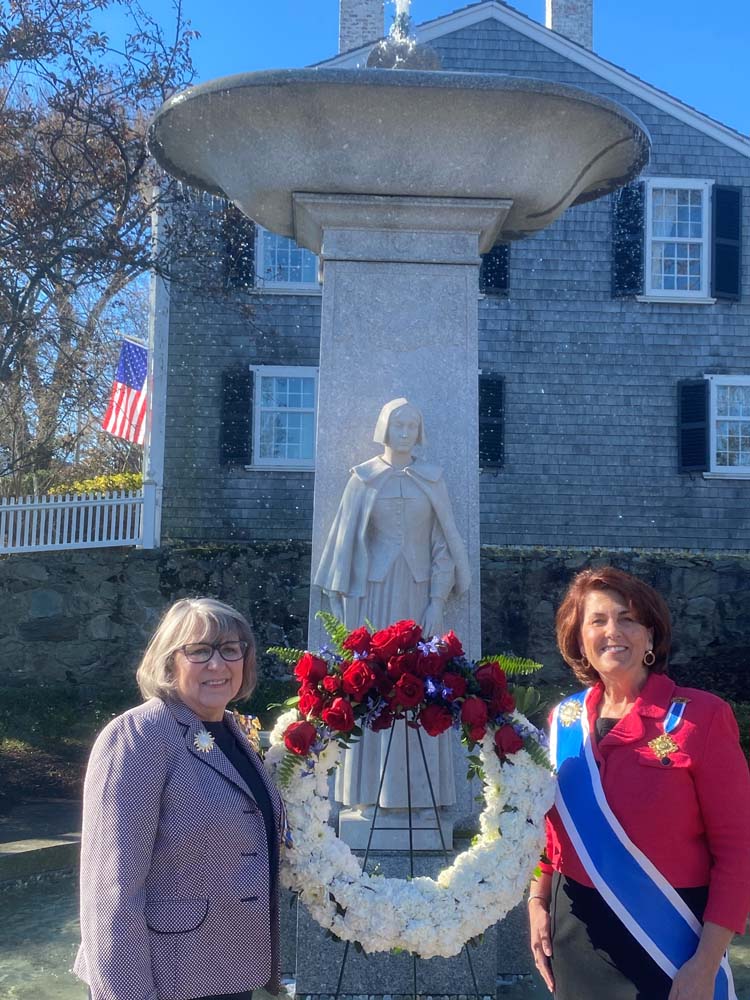

Inspired by the Pilgrim Mothers

Denise Doring VanBuren, President General

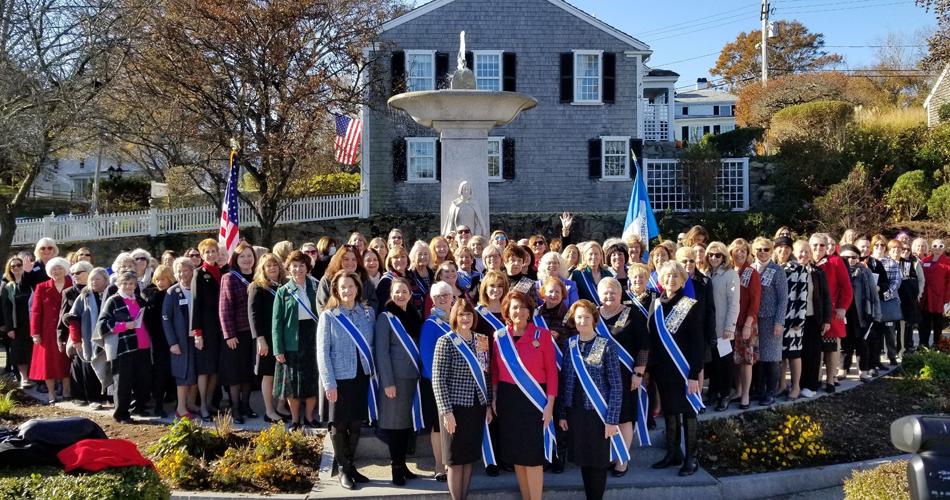
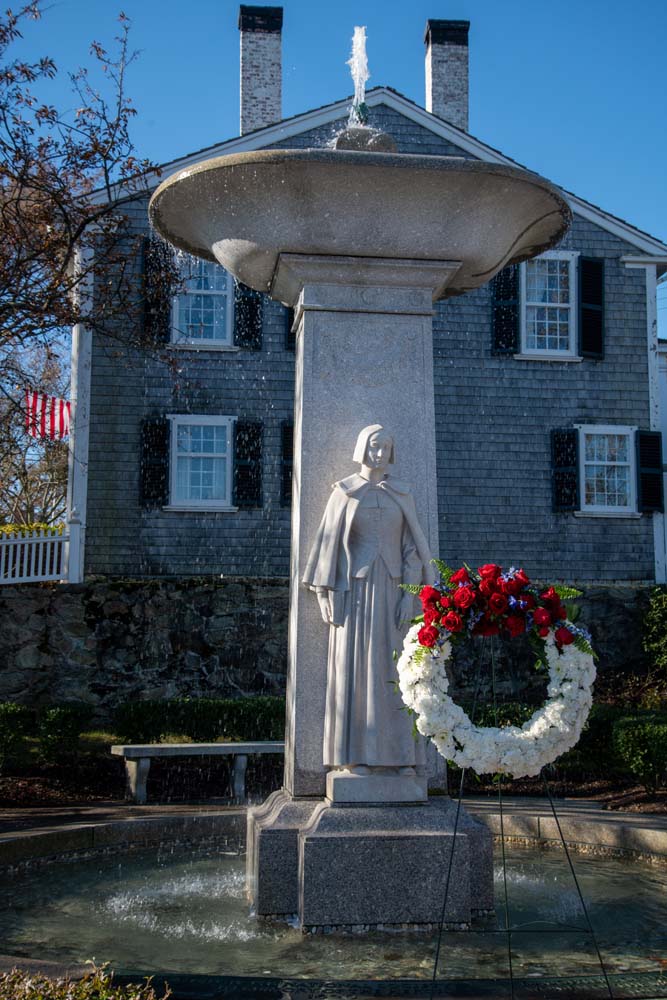
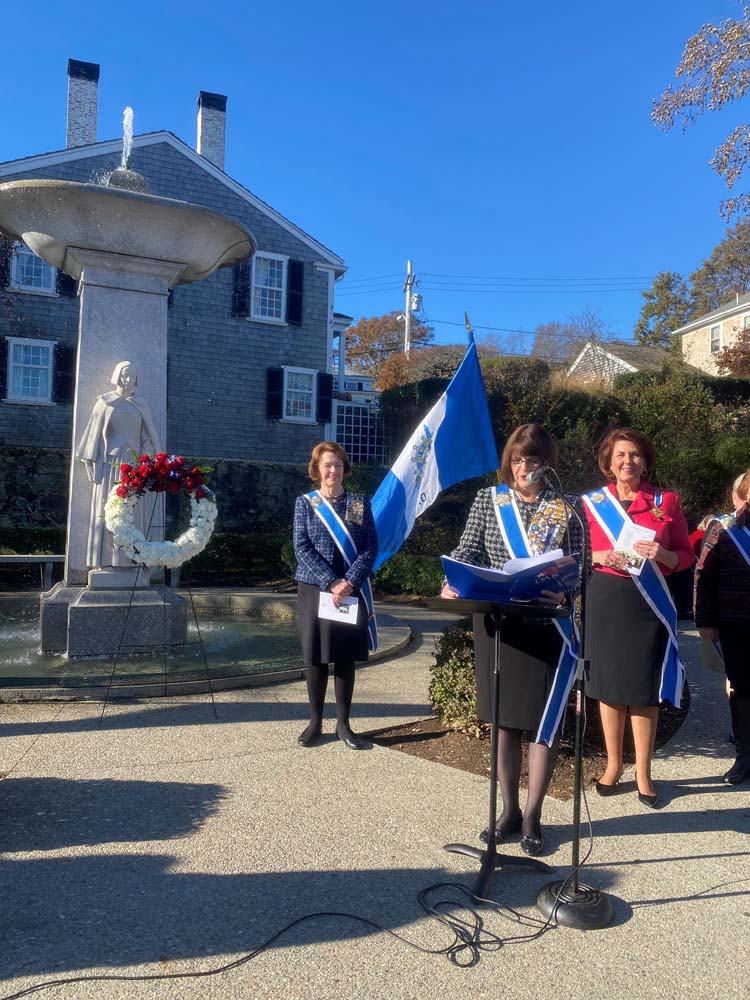
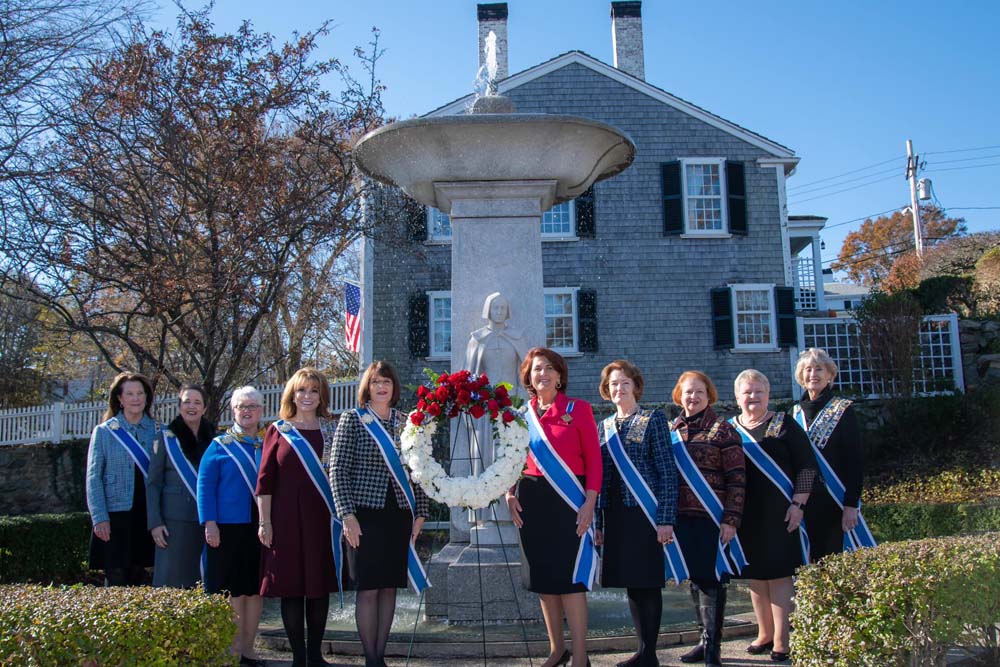
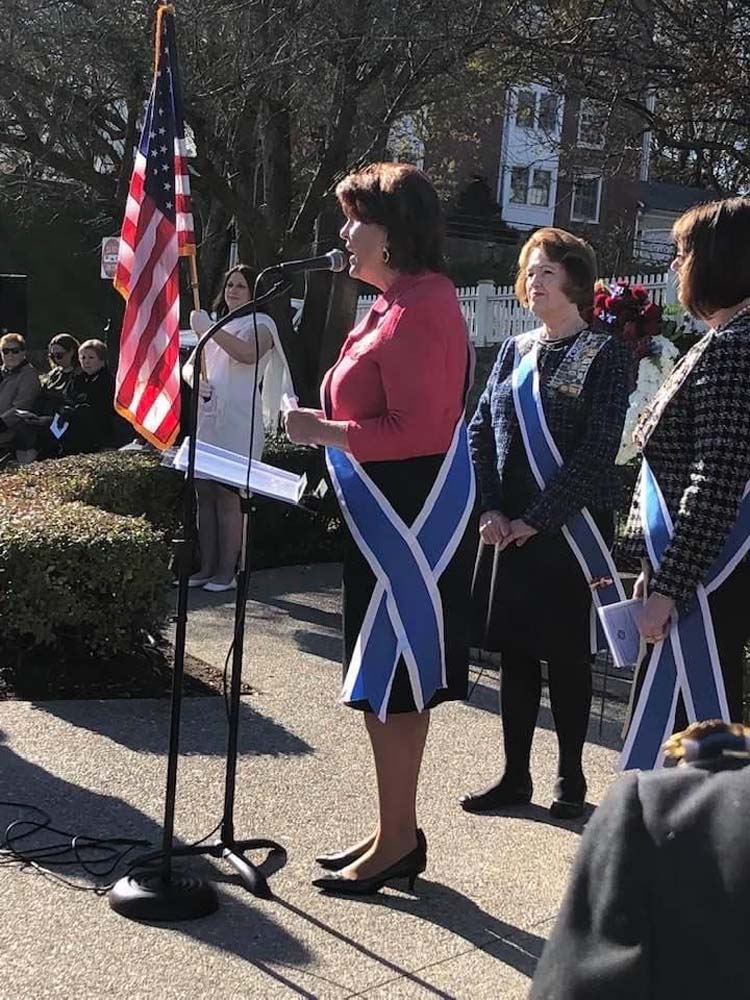
Less than a month ago, a DAR delegation traveled to Leiden in South Holland to lay a wreath in memory of the Pilgrims in the very community from which they had departed for a wonderous and dangerous New World four centuries before. We toured the 900-year-old Peterskirk where they are memorialized and the Pilgrim Museum. It was the first time that our National Society had ever visited the Netherlands -- and it was a trip full of amazing experiences. On Saturday, Nov. 6, we brought that journey full circle by rededicating our National Society’s Plymouth, Mass., statue that honors the women aboard the Mayflower in recognition of its centennial.

The NSDAR erected this monument to recognize the fortitude and faithfulness of the mothers, daughters, wives and sisters who took a bold voyage, endangering themselves and their family members, in search of religious freedom and tolerance. There were 18 adult women and 24 family units on the voyage – a relatively unique facet of a pilgrimage to settle a new colony at the time. How progressive of our Society, a full century ago, to erect this monument to ensure that the story of the female passengers would not be left out of the public consciousness or storytelling of the epic events that occurred here.
I find in them a fitting role model during our own difficult days. Though our seas have been roiled not by the currents of the mighty Atlantic but by the waves of a pandemic and divisiveness, let us be inspired by their determination and deep commitment to a cause greater than themselves. Let us steady ourselves in their memory – knowing that generations of strong and mighty women have followed in their footsteps, blazing new trails across a great and prosperous nation on a journey that began at a place called Plymouth Rock.

Tenacity. Resilience. Hope – these are the lessons that we learn from these intrepid women. Let us recommit ourselves to honor the example of the Pilgrim Mothers by serving as good and faithful stewards of the dreams they carried across a mighty sea. It is a pleasure to share below some history of the statue, details of its recent restoration and appreciation to those who made possible Saturday’s events.

History of the Pilgrim Mother Monument

In commemoration of the 300th anniversary of the Mayflower, our National Society approved construction of what would become a memorial fountain in Plymouth to specifically honor the courageous women on the voyage. In 1922, $25,000 was allocated for its construction (about $345,000 in today’s currency). The first two sites considered for the memorial were rejected before an ideal waterfront location on the corner of Water and North streets was chosen.

Our National Society then selected McKim, Mead & White, the famed American architectural firm that came to define the ideals of the American Renaissance, to complete the project. German-born sculptor Carl Paul Jennewein, a naturalized citizen, was chosen to design the sculpture itself. He was a prodigious artist whose work includes the majestic pair of eagles that guards the entrance to Arlington National Cemetery.

The Pilgrim Mother is cut from Knoxville Marble, a type of sandstone. She is mature (which avoids duplication of the Pilgrim maiden so often depicted) and appears strong, yet gentle and calm, with a spiritual quality. She is clothed in the Pilgrim attire displayed at the time at the Metropolitan Museum of Art.

Restoration of the Monument

After nearly a century of exposure, the Pilgrim Mother was in need of a thorough assessment, cleaning and restoration. Our administration allocated funds to complete the restoration in 2019, in anticipation of the 400th anniversary of the Mayflower. Work began with the Massachusetts Department of Conservation and Recreation as part of its ownership and maintenance of the Pilgrim Memorial State Park. Bids were solicited, and Skylight Studios was approved to complete the work. Conservation was performed by their Robert Shure, as well as Kevin Duffy of Line and Stone, Inc.

After the scaffolding went up and the Pilgrim Mother covered for her protection, a century of leaves, rocks, twigs and coins were removed from the fountain’s upper bowl in what may have been the first time that it was ever emptied. Even the fountain’s decorative finial was hanging on with just one screw, causing the water to spout out at an awkward angle. Indeed, our Pilgrim Mother was overdue for a facelift.

The fountain and statue were cleaned, and its joints were assessed and repaired with painstaking accuracy, using lead to fill seams – thereby allowing the granite to expand and contract in the changing climate. This is the same process and type of tools that would have been used on the curbing a century ago during its construction.

With years of stains and dirt removed, it became obvious that our Pilgrim Mother was actually in remarkable shape not only for her age, but also for her water- and wind-swept location. Though there are a few small divots in its sandstone, the fountain is structurally stable, with no movement to it. There is no indication of settling, sinking or tilting, indicating that the substructure beneath the monument is stable.

Although she now glistens white in the sun in beautiful reminder of the strong and faithful women who landed here in 1620,  there is more work to do. For while the names of the Pilgrim women who were known in 1920 are inscribed on the rear of the fountain, more women have been identified through later research. Their names will be added to an information panel that will be erected to complete the project in coming months. The signage will also include the history of the fountain and information about our National Society. I hope that you will schedule a visit to see this remarkable statue and this important place in our nation’s history.

Rededication

The entire project was coordinated by Massachusetts Daughter Patrice Delorey Hatcher, who also organized an amazing weekend of activities for more than 150 participants. On Friday evening, Commemorative Events 400th Anniversary of the Mayflower Vice Chair Grace Bliss Smith presented on the women of the Mayflower and Patrice discussed the restoration of the monument. Following our Saturday morning ceremony, a delicious luncheon at the 1620 Hotel featured a Living History Re-enactor from Plimoth Plantation, describing the real-life challenges of these remarkable women. The following day, more than 50 of the attendees visited Plimoth Plantation to experience it for themselves.

I offer my deepest thanks to Patrice for the outstanding job that she has done over the last two years to make this large and visible project a reality. She has devoted hundreds of hours to its success, and we all owe her a debt of gratitude. I also express deep appreciation to Historian General Laura Kessler, who prepared and organized the formal rededication ceremony. I am grateful to the attendees – many of whom had signed on to attend our events in November 2020, as our best-laid plans were postponed a full year due to the pandemic.

Every woman who has contributed to the General Fund also deserves our thanks, as it was from these monies that the $10,000 were taken to complete the restoration. And finally, let us all reflect on the spirit and the perseverance of the women aboard the Mayflower and be inspired by their example, as once again so beautifully personified in our Pilgrim Mother Statue overlooking Plymouth Rock.  

send-a-commentSend Us a comment