
Visiting Vermont, the Home of Gen. John Strong and the Women Who Saved It

Denise Doring VanBuren, President General

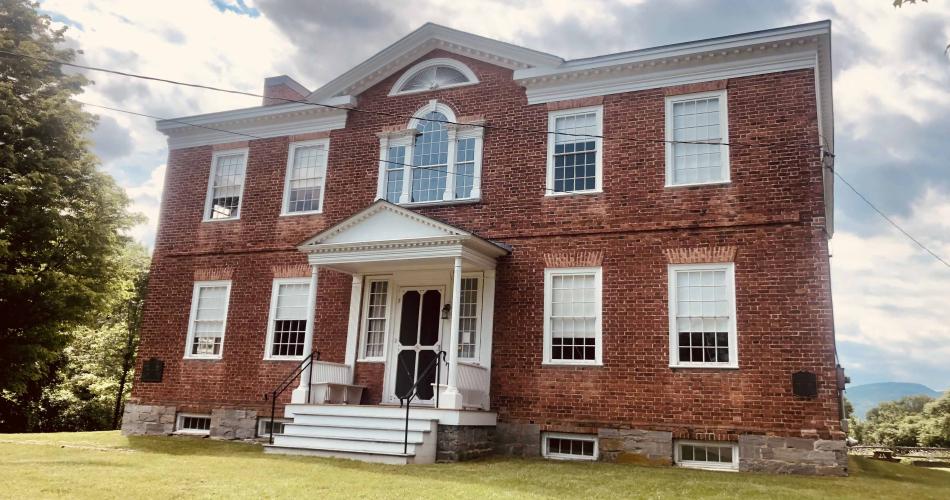
I have several times had the opportunity to drive by the impressive Gen. John Strong Mansion, and I have long wished to peek inside. That wish became reality this weekend, when I was given a tour by the outstanding Vermont Daughters who operate it as the oldest home on the Vermont side of Lake Champlain that is open to the public.

John Strong came to Vermont from Salisbury, Conn., at the age of 27 in 1765 and built a small cabin in what is now Addison. The next February, he moved his wife, Agnes, and their three small children to the new settlement. The family lived in the cabin on the shore of Lake Champlain for 12 years, encountering all the hardships common to pioneers. John received a commission as Captain in Col. Ira Allen’s Regiment in 1776, and his growing family moved to safety in Dorset as tensions escalated in the region. 
After the family returned to Addison, John was elected to the Legislature in 1784, 1785 and 1786 and as the first Judge of Court in Addison County in 1785, when the county stretched to the Canadian border. From 1786 to 1801 he served as Judge of Probate and a member of the Council. He was a member of the Council that worked on revising and re-enacting the Vermont State Constitution of 1786. John was also a member of the 1791 Convention that adopted the U.S. Constitution and approved admission of Vermont to the Union as the 14th State. He died in 1816 at age 78.

By 1795, John’s prosperity had allowed for the construction of a substantial brick home, reflecting his stature in the community and set on 360 acres rolling down to Lake Champlain. The elegance of the Strongs’ Federal-style mansion illustrates the rapid economic shift that took place in the region from the time that he had built his austere cabin. It contains a collection representing five generations of this prominent Vermont family, in rooms designed in a Georgian floor plan with wide central hall. Many of the original details and hardware remain intact; particularly fine are several fireplace mantels with molded cornices, rope moldings and dentils. Two chimneys serve six fireplaces, including the large kitchen one with a bake oven. Even the lock and key on the massive front door are original. 

The mansion became subdivided and suffered from some neglect by the early 1900s. In 1932, the Vermont Daughters rescued it and today operate it as an historic site, welcoming hundreds of visitors annually to learn more about this Revolutionary War Patriot, his family and his home.

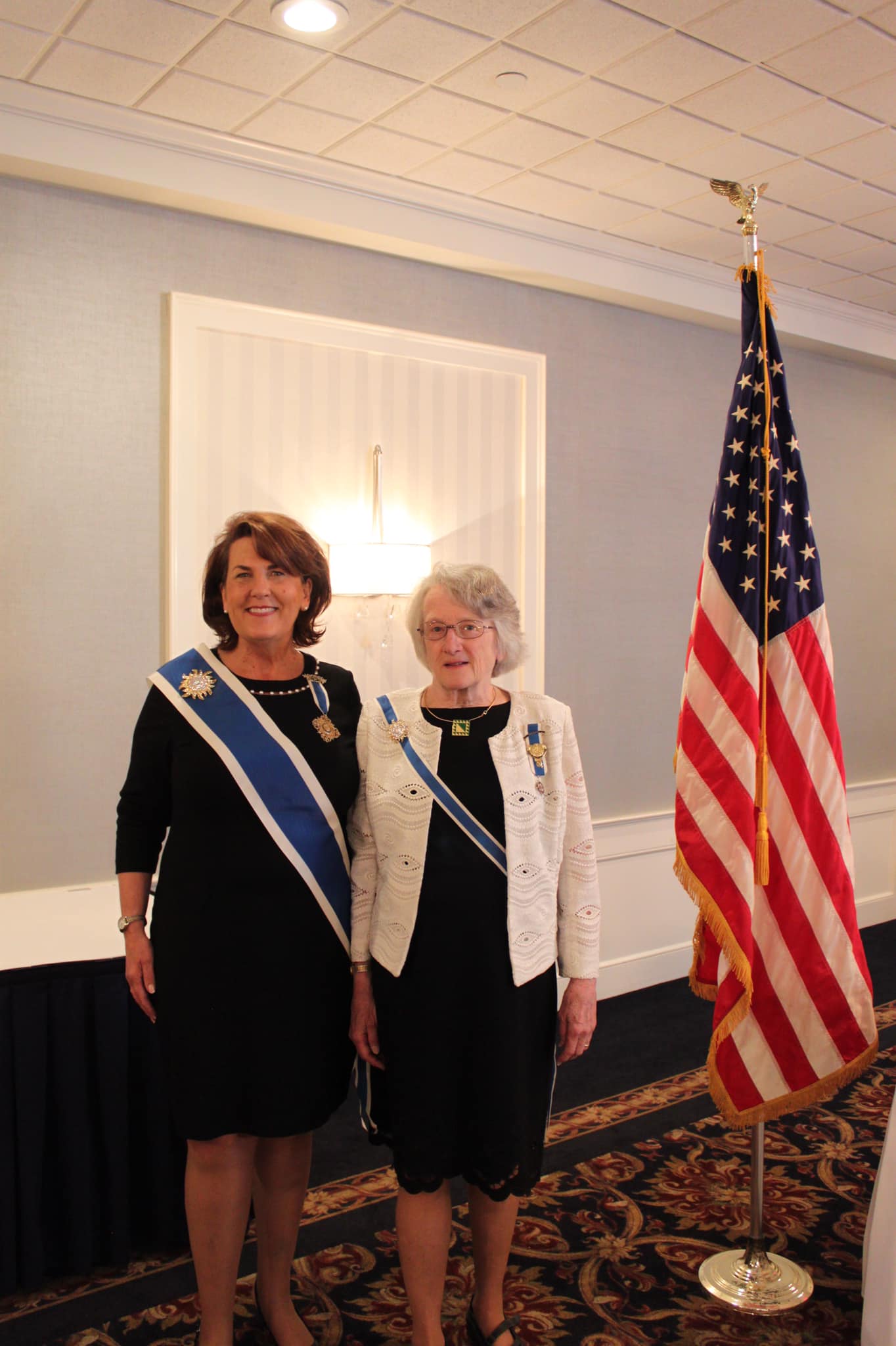
Following the tour, we traveled to the State Capital at Montpelier in order to attend the Vermont State Board of Management Meeting, which provided a great overview of DAR work occurring here in the Green Mountain State. It was a special treat to meet and hear the essays of the state’s two first-place winners in the Good Citizen Contest.

State Regent Edna Whitehead Curtin has concluded a successful two-year term, working under a theme of “Vermont Daughters, Piecing Together Our Heritage,” as symbolized by a lovely quilt square. Meet Edna and hear more about her Daughters here. The Vermont State Society has experienced a five-percent net growth in membership during the last decade, and its 13 chapters are actively engaged in their local communities. It was uplifting to meet these members and learn more about their service and their interests. After more than a year apart, it was also a joy to see them reconnect with one another. Sincere congratulations to the Vermont Daughters and Regent Curtin for exiting the pandemic with an obvious determination to once again Rise and Shine for America here in Vermont.

send-a-commentSend Us a comment