 Today's DAR
While it is always both a privilege and a pleasure to travel as President General to visit with our members worldwide, it is especially enjoyable for me to have the opportunity to take part in events in my home state of New York. In addition to renewing long-time friendships (after more than a year apart from one another!), it was simply grand to again witness their dedication to our National Society’s enduring mission during several days of visits last week. Come, travel with me to the Empire State!
Enjoyable Empire State Events
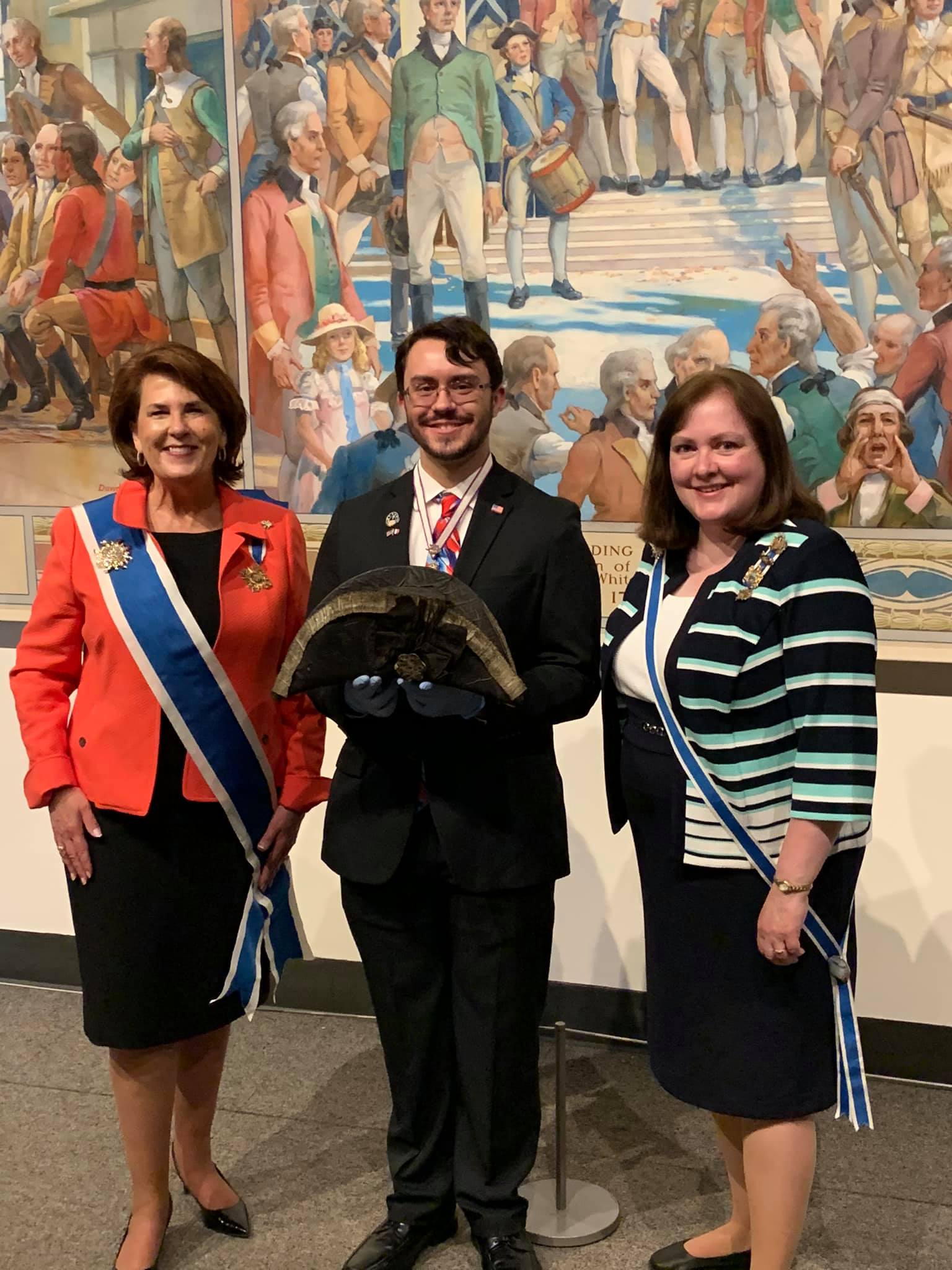
Stop #1: The State Capital at Albany
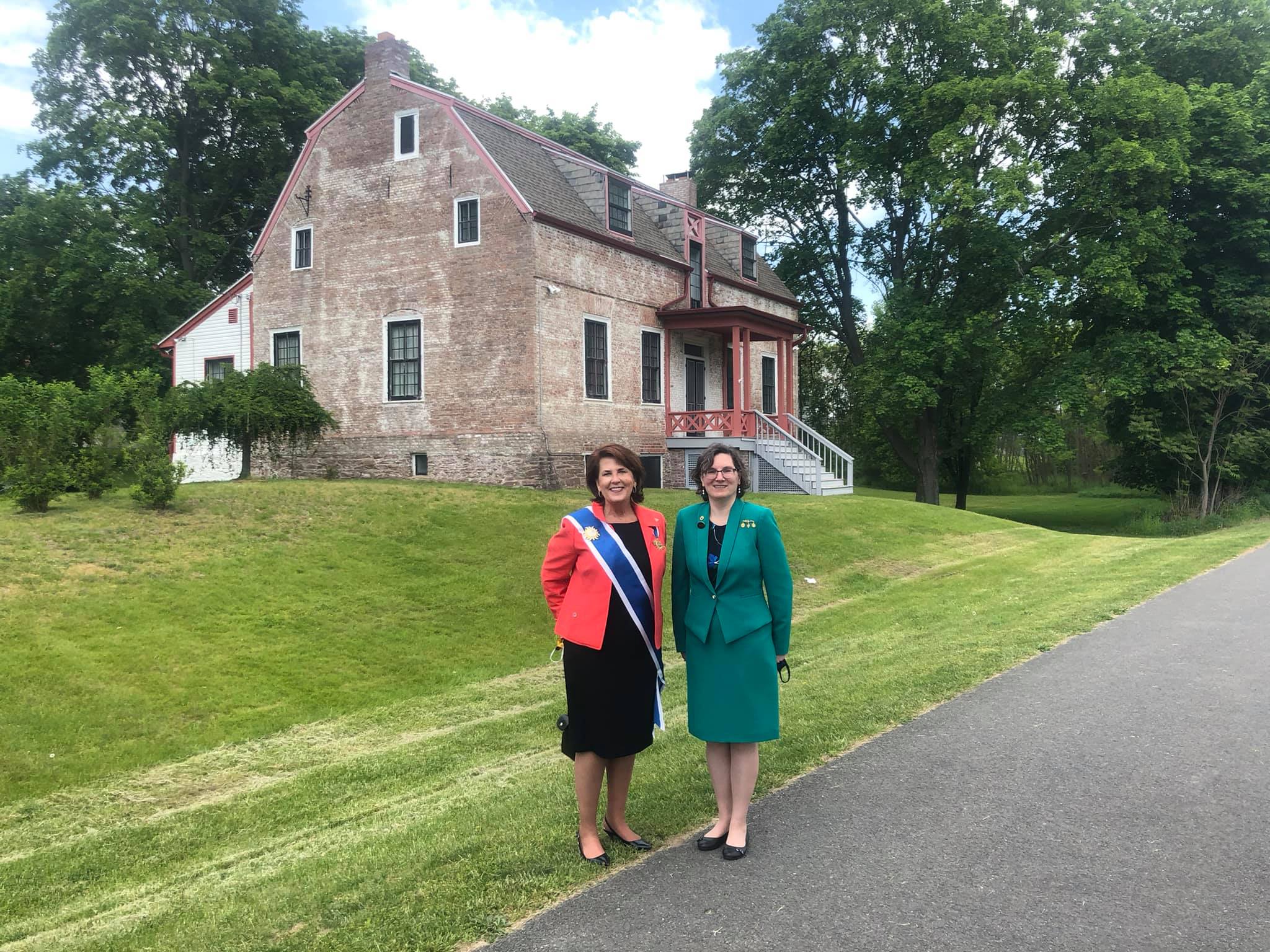
On May 18, New York’s Honorary C.A.R. State President Geoffrey Cundall presented a check for $6,000 to the curators of Political & Military History at the New York State Museum. The funds will restore an 1824 bicorn hat (chapeau-bras) worn by Lt. Col. Jonathan Taylor Cooper when he commanded the military escort for the Marquis de Lafayette's visit to my hometown of Troy in September 1824. Geoffrey chose the project because of New York's prominent connection to the Marquis de Lafayette and because the hat was in dire need of repair. When fully restored, it will be used in the upcoming NYS Museum display to celebrate Lafayette's 1824-1825 American reunion tour. My sons were all active members of the C.A.R., and it was a special joy for me to support these fine young citizens in projects such as these over the years. I am grateful to the Gen. Peter Gansevoort Chapter, of which my mother was a member, for later hosting a luncheon at the Van Schaick Mansion; they own and operate this c. 1735 home where the American strategy at Saratoga was planned.
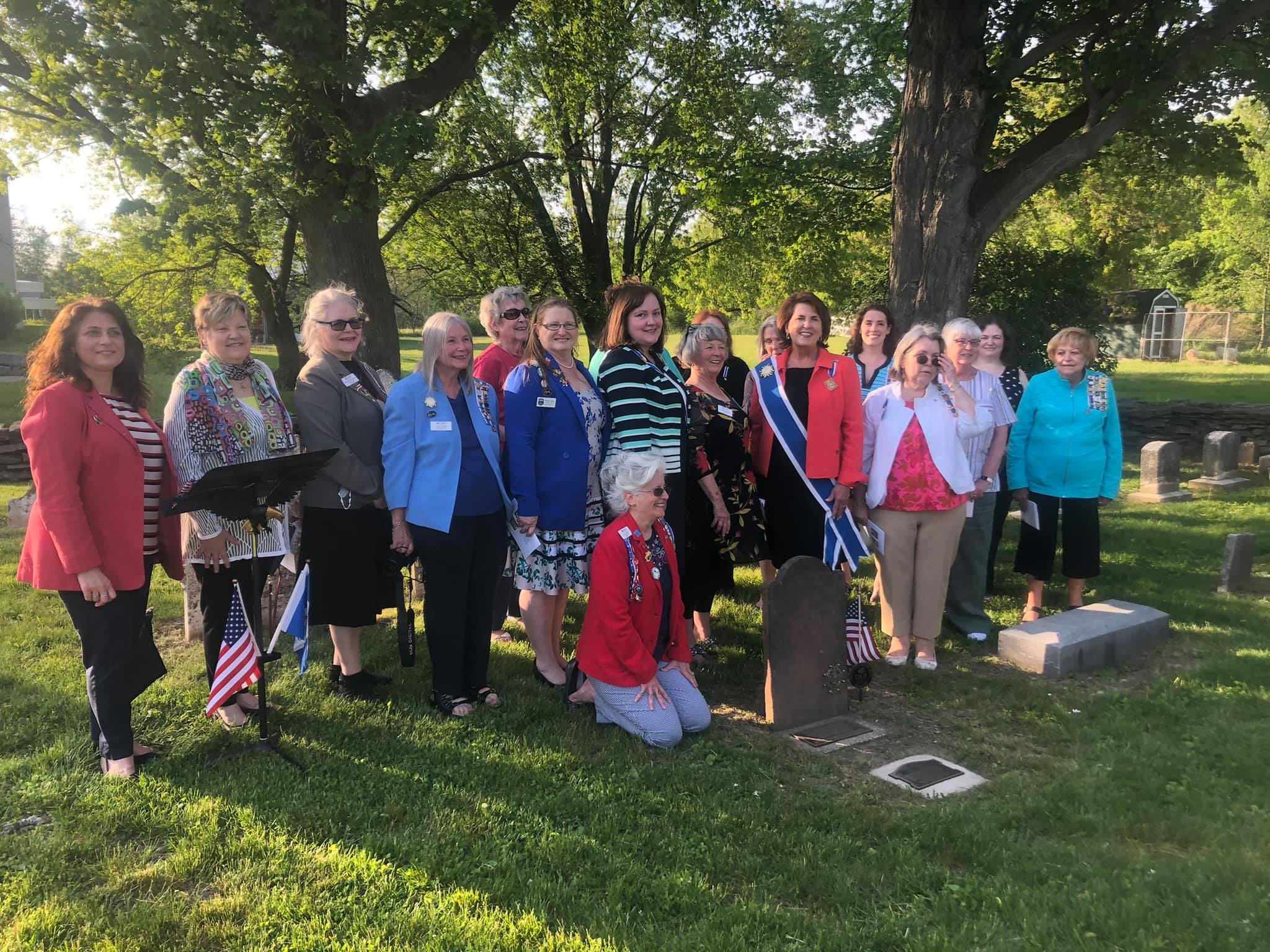
Stop #2: Historic Mabee Farm and Cemetery, Rotterdam Junction
Later that evening, I joined with nearly 50 members and community leaders to dedicate two new Patriot grave markers at the c. 1705 Mabee family stone farmhouse on the banks of the Mohawk River. Cousins John and Cornelius Mabee both fought at the Battles of Saratoga as members of the Albany County Militia, Captain John Van Patten’s 3rd Company of Col. Wemple’s 2nd Regiment. Cornelius, who became a first lieutenant, was born March 18, 1741, and died May 10, 1789; he served from 1775-1782. John Mabee was born January 10, 1728, and died November 24, 1796. During the Revolution, John attained the rank of Corporal. The Schenectada Chapter had painstakingly researched these Patriots and had planned to dedicate the markers last July – until the pandemic intervened. The postponed date actually provided a perfect spring evening to remember these men and their courage, and I was delighted to be a small part of it. I express particular appreciation to Kim and Gary Mabee for hosting me for a delicious dinner (with a great view of the Mohawk!) afterward. The story of the Revolution in the Mohawk Valley is certainly one worth learning about if you enjoy reading military history.
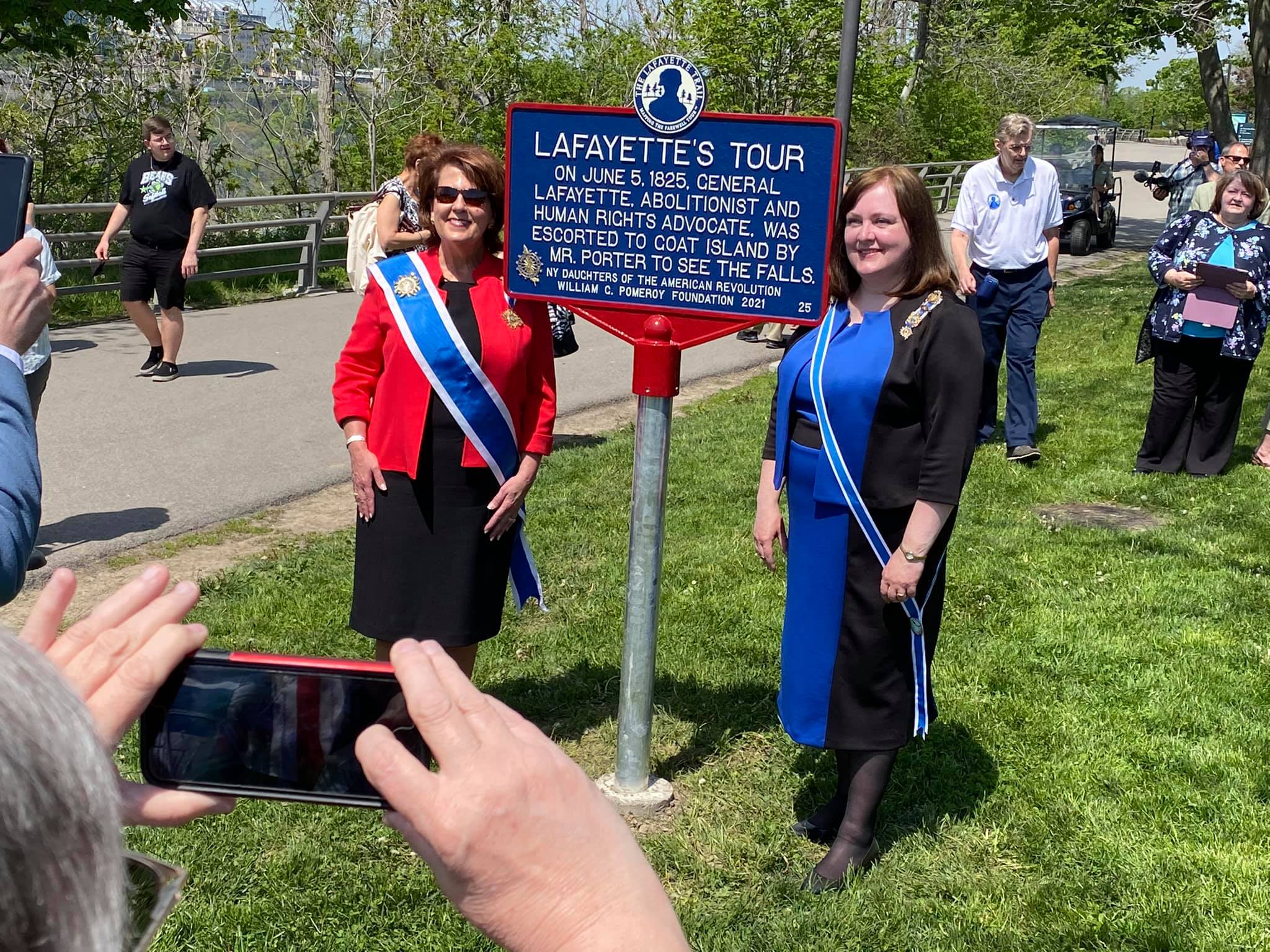
Stop #3: Niagara Falls State Park
New York State Regent Patrice Birner has chosen to support the Lafayette Trail as her State Regent’s Project, and I was overjoyed on May 20 to help unveil the second of what will be ten historic markers donated by the New York State Organization as part of a larger, multi-state trail that will ultimately include 175 markers to honor the 1824-1825 visit of the Marquis to the United States. Given that this state park, the nation’s first, welcomes more than 9 million people annually, this marker will have particular visibility. It reads “Lafayette’s Tour: On June 5, 1825, General Lafayette, Abolitionist and Human Rights Advocate, was escorted to Goat Island to see the Falls.” Days earlier, Mrs. Birner had dedicated the first of her markers, this one at Fort Hamilton in Brooklyn. It reads “Lafayette’s Tour: On September 28, 1824, General Lafayette inspected the Narrows Defenses and was Received at Nearby Fort Lafayette, where he dined.” It is exciting to know that New York Daughters and others across the route are cooperating with this effort to memorialize this trail to honor our French ally and to benefit future generations.
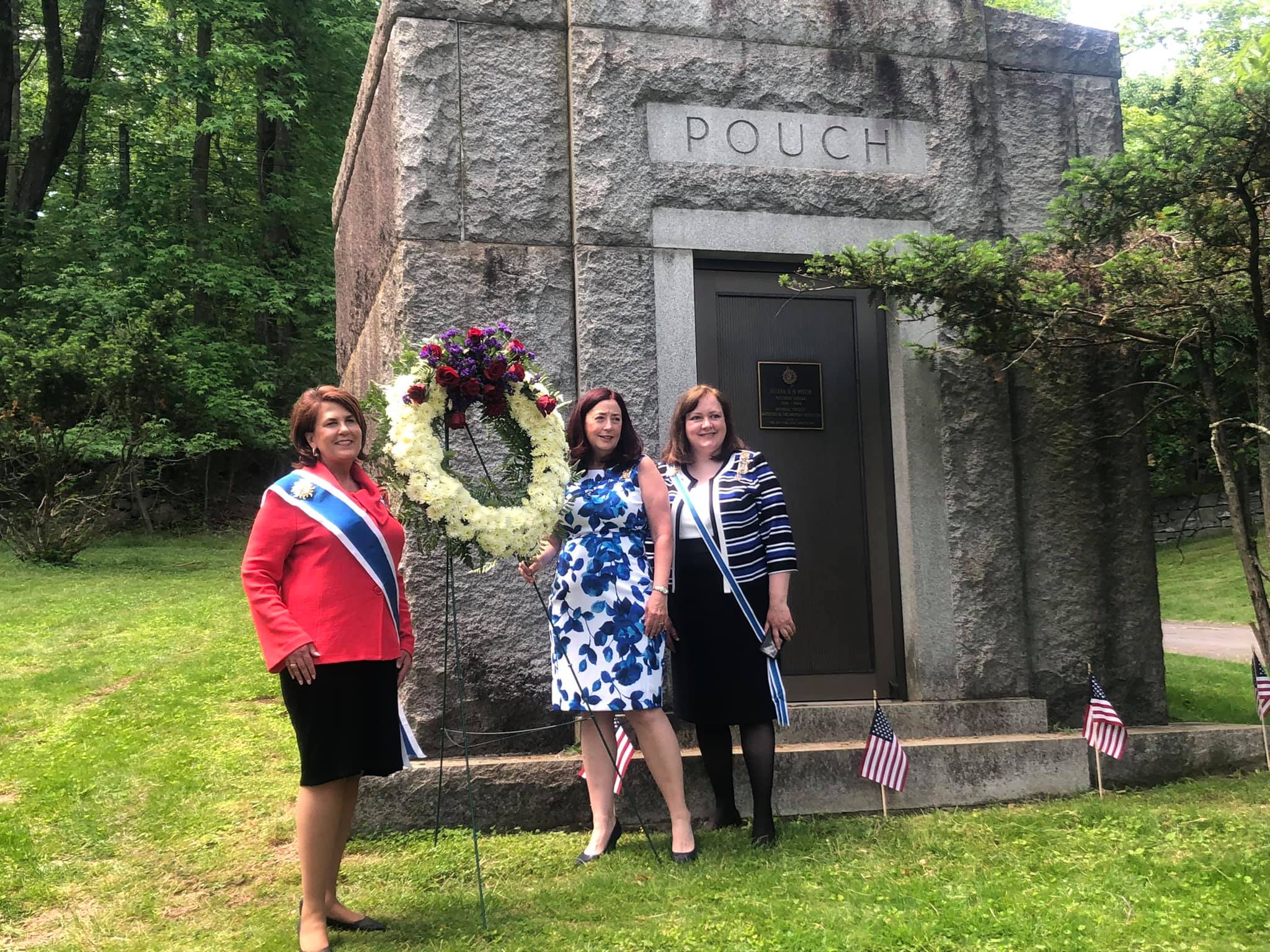
Stop #4: Staten Island
I am immensely grateful to the members of the Richmond County Chapter, who welcomed me on May 23 for a special day to honor the memory of Helena H. Pouch, who served as our 18th President General, from 1941-1944. I have long admired this capable, strong woman, who led our National Society through World War II. She refused to allow the sadness of losing her only child (daughter, Helen, for whom the Helen Pouch Memorial Fund is named) to the 1918 Spanish Flu Epidemic to shape her life. Read more about her achievements in The Wide Blue Sash, which can be found on the DAR website here. We visited the Pouches’ graves, placed a wreath in their memory and recalled Mrs. Pouch’s life of service.
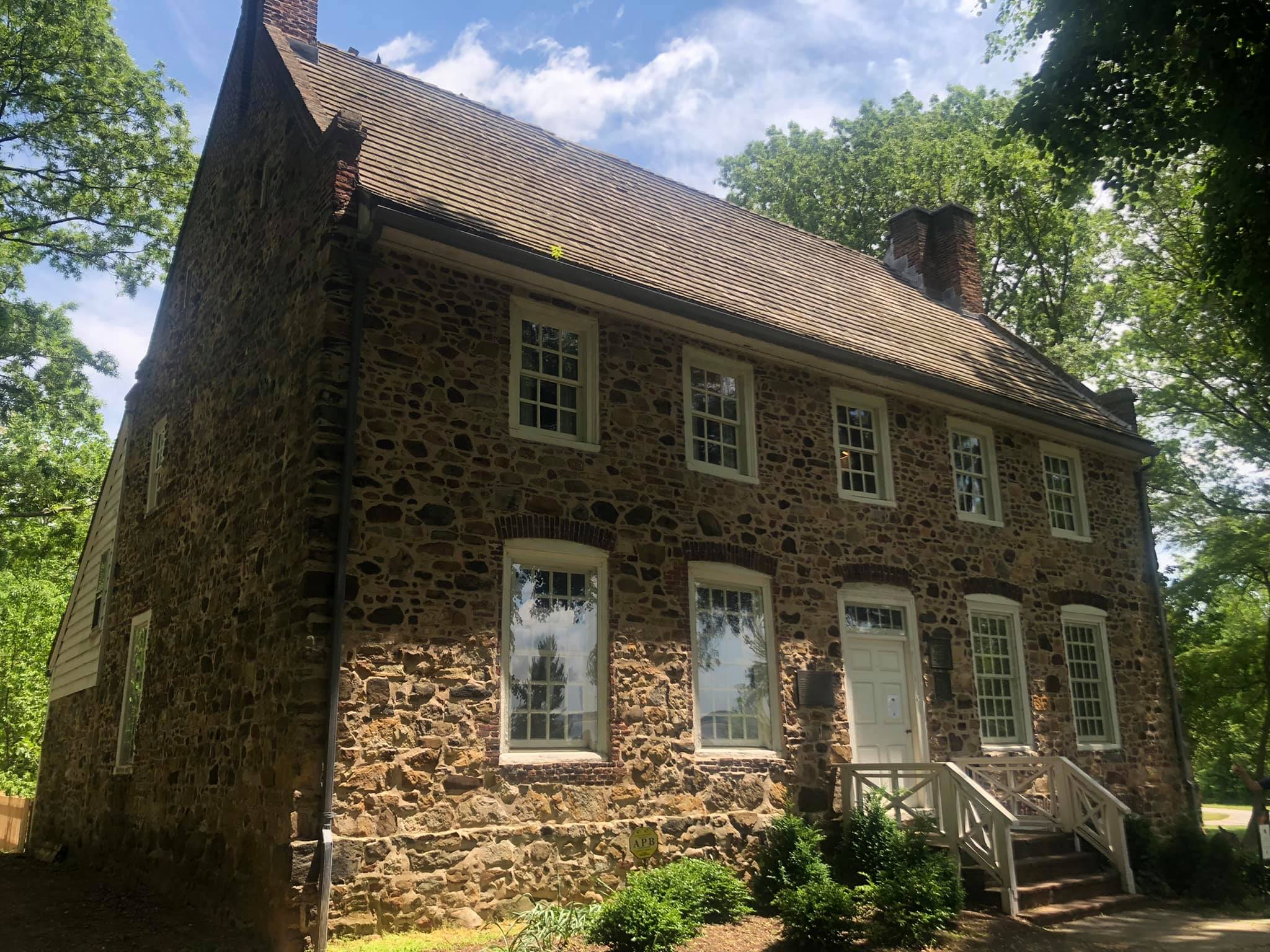
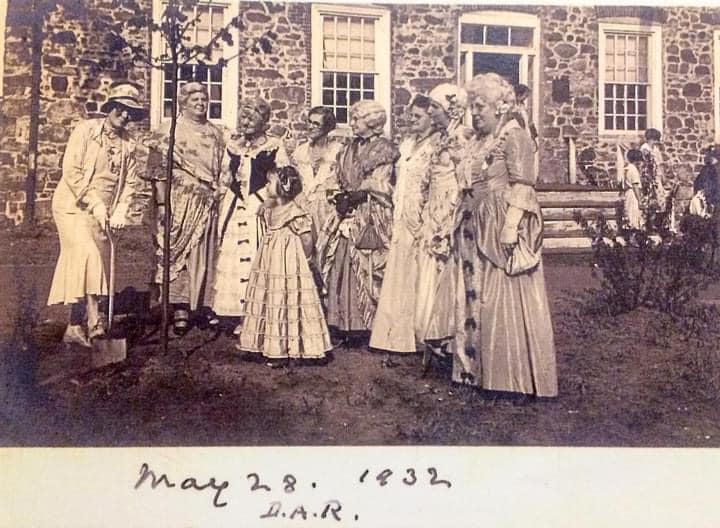
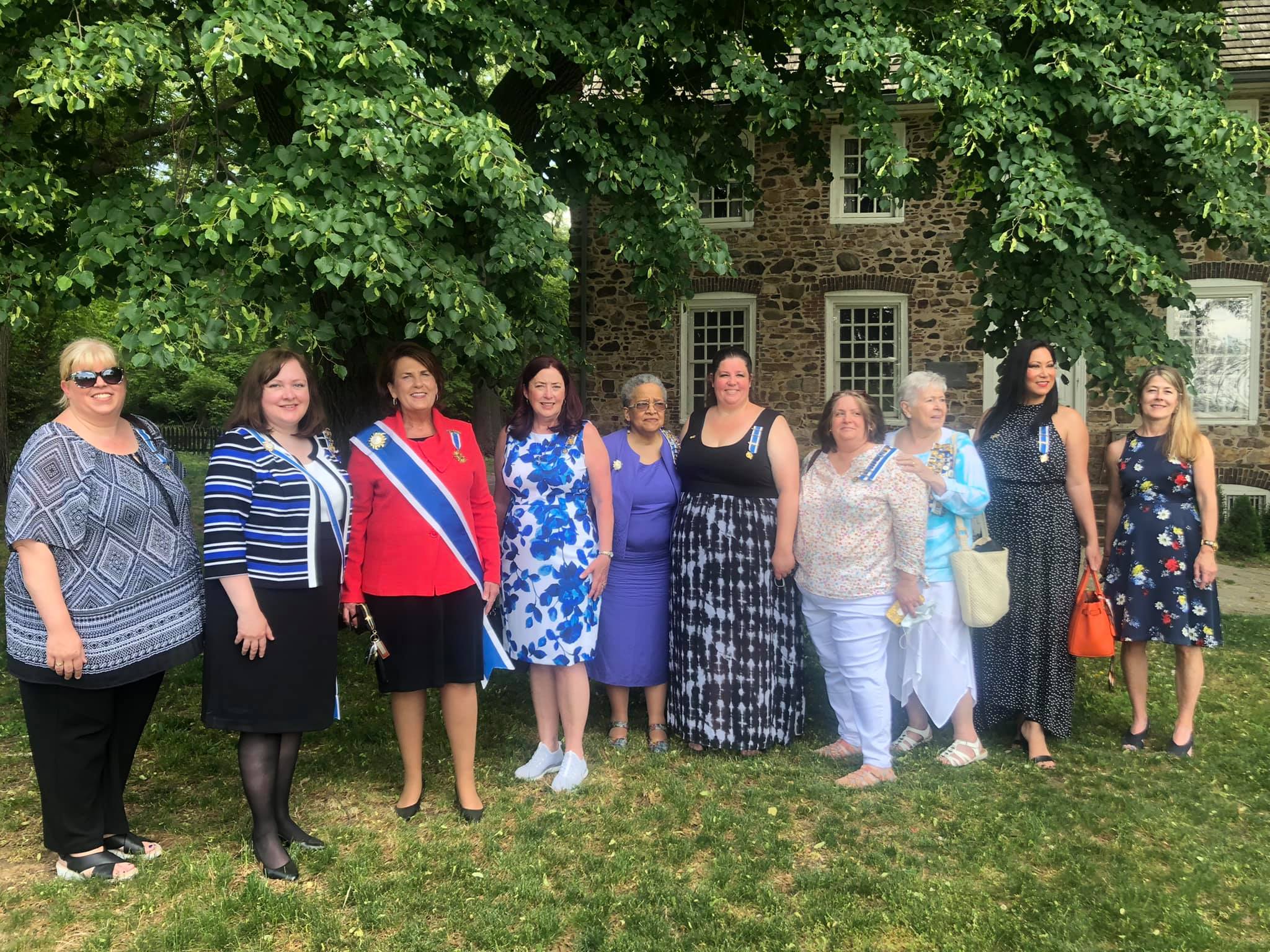
In addition to hosting a lovely luncheon, the chapter members also made special arrangements for our group to tour the c. 1680 Conference House, which early members had helped to save (note the two photos – one taken in 1932 during the planting of 13 trees to honor the 13 Colonies, and one taken during our visit beneath the same tree!). On September 11, 1776, this house was the site of a conference between British Lord Admiral Richard Howe and Founding Fathers Benjamin Franklin, John Adams and Edward Rutledge. With the British controlling New York City, Long Island and Staten Island, the Americans seemed headed for defeat. Lord Howe offered to end the conflict peacefully if the Colonies would return to British control, but the Americans refused to give up their struggle for independence. Franklin, Adams, and Rutledge reported back to the Continental Congress, and the Revolution continued for another seven years.
Thank you, New York Daughters, for your hospitality and generous, patriotic spirit.
And allow me to extend an invitation to all of you to join me on my future adventures, especially now that things are reopening – just follow along on my DAR President General’s Facebook Page!