
The Selfless Example of Mrs. Cabell

Denise Doring VanBuren, President General

You will not find her name listed among the Founders, nor her image hanging in the hallways of 1776 D Street. Devoted to the greater good of our nascent organization, she served without a wide sash, laboring behind the scenes to establish our National Society and cement its strong foundation. She offered her home as our first headquarters, and she provided her dining room table as our first banquet hall. She voluntarily stepped forward to lead without need for spotlight – seemingly motivated by the simple wish to unite patriotic women in their love of country.

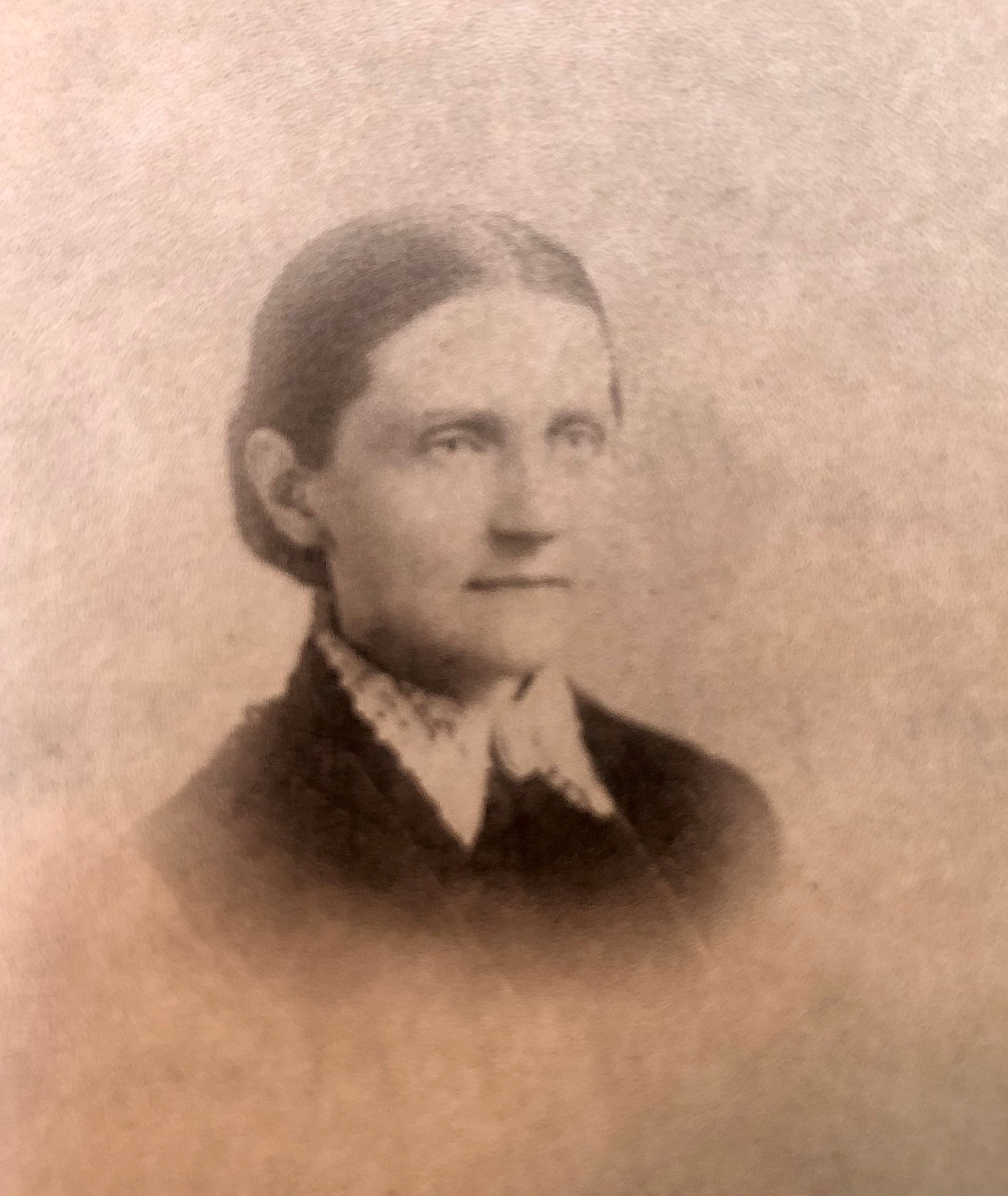
Assigned National Number 6, Mary Virginia Ellet Cabell remains something of a friendly but largely forgotten spirit who hovers over the history of our organization. Yet, no other woman may have had a larger impact upon its formative years.

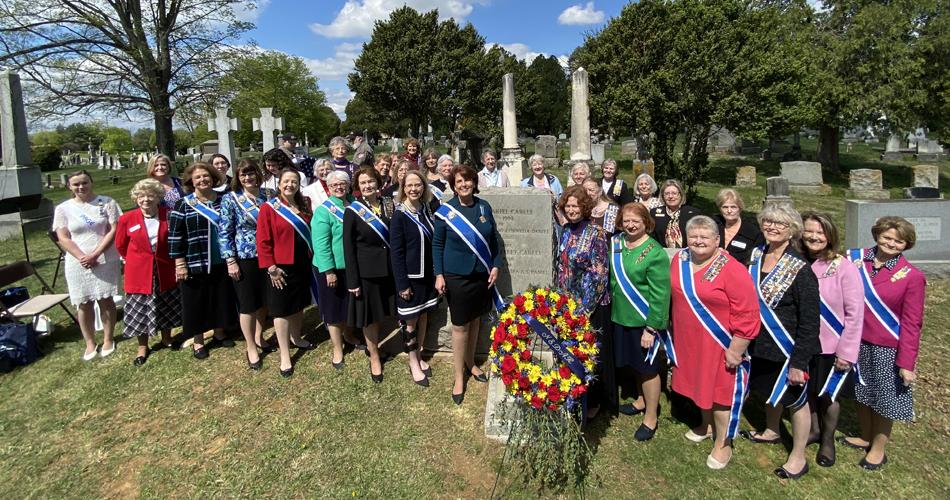
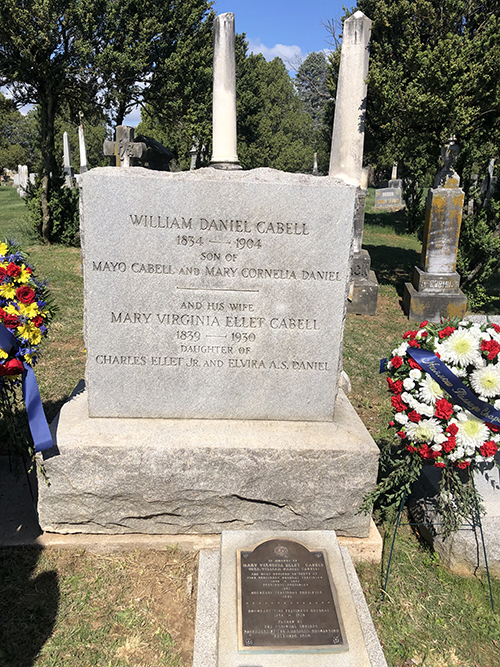
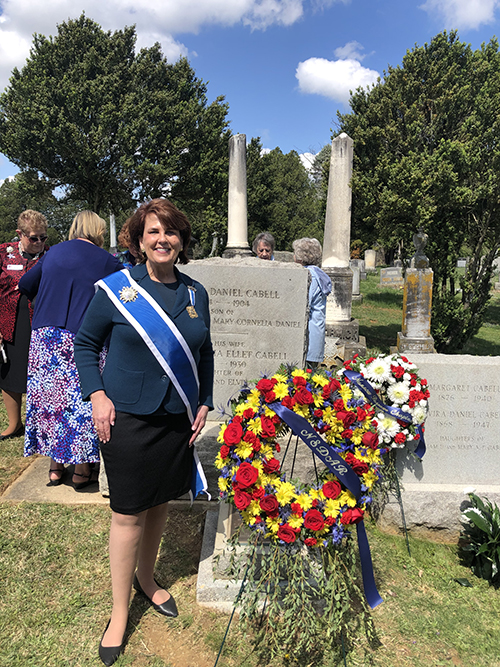
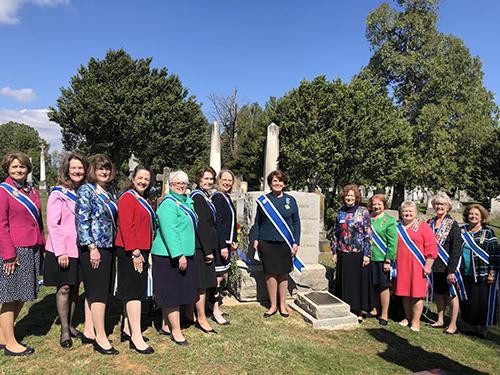
How fortunate I felt on April 18 to be invited by the generous and gracious members of the Narrow Passage Chapter to participate in ceremonies to honor Mrs. Cabell’s life by rededicating a plaque placed upon her grave a half century ago in the picturesque Green Hill Cemetery in Berryville, Virginia. Enjoy the short service here.

Erected in 1970 by the National Society, the plaque reads:

Mary Virginia Ellet Cabell
The Only Officer to Serve As
Vice President General Presiding,
1890-1892
And
Honorary President Presiding
1901
***
Honorary Vice President General
1898-1930

What to make of these “presiding” titles? At the birth of our Society, the Founders recognized the need to attract a well-recognized and respected leader as our first President General in order to provide our fledgling organization with the gravitas necessary to earn the respect (and membership!) of American women. They found one in First Lady Caroline Scott Harrison of Indiana, who accepted with the understanding that her role would be essentially ceremonial in nature.
As Mrs. Harrison’s White House responsibilities and frail health meant that she could not take an active role in the day-to-day affairs of the National Society, Mrs. Cabell stepped forward willingly to assume the critical responsibilities of establishing the new service organization and all of its necessary procedures, priorities and plans. She came to the position well prepared.

According to the Library of Virginia, Mary Virginia Ellet Cabell (1839–1930), was born at Point of Honor in her mother's hometown of Lynchburg, the daughter of Charles and Elvira Daniel Ellet. Her father was a noted civil engineer, and the family moved frequently during her childhood, living in such varied places as Cuba, Niagara Falls, Philadelphia, and several cities in Virginia, including Wheeling, where her father erected the then-longest suspension bridge in the world, across the Ohio River. The family resided in Europe in 1855. Educated by her father, Mary Virginia became proficient in French and German and developed an interest in history.

Her parents and younger brother died in the early 1860s, leaving her to care for her two younger siblings at their home in Philadelphia. In July 1867, she married William Daniel Cabell, a widower with two daughters. They together had three sons and three daughters. In 1865, William Cabell had opened the Norwood School in Nelson County, Penn. In 1881, he sold the school, and the Cabells moved to Washington, D.C., to open the Norwood Institute, an exclusive school for girls, of which they were joint directors. Mrs. Cabell and her husband became well known for their educational work and were prominent members of society.

On October 11, 1890, Mrs. Cabell was one of the 18 women who responded to the call to an organizing meeting of the National Society Daughters of the American Revolution. She later hosted many of early meetings at the Cabells' large and elegant residence, including an elaborate reception to publicize our new organization in 1891.

While she served as our presiding chief officer, the Society opened 150 chapters and accepted thousands of members in 35 states and the District of Columbia; founded a journal, the American Monthly Magazine (later Daughters of the American Revolution Magazine, then the Daughters and American Spirit); and made plans to erect a national headquarters building in Washington, what she referred to as a “House Beautiful.” Cabell was one of our Society's delegates at the World's Congress of Representative Women in Chicago in May 1893 and delivered an address titled "The Ethical Influence of Woman in Education." It exalted the maternal role of women and emphasized their special social responsibility to educate their children properly.

Mrs. Cabell presided at all sessions of the First Continental Congress, during which she posed this question to the Daughters: “What is your object: what do you propose; what good will you do; what is the use of such an organization? What does thou work?”

More than a century and a quarter since Mrs. Cabell first asked those questions, I believe that our Daughters have answered them eloquently, as evidenced by our thriving purpose, growing membership and enduring relevancy. I draw inspiration from her example – and know that she lives on in so many of our members who work tirelessly with no expectation of reward or recognition – only for the opportunity to repay our joyful obligation to our Patriot ancestors and share our love of country. I suspect that Mrs. Cabell’s greatest gift to our National Society was introducing the tradition of selfless devotion to our vital mission.

send-a-commentSend Us a comment