 Today's DAR
“The shot heard around the world;” “minutemen;” “General Gage;” stockpiling arms, ammunition and supplies;” “a secret expedition;” “Paul Revere and William Dawes;” the “North Bridge…”
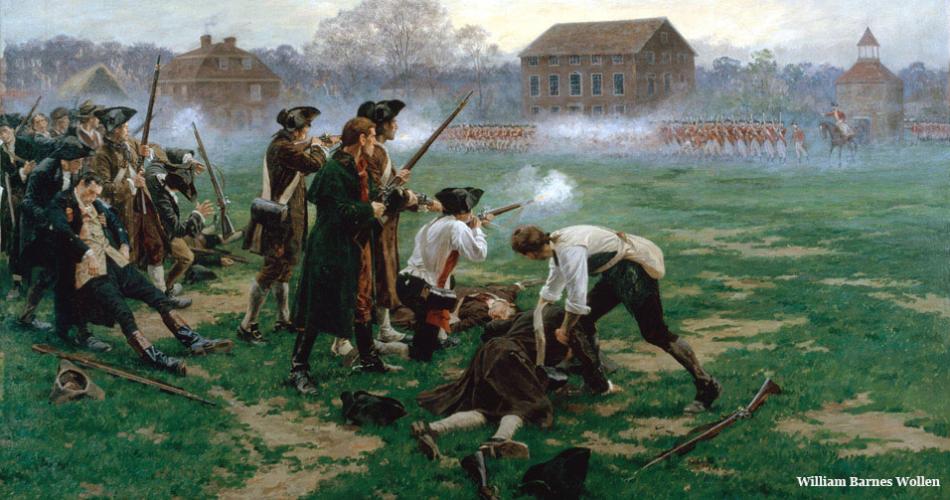
These are all words that most likely bring to mind the date of April 19, 1775, the Battles of Lexington and Concord, which took place in Massachusetts. The “famous day and year,” when American Colonists took up arms in defense of liberty and touched off the American Revolution.
What would it have been like, to be living during this time? From your knowledge of American history, you can well imagine how tensions of the American Colonists continued to grow throughout the colony... Demonstrations and events such as the Boston Massacre (March 5, 1770); the Boston Tea Party (December 16, 1773) and the Intolerable Acts (March-June 1774), demonstrated the frustration, anger and unrest that many were feeling during this time.
Why did the British target Concord, Massachusetts, a town 18 miles northwest of Boston? General Gage had information that Patriot leaders were stockpiling arms, ammunition, and provisions. The British Army regulars were ordered to “capture and destroy” these military supplies that were stored by the Massachusetts militia at Concord.
Please travel back in time with me to revisit some of the events of April 19, 1775:
12:30 AM: Paul Revere and William Dawes arrive in Lexington to warn Samuel Adams and John Hancock (who were staying with Rev. Jonas Clarke), that the “Regulars are coming.”
5:00 AM: Someone, somewhere fires a shot off of Lexington Green…“the shot heard around the world,” resulting in the light infantry rushing onto the Green and firing at the retreating militiamen. Eight militia men died.
7:00 AM: 700 British soldiers arrive in Concord, outnumbering the militia 3 to 1. The British secured the South Bridge and the North Bridge.
9:00 AM: The Battle at the North Bridge takes place. This is the first time that colonial militiamen were ordered to fire on British soldiers.
12:30 PM Following the fight at Concord’s North Bridge, the British soldiers begin heading east, back to Boston; they are attacked, and the fighting continues from Concord to Lincoln.
British commander Percy said that they were “fired at from all quarters, but particularly from the houses on the roadside, and the adjacent stone walls…”
By 7:30 PM on April 19, 1775, the British troops are crossing into Charleston Neck and take a defensive position on Bunker Hill, where they were protected by the guns of the fleet; with the battle coming to an end.
73 British were killed, 174 wounded and 26 were missing
49 Patriots were killed, 41 wounded and 5 were missing
Percy’s reflections of that day: “Whoever looks upon them as an irregular mob will find himself much mistaken. They have men amongst them who know very well what they are about…You may depend upon it, that as the Rebels have now had time to prepare, they are determined to go thro’ with it, nor will the insurrection here turn out so despicable as it is perhaps imagined at home. For my part, I never imagined they would have attacked the King’s troops or have had the perseverance I found in them yesterday.”
From the early beginnings of our National Society, April 19, 1775 has been a date of significance…for the acceptable service of Patriots, ”the National Society accepts, with some exceptions, the period between April 19, 1775, (Battle of Lexington) and November 26, 1783 (withdrawal of British troops from New York).”
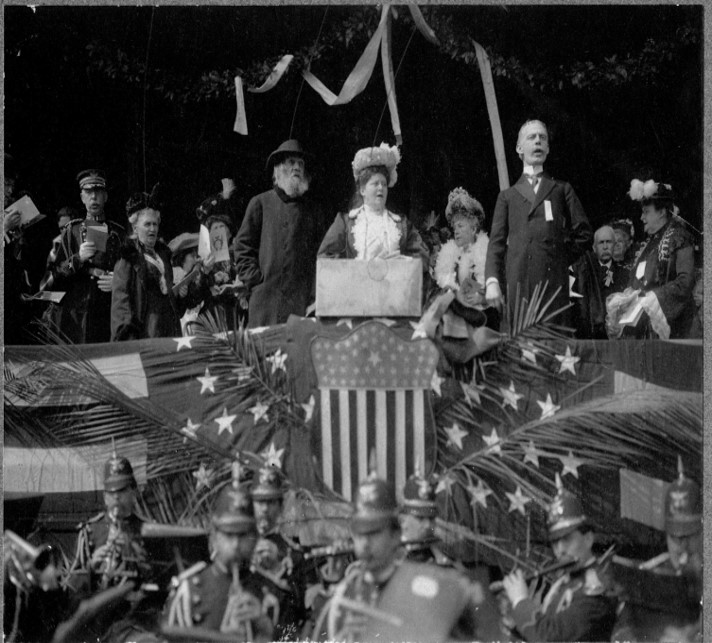
The April 1904 issue of the American Monthly Magazine has an article about the first Continental Congress that was to be held in the month of April. To commemorate the men and women of the American Revolution, the corner-stone of Memorial Continental Hall will be laid April 19th, 1904 – the anniversary of the battle of Lexington, – with appropriate ceremonies. This recently changed date for the congress also celebrates this anniversary. It promises to be the most impressive ceremony performed in the city of Washington since the laying of the corner-stone of the capitol.