
Learn More About the Long Range Planning Commission

Barbara Hensley Carpenter, National Chair, Long Range Planning Commission

Have you ever wondered about the Long Range Planning Commission - what it is and how it works?

The Commission is newer and less well known than many of the National Society’s committees. It was authorized by Continental Congress in 1987 and has remained an important administrative committee since - for nearly 35 years. To many members, though, it remains a bit of a mystery.

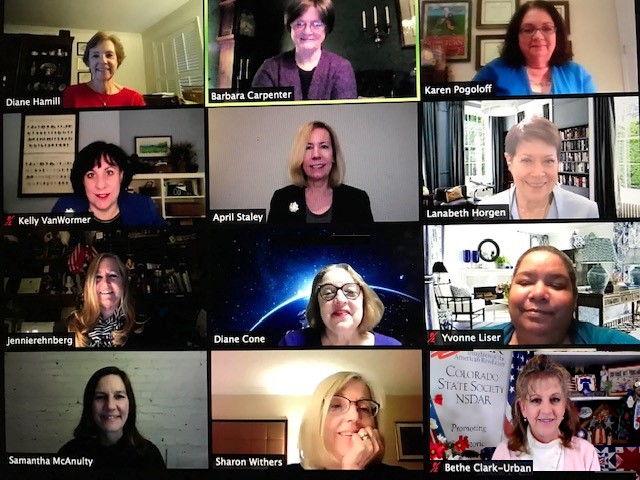
The Commission is made up of 12 members, each serving up to nine years. The three-year terms are staggered, with new members appointed at the beginning of each administration to replace retiring members. It is a group of diverse members, each with different backgrounds, talents, and DAR experience.

The work of the Commission continues year-round. In normal years, the Commission meets in person three times - two full days during the October and February Board weeks and one full day just prior to the June National Board of Management meeting. Between in-person meetings, the Commission meets monthly via 2-hour teleconference or virtual meetings. During the current pandemic, all meetings are being held via ZOOM.

With the purpose of providing a continuing assessment of future needs of the Society to ensure the organization’s viability into the future, the Commission has two major responsibilities: developing the Society’s strategic plan and developing recommendations to address issues assigned to it by the Executive Committee.

Strategic Plan: In its role of formulating a strategic plan for the National Society covering a five- to ten-year span of time, the Commission reviews previous strategic plans and recommends continuation of elements consistent with current goals; reexamines the vision, philosophy, concepts and strategic path of the organization; and identifies directions and actions that will enhance the organization as it heads into the future.

Current Issues: To provide solutions to current issues assigned to it by the Executive Committee, the Commission researches each issue and develops recommendations for Executive Committee consideration. The Commission spends most of its time addressing issues assigned in this manner. These assignments are communicated to the Executive Committee through the Commission’s executive liaison. During this administration, the executive liaison is First Vice President General Pamela Wright.

When assigned an issue, the Commission’s most important responsibility is to develop recommendations designed to keep the National Society viable, relevant, and timely both today and into the future. To accomplish this, the Commission considers issues from a number of different perspectives, researches how other organizations have dealt with similar issues, researches industry best practices and trends, interviews staff when appropriate, and makes full use of the diverse perspectives and talents of the Commission’s members as it considers how DAR can address these key issues. The recommendations are presented in well-researched papers delivered to the Executive Committee for consideration.

When considering issues, Commission members are encouraged to think in new ways - some might call it thinking outside of the box. As a result of this type of thinking, some recommendations may be ahead of their time, some may be accepted but modified by the Executive Committee, and some may be rejected or not considered.

Recognizing the importance of thinking in new ways, the work of the Commission is confidential. Confidentiality allows the Commission members the freedom and flexibility to think in new and sometimes unconventional ways as they approach issues. You won’t hear from members the often heard phrase, “because we have always done it that way.” A result of this very exploratory approach involving thinking outside of the box means that not all recommendations are adopted. Recommendations that are adopted, however, may be disclosed after Executive Committee approval. 

One recent example of a recommendation that was adopted is the new “Opt Out” feature of Today’s DAR Blog. The Blog now arrives in the mailbox of all members with email addresses. Members who do not wish to receive the communications can simply opt out. At a time when chapters and states have fewer, if any, in-person meetings, communication between members is more challenging. This change provides an additional line of communication from the National Society to more of its members.

Who among us doesn’t know that DAR members love their pins? Another Commission recommendation led to the creation of the Insignia Task Force and ultimately the adoption by the 128th Continental Congress of our in-house DAR Insignia Operation. It was a bold but sound business decision in support of our DAR mission. All proceeds from pin sales support the mission-driven work of the Society. Two of the first pins offered when The DAR Insignia Store launched during Congress in 2020 were this administration’s President General’s Project benefactor and donor pins - Rise and Shine for America. Wear these and all your new pins proudly knowing that you are supporting our DAR mission.

It is both an honor and my pleasure to lead this group of dedicated members who volunteer many hours to address key issues identified by the Executive Committee. In its confidential way, the Long Range Planning Commission plays an important, though quiet, role in helping the National Society “Rise and Shine for America”, ensuring a very bright future for DAR!

send-a-commentSend Us a comment