
Patriotism and Tradition Echo Through the Decades and Streets of Philadelphia

Denise Doring VanBuren, President General

Earlier this week, I not only walked in the footsteps of history but also shared in boldly declaring the sentiments of those who courageously charted the course for our new nation more than two centuries ago. The occasion was a unique event staged in the heart of historic Philadelphia to commemorate the 246th anniversary of the close of the First Continental Congress.

From September 5 until October 26, 1774, delegates from 12 of the colonies (Georgia did not participate) met to organize resistance to Britain’s Coercive Acts. Those colonial delegates included George Washington of Virginia, John Adams of Massachusetts and John Jay of New York.  The Congress ultimately issued a Declaration of Rights, affirming its loyalty to the British Crown but disputing Parliament’s right to tax it. It also passed the Articles of Association, which called on the colonies to stop importing goods from the British beginning on December 1 if the Coercive Acts were not repealed. Should Britain fail to redress the colonists’ grievances in a timely manner, the Congress declared that the colonies would also cease to export goods to Britain in September 1775. These were fiery words with dangerous consequences for these men. And, of course, the clash on April 19, 1775, at Lexington and Concord forever altered the course of future events.
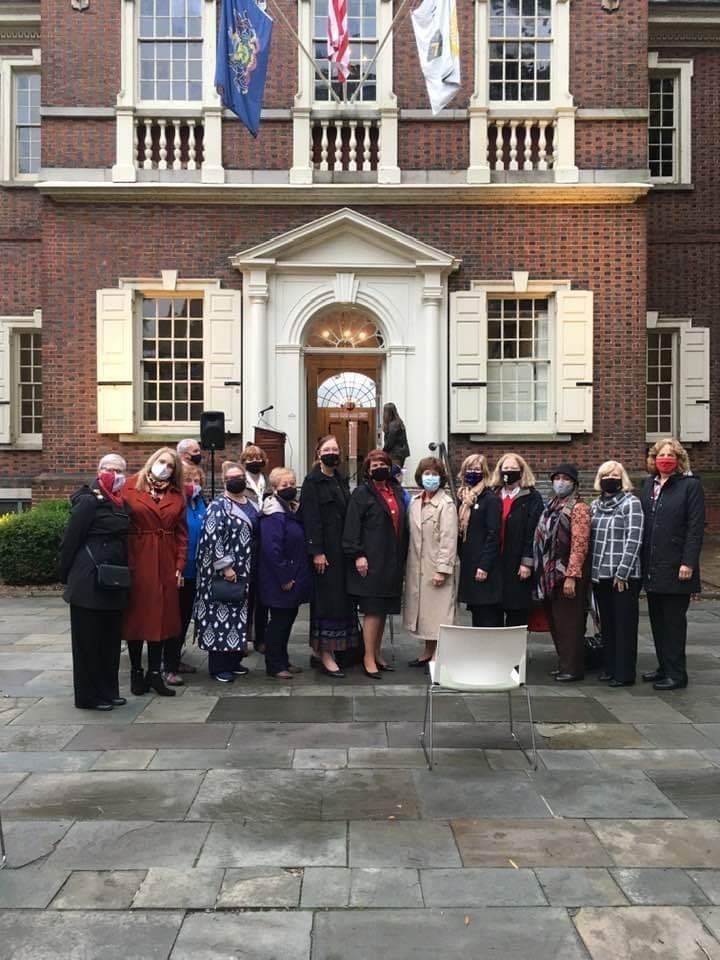
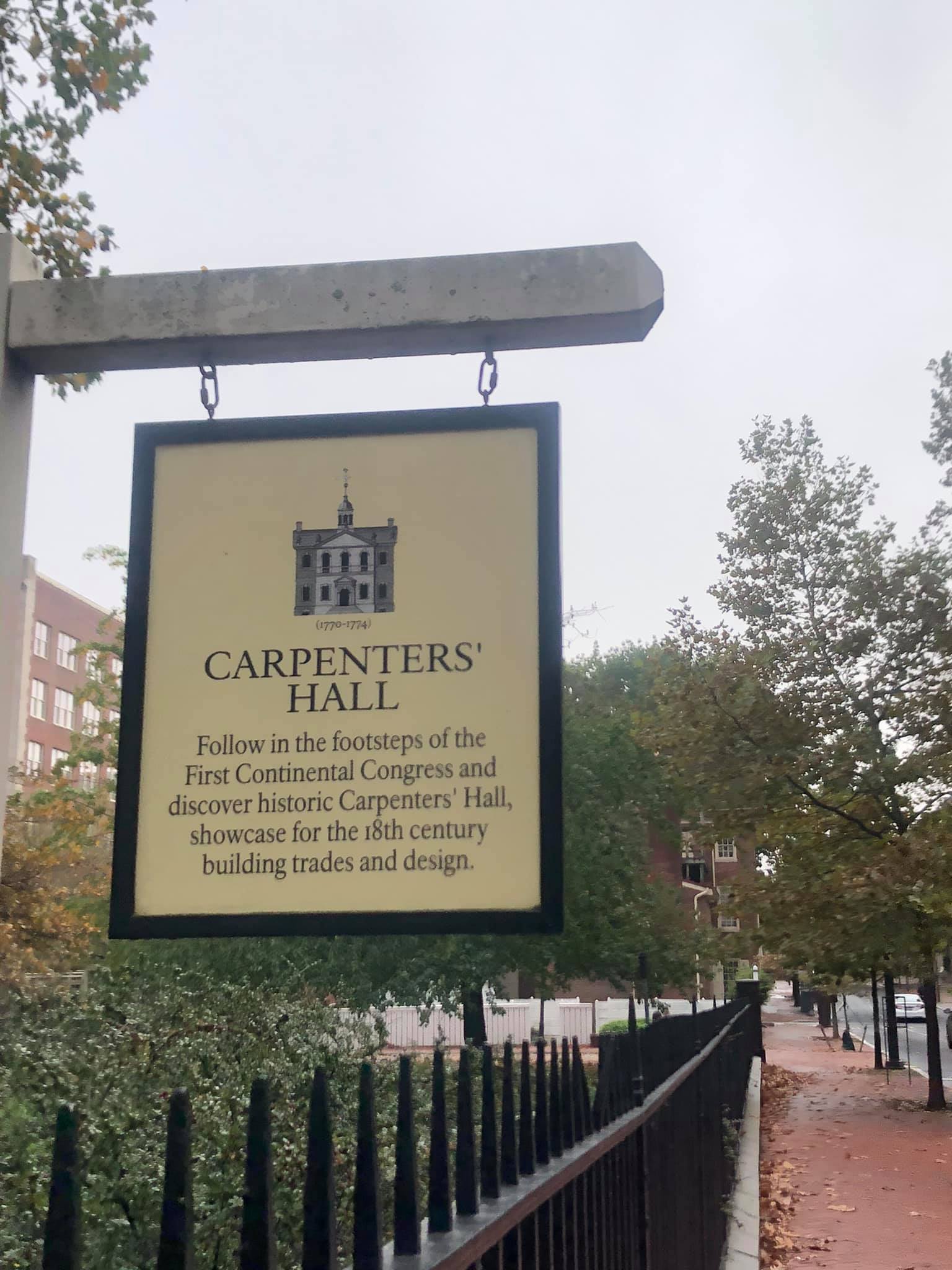
This important first congress occurred in Carpenters’ Hall, just steps away from what we know today as Independence Hall.  Founded in 1724, The Carpenters’ Company of the City and County of Philadelphia is the oldest extant craft guild and professional association in the United States. The Hall, a National Historic Landmark built between 1770 and 1774, is a showplace for 18th-century architectural design and building techniques. It was here that the nation’s first architecture school was established in the early 1820s.

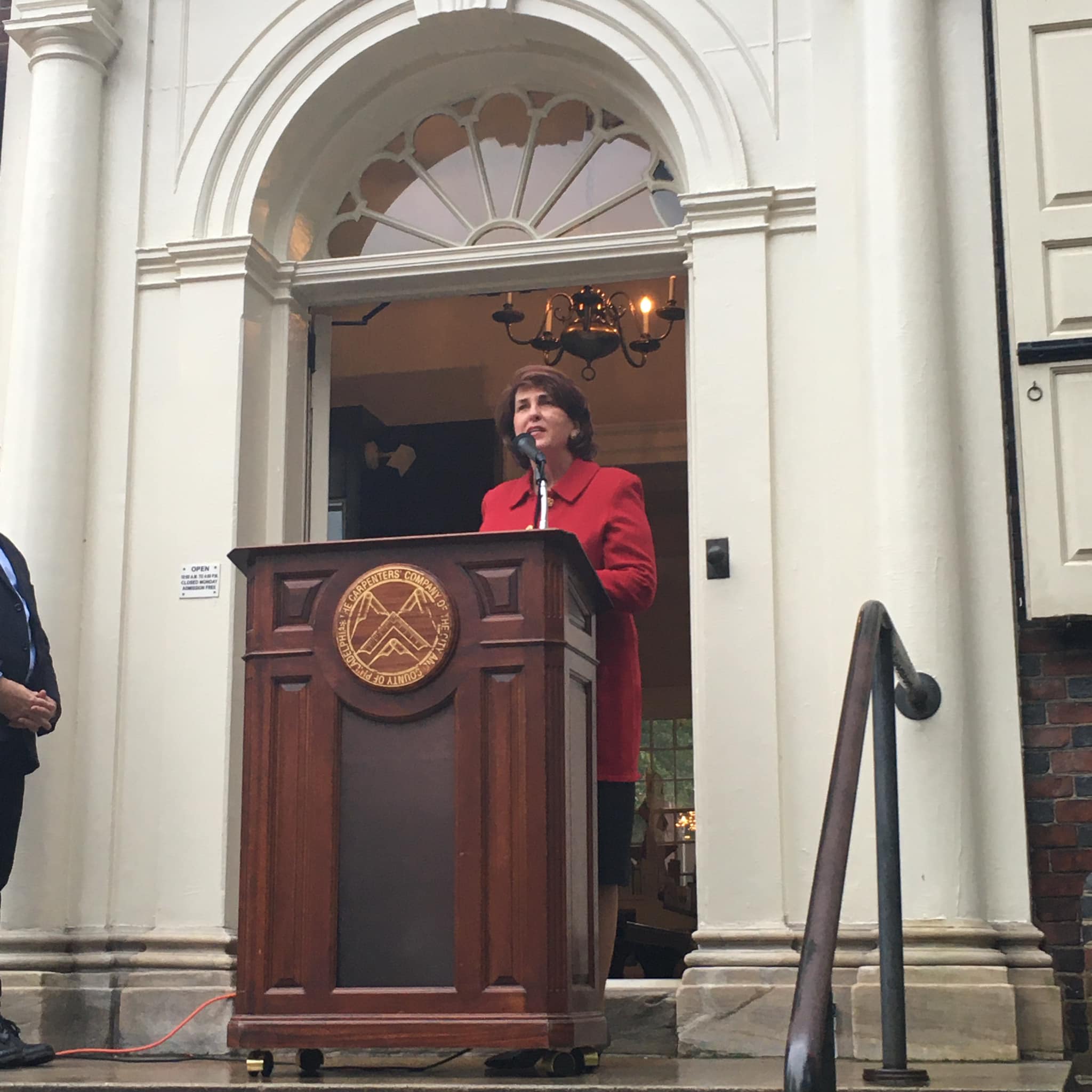
I was invited to take part in the ceremonies, which featured readings of portions of the important documents produced at the Congress, including the Petition to the King and the Letter to the People of Great Britain. I was assigned the role of young Alexander Hamilton and given the privilege of reading a section of his “Full Vindication of the Measures of Congress.” What an honor to stand on the steps of this national landmark and share the sentiments of this brilliant and bold statesman!

I thank the Carpenters’ Company for preserving their historic structure, staging this event and inviting me to represent our National Society; and, I appreciate the Pennsylvania Daughters who turned out to share the outdoor, socially distanced event on a chilly, overcast day.

Mine was a brief-but-history-filled visit to this revolutionary city, and it included three additional stops that I think you will appreciate.


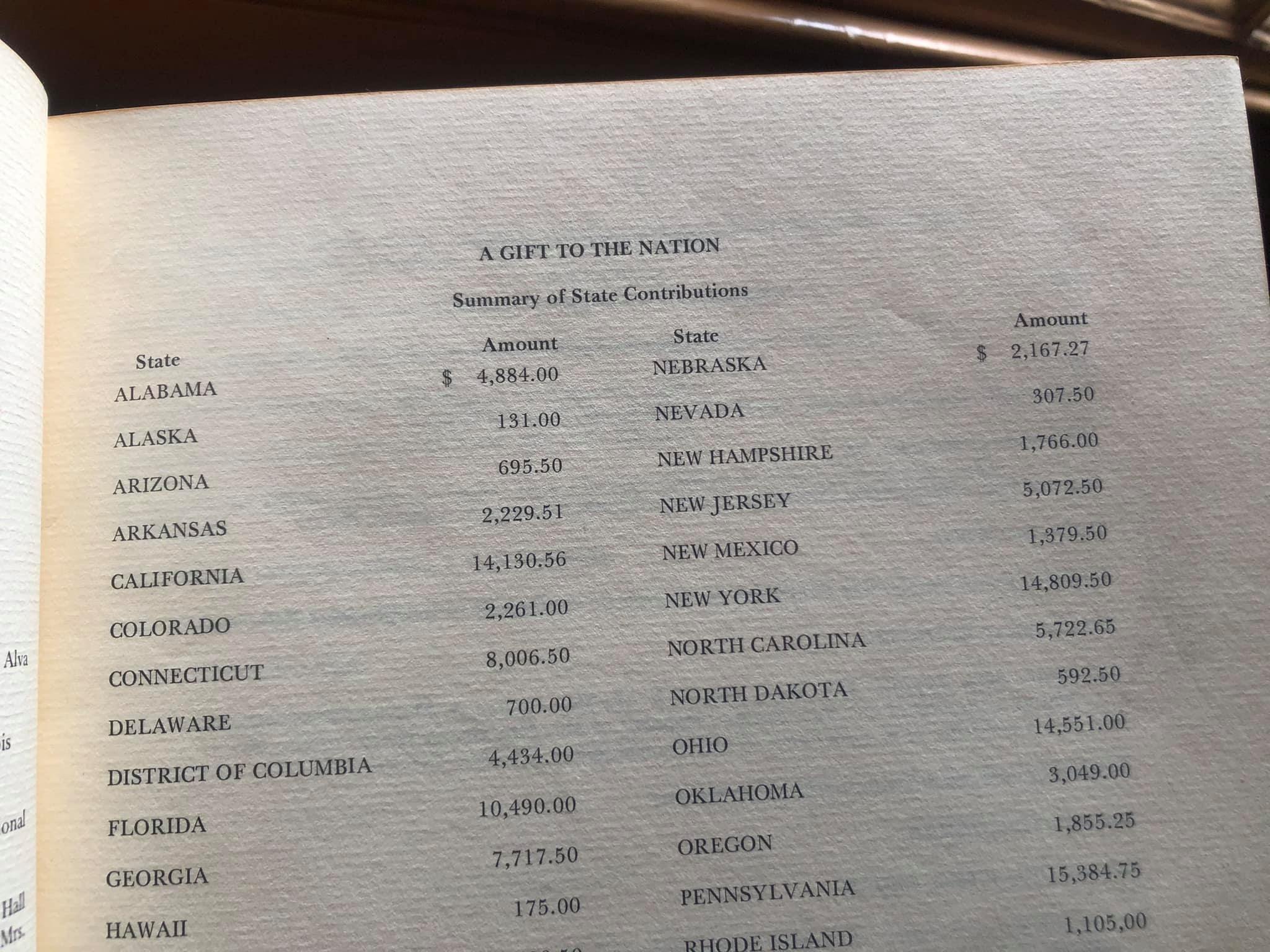
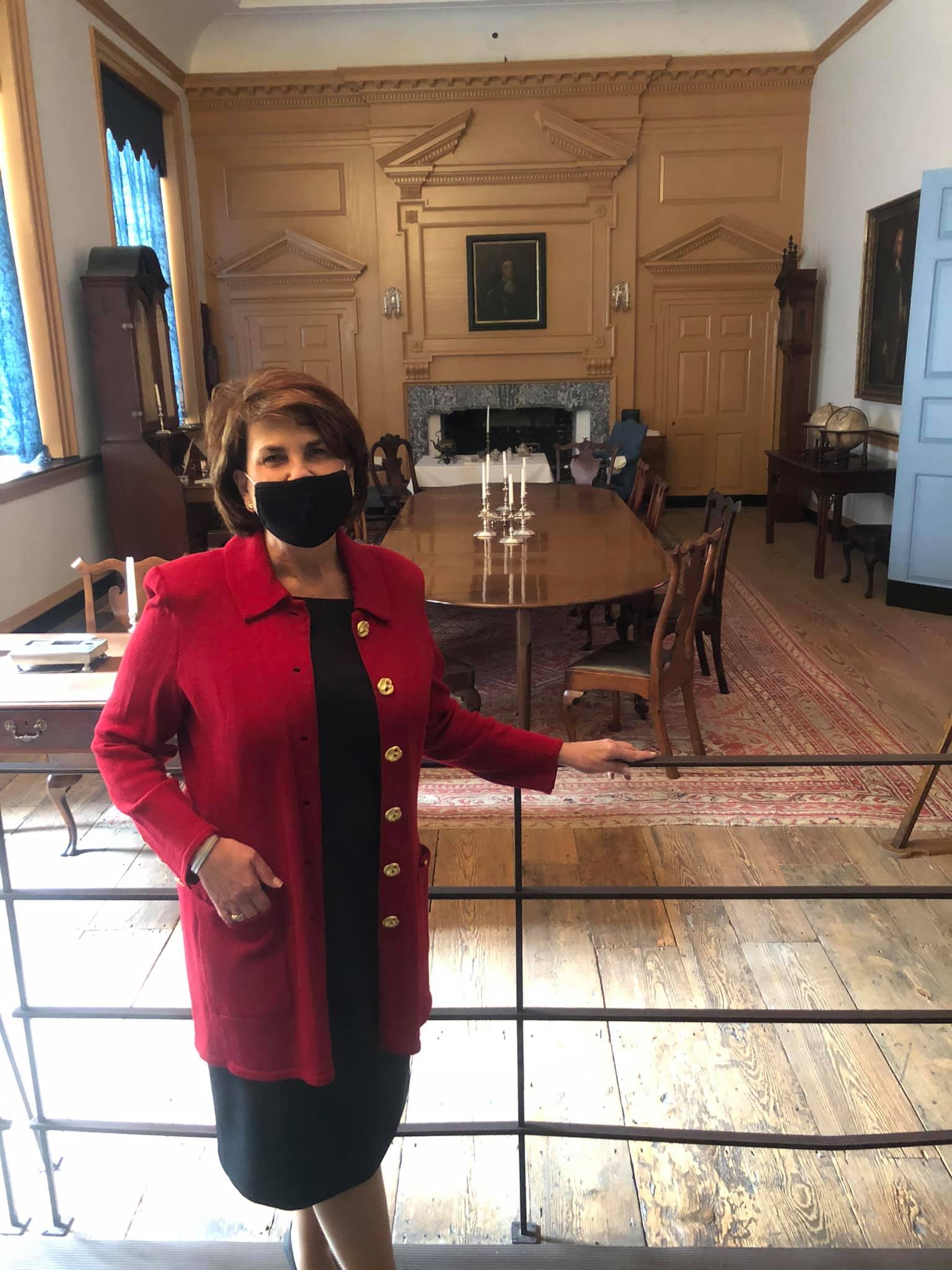
Thanks to Pennsylvania Daughter Samantha Friese, one of the historians at Independence National Historical Park, I enjoyed a private tour with Karie Diethorn, the Chief Curator of Independence Hall. I loved very moment but in particular, it was a joy to savor the volume that celebrates our National Society’s support here for the 200th anniversary of the United States.  In the early 1970s, President General Eleanor Spicer’s Project was the refurbishment of the Governor’s Council Chamber and Assembly Committee Room on the second floor. It was completed in time for the millions of visitors who would tour Independence Hall for the upcoming Bicentennial. The total NSDAR donation was more than $191,000, which equates to about $775,000 today.  Join my tour as Ms. Diethorn explains how our support is commemorated here.

Every Daughter should take pride in being a member of a Society that helped to improve and preserve these historic spaces on behalf of the nation. The Governor's Council Chamber was used by the Provincial Council, the highest legislative body in the Colony, and features objects primarily from the 1740s. The adjacent Committee of the Assembly Chamber was used from 1747 to 1752 as a combined Committee Room and Library for the Pennsylvania Assembly. It was then given over to the Militia of the City of Philadelphia for the storage of military items. In May of 1775, the Pennsylvania Assembly convened here, while the first floor was occupied by the Continental Congress.

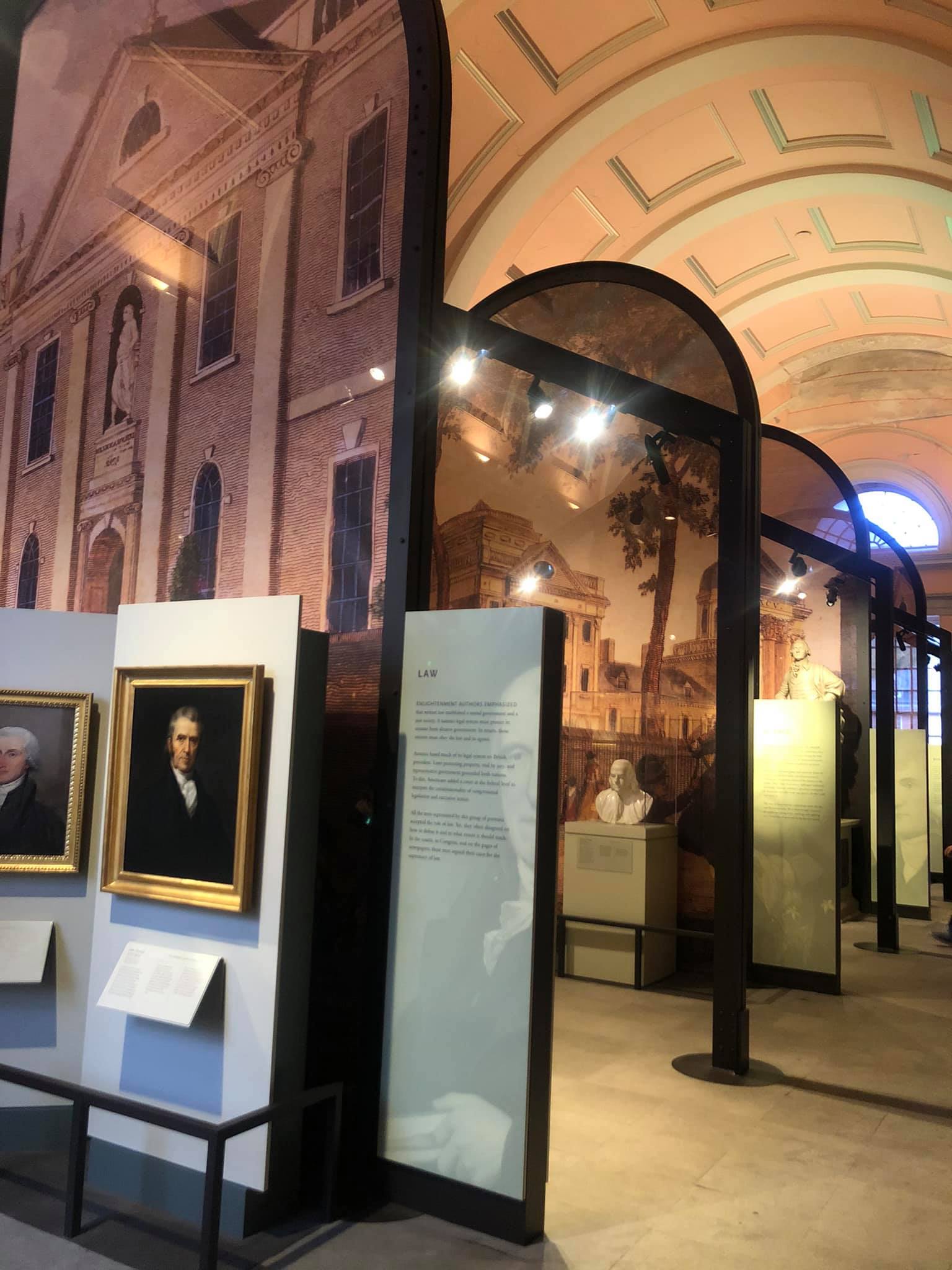
The second portion of my tour was a visit to enjoy nearly 100 portraits from the "People of Independence" exhibit housed at the Second Bank. Portraits by artist Charles Wilson Peale form the core of the collection. In the early 1800s, these likenesses of "Worthy Personages" were exhibited in Peale's Philadelphia Museum, once located on the second floor of Independence Hall. Learn more about the historic structure in which they are now housed here; and, the riveting portrait exhibit here.

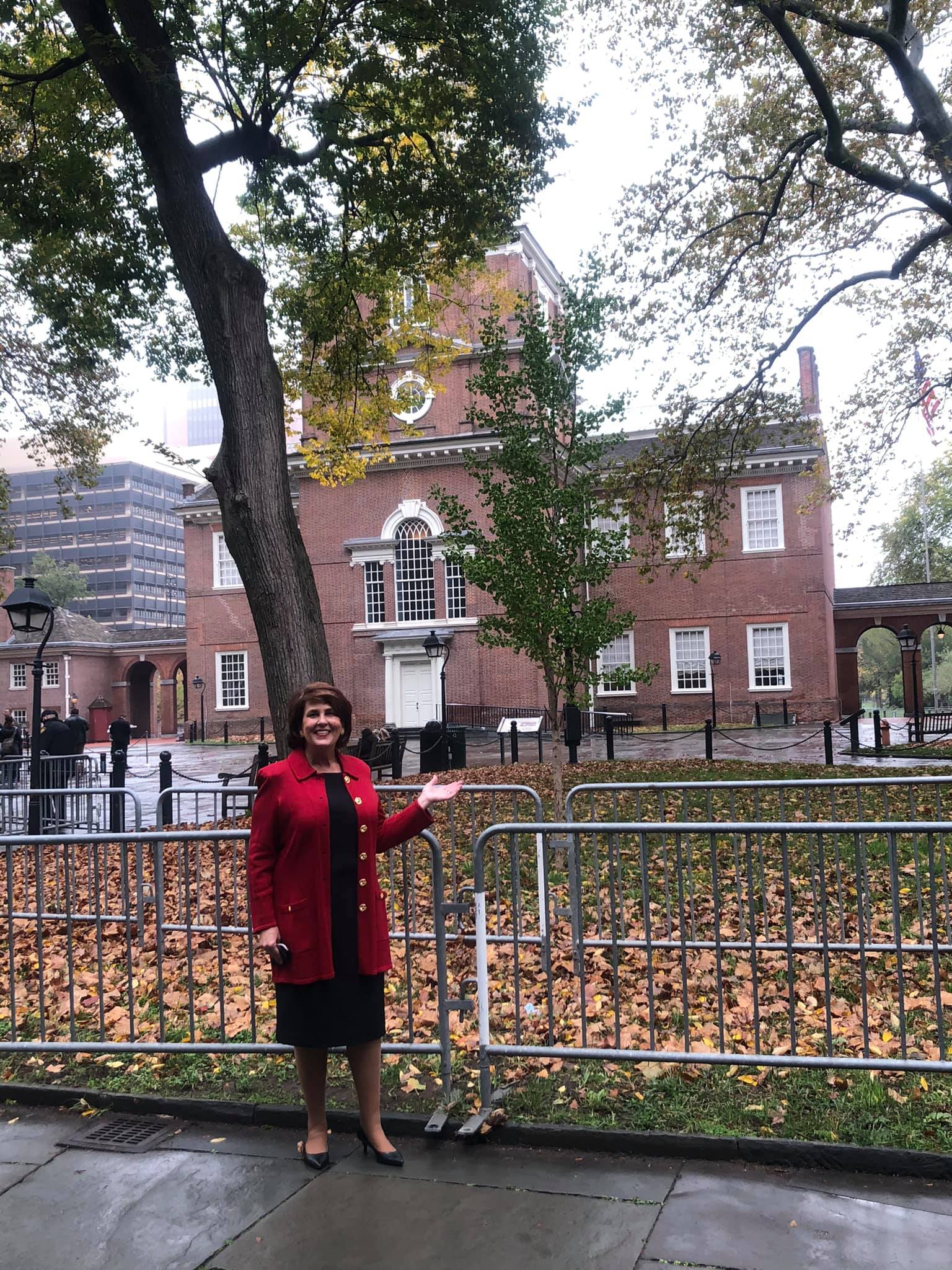
Finally, I am overjoyed to report that I inspected two of the 76 trees donated to this 51-acre national park in the heart of Philadelphia during the administration of President General Ann Turner Dillon. They are both thriving in the shadow of these national landmarks, which are visited by about 5 million people during a typical year. Their planting continued a long tradition by DAR here on these hallowed grounds, begun in 1926, when State Regents from the 13 Colonies donated trees for the 150th anniversary of the nation.

send-a-commentSend Us a comment