 Today's DAR
Just before the pandemic, a new exhibition opened in the DAR Museum gallery called Illuminating Design: The Decoration and Technology of E. F. Caldwell and Company, 1895-1959. With the on-going restrictions and DAR Headquarters remaining closed, this exhibition is also unfortunately closed to the public until further notice. In lieu of being able to see it in person, we thought it would be nice to highlight some of the 75 items on display. But first, allow me to share a little about E. F. Caldwell – which has no relation or connection to J. E. Caldwell, the jewelry firm that made the DAR insignia for more than a century until closing in 2003.
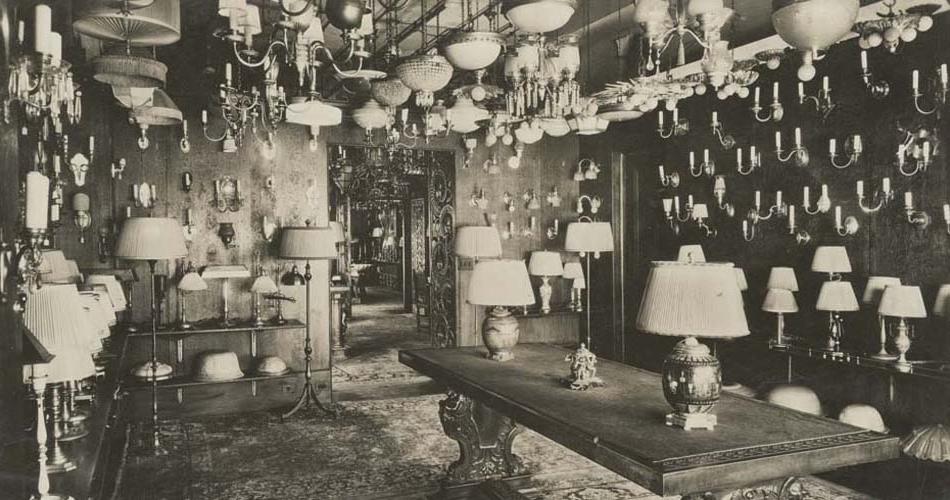
Electric Lighting by Edward F. Caldwell and Co.


The Caldwell firm featured in the exhibition was located in New York City and founded by Edward F. Caldwell and Victor F. von Lossberg in 1895. They offered clients thousands of objects from which to choose including chandeliers, table lamps, humidors, clocks, boxes and even telephones. Critics and tastemakers of the day highly valued their work and included famous architects such as Stanford White, John Russell Pope and Elsie DeWolfe. Their client list is long and includes the DAR Headquarters building, the White House, Rockefeller Center and many other public and private buildings throughout the nation. Its showrooms and factory were located at 36-40 West 15th Street and after 1938, 214-216 East 57th Street. Much of their work was customized for specific orders but parts could be reused to create something different according to client preference. Caldwell preferred not to advertise, instead clients could visit one of many showrooms at their headquarters. Caldwell made high quality items into the 1950s, but shifts towards modernism, mass production and poor management in the post war years brought an end to the firm in 1959.
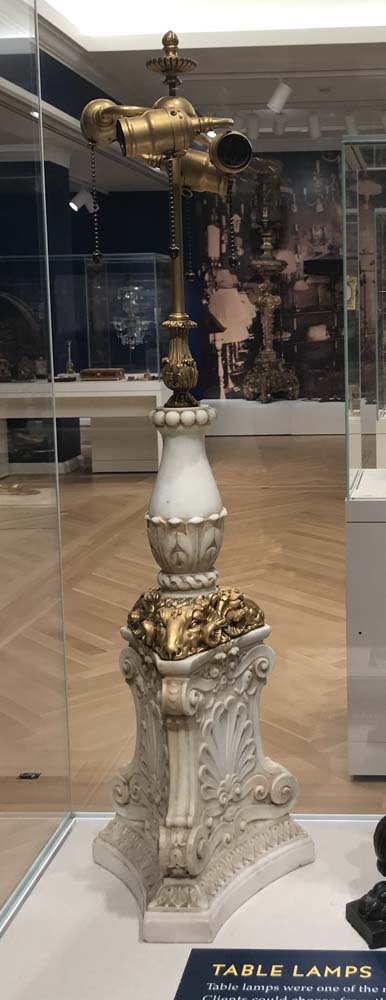
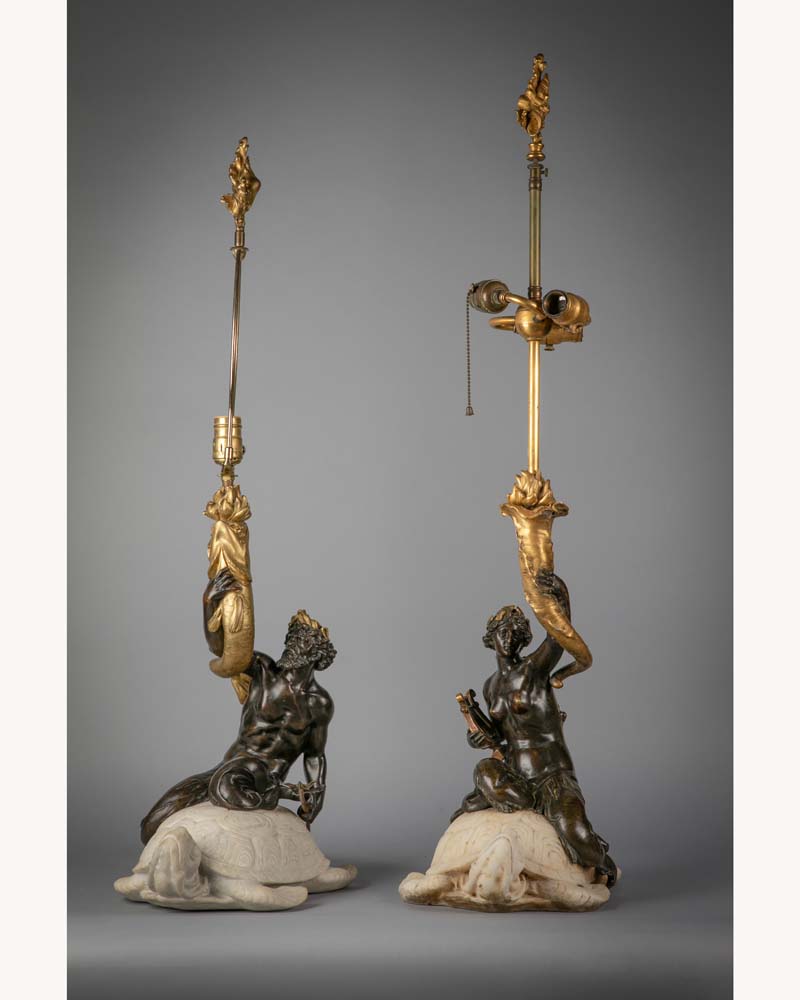
Allow me to concentrate on the electric lighting that represents the firm’s specialty. Caldwell’s design department created thousands of styles from which to choose. Table lamps could be made in all sorts of materials like this lamp made between 1911 and 1915. It is made of gilded bronze and marble with ram’s head decoration. The imported Italian marble base is carved with stylized flowers and scrolls. A pair of table lamps made between 1915 and 1920 are a tour de force of Caldwell’s manufacturing skill. They feature patinated bronze figures of Poseidon and his wife Amphitrite seated on marble turtles.
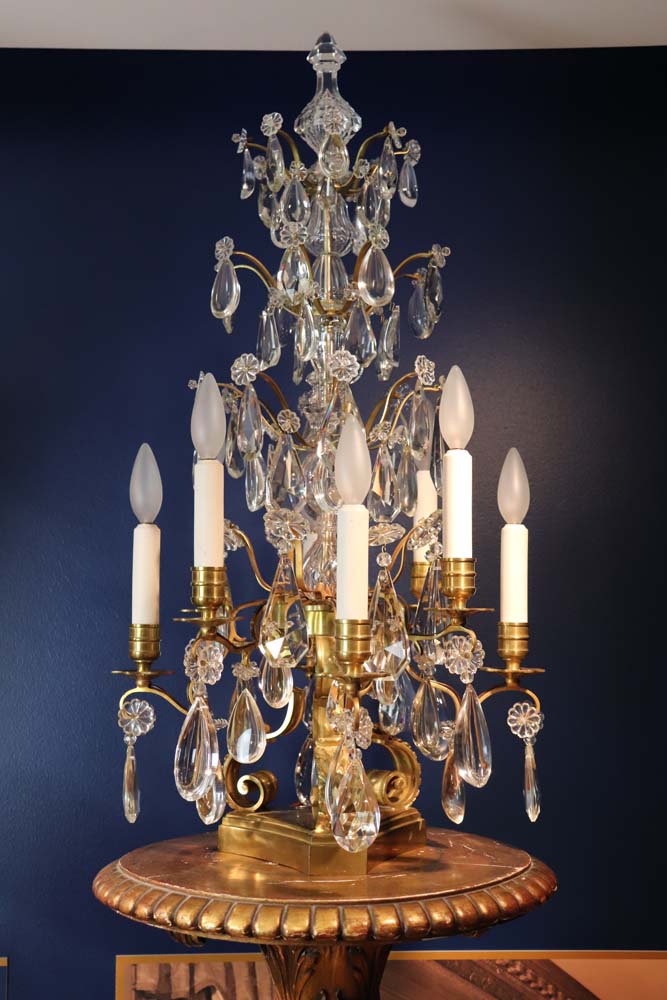
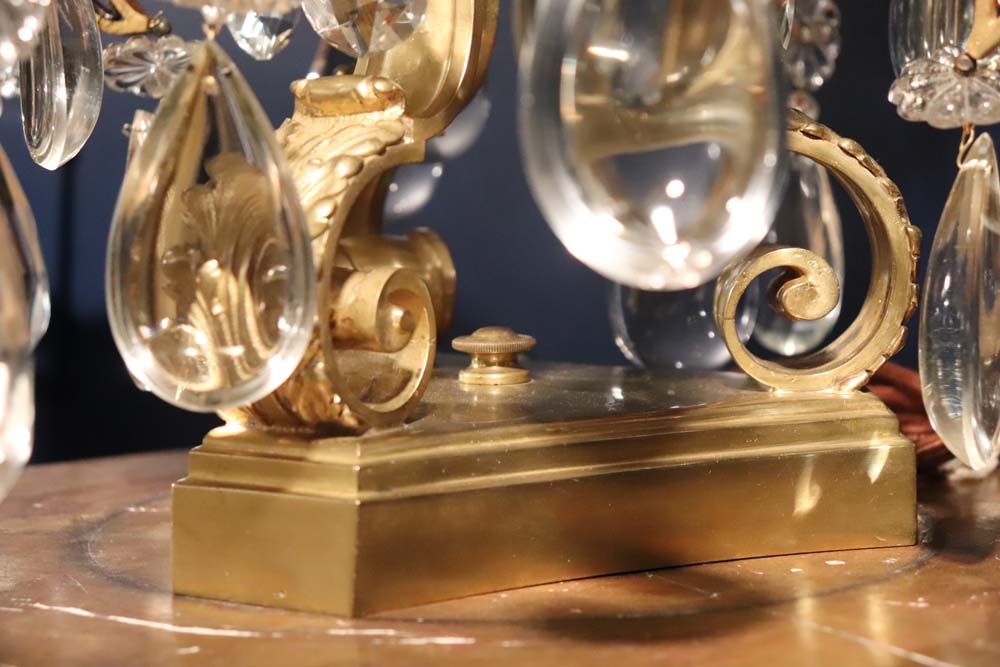
For those who like lighting with cut glass drops or prisms, is this small candelabra also called a girandole. It is made out of gilded bronze between 1915 and 1920. The cut glass is likely Czechoslovakian, although the bobeches are marked by the famous French glassmaker Baccarat. Too small, well how about this monumental girandole? Imagine cleaning all those prisms? One of a pair, it was originally made for the Robert and Elinor Patterson House on Dupont Circle in Washington, D.C. between 1920 and 1930 out of gilded bronze. Caldwell excelled in concealed on/off switches, and this one is located in the center of the base.
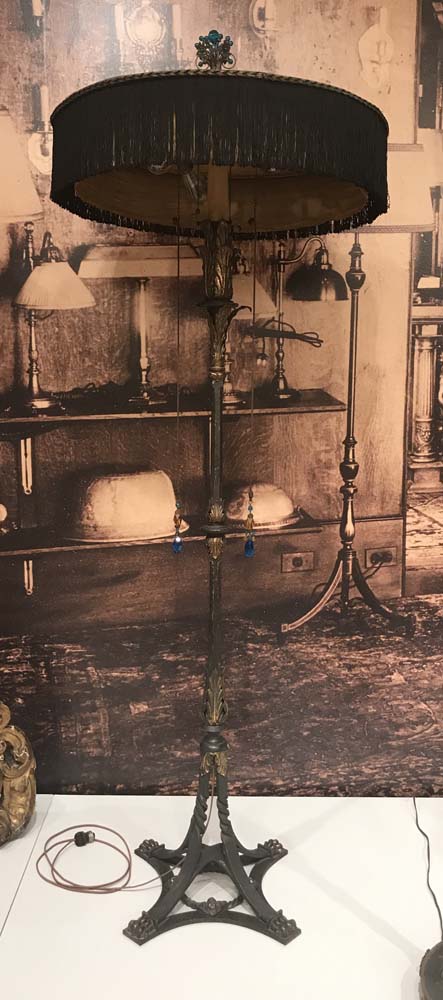
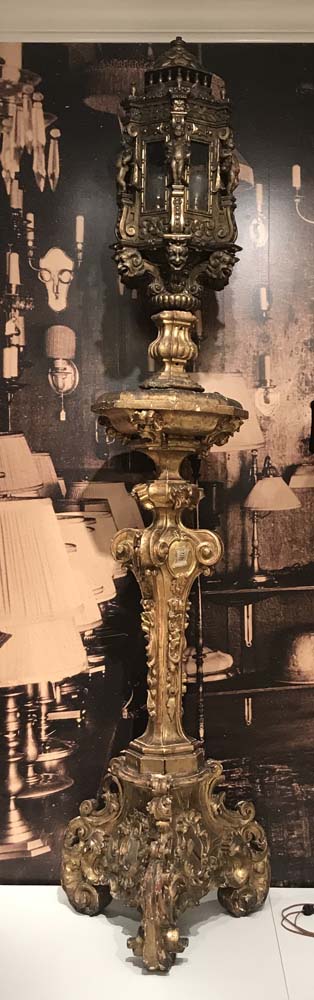
Caldwell also offered many different styles of floor lamps. Floor lamp designs could be quite original like this example made in 1914. Though it looks like wrought iron, it is actually patinated bronze. Originally one of a pair, it came from the Tudor style mansion called Stan Hywet Hall in Akron, Ohio owned by the Seiberling family. The next lamp is truly monumental standing at nine feet. Called a torchiere, it was made in Spain during the 18th century. Larz and Isabela Anderson purchased this in 1902 for their house on Massachusetts Avenue and had Caldwell to make the electrified lantern on top.
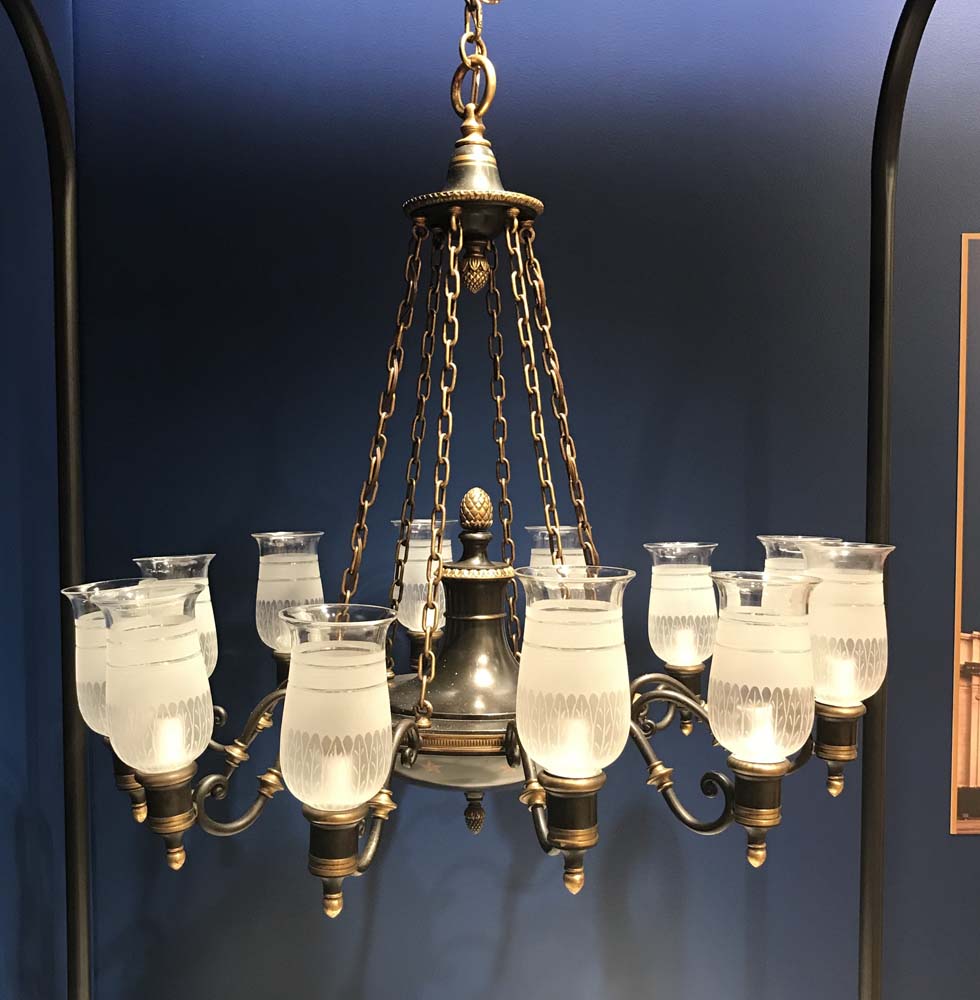
I end this blog with a chandelier made in 1928-1929 -- originally designed for DAR Constitution Hall! Architect John Russel Pope used Caldwell almost exclusively in the buildings he designed. Featuring original cut glass shades, its styling fits perfectly with the classical look of the building.
There is so much more to see and learn about in Illuminating Design: The Decoration and Technology of E .F. Caldwell and Company, 1895-1959, so please continue to check the DAR Museum website for more information.