What the New “POW Pin” Means to Me

Joy Sanders Graham, Old Glory Chapter

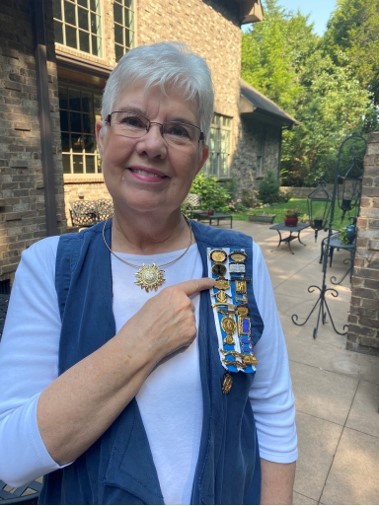
Friday, Sept. 18, was National POW MIA Recognition Day, an observance set aside to honor the sacrifice of those who have been held prisoner or who are listed as mission in action. I was moved to receive this email from a member in Franklin, Tenn., about her appreciation for the new POW MIA pin that honors such service personnel from all American conflicts; it may be purchased through the DAR Insignia Store and may be worn on the official ribbon. I was grateful that Mrs. Graham allowed me to share her poignant email with you. 

Denise Doring VanBuren
President General

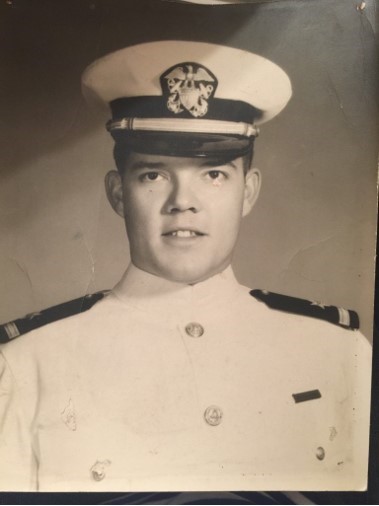
I just got my first pin from the new DAR Insignia Store. It is the “POW” pin. I am so happy that the National Society is now making it so easy for us to buy pins and is getting the profit from these sales. But this pin means so much more to me. I wear it in honor of my husband’s first cousin, Lt. Commander Michael Durham Christian, who was a POW for six and half years in North Vietnam. It is his story that I share with you.  His story of not only about survival but also incredible courage and a love for America and our Flag. 

Michael was born October 7, 1940, in Huntsville, AL.  He enlisted in the Navy in 1955 and served as an aviation electronics technician. He was accepted into the Navy Enlisted Scientific Education Program in 1959. Upon commissioning, he served on the USS Dahlgren until his flight training began. He attended naval flight officer training and after receiving his “wings of gold” was assigned to Attach Squadron 85 at Naval Air Station Oceana, Virginia, serving as a bombardier/navigator in the A-6 Intruder. 

Michael was deployed on the USS Kitty Hawk to the Gulf of Tonkin. On April 24, 1967, Pilot Lt. Lewis I. Williams launched in his attack bomber from the Kitty Hawk with his bombardier/navigator, Lt. Michael D. Christian, on a daylight strike mission into North Vietnam.

Approximately three miles from the target, their port wing was hit by 85-mm anti-aircraft fire and was subsequently engulfed in flames. Lt. Williams reversed course and jettisoned his ordnance before the crew ejected. Both men were seen to land in an open field about 100 yards apart and established radio contact with airborne aircraft. The crewmen appeared uninjured and reported their condition as good. The ejection occurred in a well-defended, populated area near the city of Kep in Ha Bac Province, and capture was almost immediate.

For three years, Michael’s family did not know if he was dead or alive.  During his captivity, Michael was held prisoner in various North Vietnam camps, the last one being the Hao Lo POW Camp, which is better known as the Hanoi Hilton.  Some of the things I learned about Michael were stories that the family told, but I also began to research more and found stories about him that his fellow prisoners told.         

Senator John McCain, who was with Michael during this time, said of his stay as a POW, “During the early years of imprisonment, the North Vietnamese kept the prisoners in solitary confinement or two or three to a cell.  In 1971, the North Vietnamese moved many from these conditions of isolation into large rooms with as many as 30 to 40 to a room.  This was, as you can imagine, a wonderful change.  And was a direct result of the efforts of millions of Americans, led by people like Nancy and Ronald Reagan, on behalf of a few hundred POWs, 10,000 miles from home.”

Another POW, Col. Leo K. Thorsness, USAF (Retired) and recipient of the Medal of Honor, wrote about their imprisonment at the Hanoi Hilton. He said, “the prisoners were allowed outside most days for a couple of minutes to bathe. They showered by drawing water from a concrete tank with a homemade bucket.  One day Michael found the remnants of a handkerchief in a gutter that ran under the prison wall.  He managed to sneak the grimy rag into our cell and began fashioning it into a flag. He spent days cleaning the material with bits of found soap or anything he could use. At night, under his mosquito netting, Mike worked on the flag. He made red and blue from ground roof tiles and tiny amounts of ink and painted the colors onto the cloth with watery rice glue.  Using thread from his own blanket and a homemade bamboo needle, he sewed on stars. 

Early in the morning a few days later, when the guards were not alert, he whispered loudly from the back of their cell, ‘Hey gang, look here.’  He proudly held up this tattered piece of cloth, waving it as if in a breeze.  If you used your imagination, you could tell it was supposed to be an American Flag.  When he raised that smudgy fabric, we automatically stood straight and saluted, our chest puffed out, and more than a few eyes had tears.”  Michael hid the flag inside his uniform.

Senator McCain reported, “Every afternoon, before we had a bowl of soup, we would hang Mike's shirt on the wall of our cell and say the Pledge of Allegiance.  I know that saying the Pledge of Allegiance may not seem the most important or meaningful part of our day now, but I can assure you that – for those men in that stark prison cell – it was indeed the most important and meaningful event of our day.”

Col. Thorness said, “About once a week, the guards would strip search them.  During one of those shakedowns, they found Mike’s flag. That night they came for him.  Night interrogations were always the worse.  They opened the cell door and pulled Mike out.  We could hear the beginning of the torture before they even had him in the torture cell.  They beat him most of the night.  About daylight they pushed what was left of him back through the cell door.  He was badly broken; even his voice was gone.   

In a letter to MG Patrick H. Brady, Col. Bud Day, Medal Honor Recipient, POW 1967-1973, recounted his personal recollections of Mike Christian, POW. The letter was entered in testimony on the flag protection constitutional amendment before the U.S. Senate Judiciary Committee, “They broke his ribs… but not his spirit.  A few days passed and Mike approached me.  He said, “Major, they got the flag… but they didn’t get the needle I made it with.  I’m making another flag!”

During the next several weeks, despite the danger and with eyes still almost swollen shut from the torture, Michael scrounged another piece of cloth and began another flag.  Sen. McCain, said, “He was not making the flag because it made Mike Christian feel better.  He was making that flag because he knew how important it was for us to be able to pledge our allegiance to our flag and country.  Duty, Honor, Country. We must never forget those thousands of Americans who, with their courage, with their sacrifice, and with their lives, made those words live for all of us.” 

Lt. Michael Christian was promoted during his captivity to the rank of Lt. Commander.  He was awarded two Silver Star, three Bronze Stars, four Air Medals, the Legion of Merit with Combat “V”, the Navy Commendation Medal and the Prisoner of War Medal for exceptionally meritorious conduct in the performance of outstanding services to the Government of the United States while interned as a Prisoner of War in North Vietnam from April 1967 to March 1973: “Under the most adverse of conditions, he resisted all attempts by the North Vietnamese to use him in causes detrimental to the United States and his fellow prisoners. While in daily contact with the North Vietnamese guards and officers, he performed duties in staff positions, maintaining good order and discipline among the prisoners. Further, as an educator he provided diversion and constructive rehabilitative thinking to his fellow prisoners during their long internment, Despite harsh treatment and a lack of material aids, he devoted long hours toward improving their morale and well-being. His extraordinary skill, resourcefulness, and sound judgment reflected great credit upon himself and upheld the highest traditions of the Naval Service and the United States Armed Forces.”

Upon his return, Michael attended Old Dominion University, where he received a Master of Science degree. (He voluntarily retired on February 1, 1978, while at the Armed Forces Staff College. His resignation was as a protest to president-elect Jimmy Carter's amnesty plan for those who evaded the draft. In protest, he even threw his medals on the grave of a veteran.)

Michael died in a tragic fire on Sept. 4, 1983.   

The Stars and Stripes, our national symbol, was worth the sacrifice to Michael.  So, when I place my hand on my heart and say the Pledge of Allegiance, I say it proudly and remember my husband’s first cousin, Lt. Commander Michael Durham Christian and the thousands of other courageous Americans who have sacrificed so much for our nation.  And, when I look at this POW pin, I think of Michael’s courage and love for our nation’s flag.  

send-a-commentSend Us a comment