
 Today's DAR
Like seeing a great movie or eating a delicious restaurant meal, it’s possible to enjoy a fascinating museum exhibition without knowing everything that went into creating the experience. But it can also increase your appreciation if you know what happened behind the scenes! Before the exhibition opens, a team of people worked to produce what the visitor will see. It may not be hard to imagine the hours spent researching a topic, selecting objects for display, writing labels, and working with an exhibition designer. What is more difficult to understand are the steps required to assemble objects in the museum gallery for installation in displays. The process of setting up an exhibition starts off slowly, follows established procedures and finishes with a burst of activity.
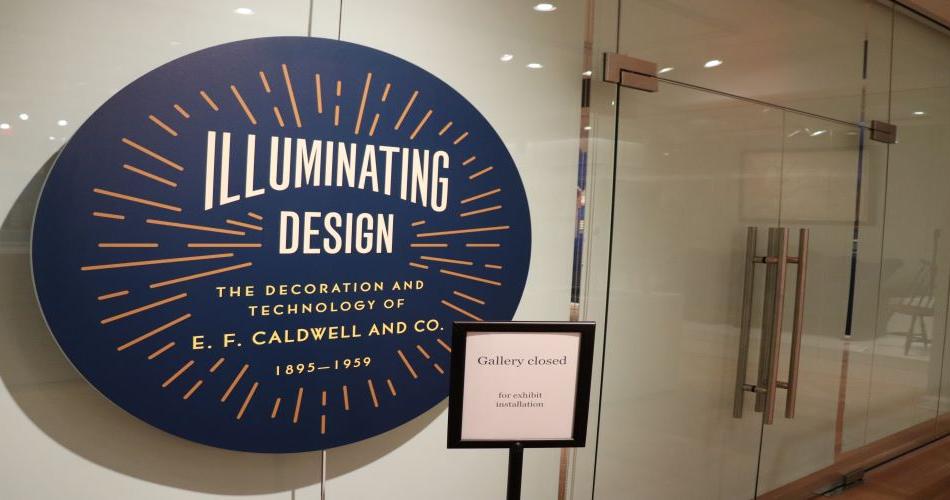
Before a DAR Museum Exhibition Opens

The DAR Museum collection is usually the inspiration for exhibits and the source of the objects on display. But no museum has everything, so it is necessary to borrow items that are needed to better convey an exhibition’s theme or illustrate a story. The most common sources museums turn to to borrow objects are other museums and individuals. A year before an exhibition opens, individual lenders as well as museum lenders sign loan agreements that state exactly what items the DAR Museum will borrow, the duration of the loan, and how the loan will be handled. Lenders also receive a certificate of insurance which verifies that their loans will be insured from the time they leave their location until the moment they return.

The third step for these lenders is to work with museum staff who coordinate the transportation for loans. Some lenders may choose to bring their items to the museum, but most opt to let special fine arts shippers manage the move. These trained art handlers visit the lender to carefully pack their loans in boxes and crates, and transport them to the DAR Museum in special trucks with temperature controls. These steps provide lenders with the assurance that their things will be handled professionally using the museum field’s best practices.
The gallery is prepared for a new exhibit installation as soon as the prior exhibition closes to the public. Museum staff empty display cases and remove all objects used in the old exhibit from the gallery. The most visible sign of this early stage is often the fresh coat of paint applied to the gallery walls. New paint covers any scuff marks and repairs to holes made by hangers or display hardware and it helps set the scene for the story the new exhibit is going to tell. By this point, the exhibition designer has submitted elevations, which are drawings of the overall exhibition and case layouts that show where in the cases items should go. Staff consult this plan to move display cases and platforms into correct locations where they wait to be filled with objects.

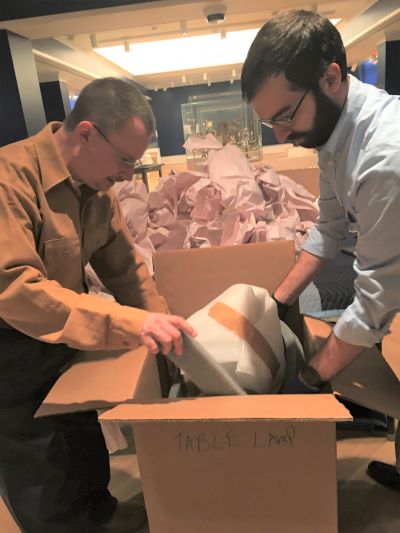
In the last few weeks before the exhibition opens, several activities happen simultaneously in the museum gallery. Staff move DAR Museum objects from storage to the gallery and the fine arts shipper delivers loans. Museum staff carefully unpack these boxes, retaining the packing materials for the return trip. They examine each loan object and write a report describing its condition upon arrival at the museum and taking photos of item. The assembled objects are set inside display cases, placed on platforms and hung on walls. Large section labels go on walls while smaller individual labels accompany objects in cases. Staff complete the finishing touches as display cases are cleaned, floors are swept, and the curtains are lifted to unveil the new exhibition for all to see.
