
 Today's DAR
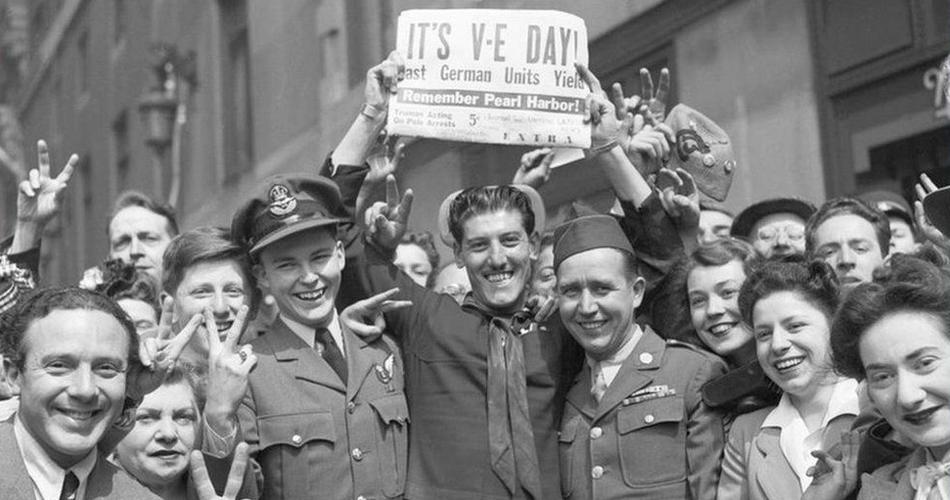
Today, May 8, marks the 75th anniversary of Victory in Europe (V-E Day), which signaled the nearing of the end of World War II; it is one of the official commemorations of this administration. Though social distancing and gathering restrictions have altered the way that we may observe such solemn dates, I ask you to take a few moments today to honor the significance of this event when good triumphed evil; the courage of our men and women in uniform who achieved the victory; the strategic superiority of our commanders; the tragedy of both civilian and military lives lost; the national unity that propelled us to victory; and the searing impact on the home front. The Friends of the National World War II Memorial Facebook page will be sharing virtual commemorations throughout the day.
With the approach of the Allies and the death of Adolph Hitler, the Nazi empire surrendered unconditionally on this date in 1945. It marked the end of six long years of a terrible warfare that had cost millions of human lives, destroyed whole cities and brought mass suffering to all of Europe. In preceding weeks, the intolerable cruelty and incomprehensible horrors of Hitler’s death camps had been revealed. But finally, the Allies had cause to celebrate – the enemy was defeated and had capitulated.
In the United States, VE Day coincided with President Harry Truman's birthday. He dedicated the victory to the memory of his predecessor, Franklin D. Roosevelt, who had died of a cerebral hemorrhage less than a month earlier. Great celebrations took place in many American cities, notably in New York's Times Square, though war continued with the Japanese.
During our most recent days during the pandemic, I have thought often of the lives of my grandmothers, who were born in the 1890s, and who would surely have rejoiced at this news. They not only came of age during World War I and the great Spanish Flu Epidemic of 1917-1918 but they also survived the Great Depression and World War II. Between the two of them, they sent seven sons to the battlefields of the 1940s – miraculously, all of whom returned. What trials the women of their generation endured and what sacrifices they made, though their home front contributions are so often overlooked by textbooks.
I am certain that you are equally proud of the service members of your family and those who remained at home to support the war effort in ways large and small. Perhaps the latter planted Victory Gardens or worked in factories. They also likely contributed their fair share by buying War Bonds, donating scrap metals and myriad other supportive efforts as part of their patriotic duty. If they were members of the DAR, they also likely supported our substantive efforts to achieve Allied victory.
Please join me in honoring the achievements made by all Americans of 1945 by taking time today to share their stories with your children and grandchildren. Don’t allow their contributions to fade away – impart the details of their wartime valor and sacrifice in order to educate and inspire future generations. Transfer of family memory is a ray of sunshine during these cloudy days – one that provides hope by holding up everyday examples of courage and reminds us of the power of united purpose.
