
 Today's DAR
Celebrating African American History Month - Suggestions for Marking the Occasion
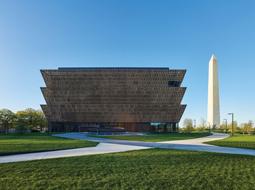
Here in Washington, we are excited to welcome a new neighbor. The National Museum of African American History and Culture (NMAAHC) opened its doors in September 2016 and visitation has surpassed the wildest dreams of even the architects of the new building. So many people want to visit the building can’t hold them all and timed tickets continue to be the best way to ensure you get in - even now six months after the doors opened for the first time.
As a museum professional, it delights and encourages me to see this enthusiastic response. Within our profession we constantly ask ourselves, “How are we relevant? Are we doing our best to interpret history and art in a way visitors will find interesting and meaningful? In this day and age of virtual reality, how do we get people excited about non-digital, analog technology and products of that technology?” The popularity of the NMAAHC is proof that individuals of all backgrounds are interested in seeing the real thing set in an exhibit that helps put it into context. It further shows us stories about people who contributed greatly to our country but have been excluded from textbooks and popular history are relevant to us all. That is why African American History Month exists.
From its earliest days in the 1920s as Negro History Week, to its expansion in 1976 to an entire month, it has endeavored to, as President Gerald Ford said, “seize the opportunity to honor the too-often neglected accomplishments of black Americans in every area of endeavor throughout our history.” With that imprimatur, here are some suggestions for marking African American History Month:
- Read a book about a topic relating to African American history – your local library is a great place to start. Some titles to get you started are: Narrative of the Life of Frederick Douglass by Frederick Douglass, Incidents in the Life of a Slave Girl by Harriet Jacobs, Beloved by Toni Morrison (a novel that vividly describes life after the Civil War), The Blood of Emmett Till by Timothy Tyson (a brand new book with new information about the lynching of a 14 year old from Chicago visiting Mississippi).
- Check out a website with new information about African American history like these:
- African Americans in the American Revolution are discussed on the Gilder Lehrman Institute’s webpage here: https://www.gilderlehrman.org/history-by-era/war-for-independence/essays/african-americans-revolutionary-war - Also make sure to check out DAR’s Forgotten Patriots here: www.dar.org/forgottenpatriots
- Fascinating history of African American tombstones in New England is here on Atlas Obscura’s website: https://tinyurl.com/atlas-obscura-slave-cemetery
- Learn about the first American woman ever to start and be president of a bank here: https://www.nps.gov/mawa/learn/historyculture/index.htm
- Listen to a story about African Americans in the California Gold Rush here http://www.npr.org/2016/09/17/494394891/documenting-the-history-of-african-americans-in-the-california-gold-rush
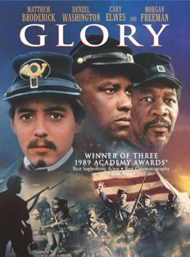 Watch a movie! Recent films like Loving about a couple fighting laws against interracial marriage, Hidden Figures about the women who made the moon landing possible, and Fences based on a Pulitzer Prize winning play by August Wilson are all still in theaters. Or better yet, host a movie night with some friends pop some popcorn and watch 12 Years a Slave, Glory, or Amistad.
- Visit a museum! You might not be able to get to the NMAAHC this month (put it on your list for your next visit to the nation’s capital) but there are other places you can learn about African American History. Here are just a few:
- Royall House and Slave Quarters in Medford, Massachusetts is home to the only colonial era slave quarters still in existence in the north. www.royallhouse.org
- Harpers Ferry, West Virginia – the location gained notoriety from John Brown’s raid in 1859 but after the Civil War it was home to Storer College, started in 1867 as a normal school to train African American teachers. Its history is preserved as part of the Harpers Ferry National Historical Park. https://www.nps.gov/hafe/index.htm
- If you’re in Los Angeles visit the California African American Museum before the end of the month to see “Politics, Race, and Propaganda: The Nazi Olympics, Berlin 1936” www.caamuseum.org
- Learn about the origins of Bre’r Rabbit and the complex lives of the people at Laura Plantation in Vacherie, Louisiana https://lauraplantation.com/index.php
These are just a few suggestions to get you started on your own journey of discovery. African American History Month offers us an opportunity to stop and consider how intertwined American lives are and to learn about people and places that might be new to us.